| OCR Text |
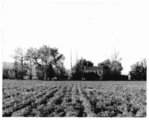
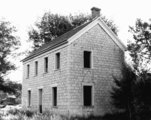
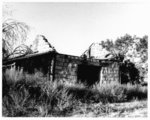
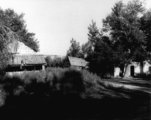
Show 8. Significance Period prehistoric 1400-1499 1500-1599 1600-1699 1700-1799 _3^ 1800-1 899 1900Specific dates Areas of Significance Check and justify below community planning archeology-prehistoric conservation archeology-historic X agriculture economics X_ architecture art education engineering exploration/settlement commerce industry invention communications 1884 landscape architecture law literature military music philosophy politics/government religion science sculpture social/ humanitarian theater transportation other (specify) Builder/Architect Statement of Significance (in one paragraph) The Charles Crawforth farmstead is significant as an isolated farmstead in the midst of a farm village settlement region.Deviating from the predominate pattern, the Crawforth farmstead historically demonstrates that Mormon culture in the nineteenth century was not as homogeneous as has often been thought. The opening of a U.S. Land Office in Salt Lake City in 1869 signalled the beginning of a great change in the Mormon Church's influence on settlement. In the areas already settled, like the Sanpete Valley, little agricultural land remained available. Farmsteads outside the established villages in Sanpete were very rare, and help document the shift there from subsistence agriculture to cash farming--cattle, sheep and cash crops including fruit and sorghum. The outstanding vernacular architecture of the farmstead is an important element of its significance. The large stone I house is a sign of agricultural prosperity and attests to Crawforth's prominence in the local community. The Sanpete Valley was settled after 1849 by members of the Church of Jesus Christ of Latter-day Saints (Mormons) and land occupance here followed a farm village plan advocated by the church leadership. Mormon town planning in the West was based loosely on the "Plat for the City of Zion" developed in 1833 by the Mormon prophet, Joseph Smith. Smith's plan was built around a nucleated agricultural community where all dwellings and farm buildings would be contained on town lots. Farm acreage would then be located outside the town limits. This town unit, when it reached sufficient size could then be repeated over and over again in other locations. The village settlement pattern was particularly strong in the Sanpete Valley where the persistent threat of Indian attack through the 1870's made group livng attractive. The Crawforth farmstead is located about two miles south of Spring City, a town which has been nominated to the National Register as an excellent and typical example of the Mormon village. Charles Crawforth was born in Sutton-on-Hall, Yorkshire, England, on May 24, 1824. Following his conversion to the IDS Church in 1854, Crawforth emigrated to Utah and the Mormon Zion. The William Glover Company carried young Crawforth to Utah where he arrived in Provo in 1855. During the next seventeen years he engaged in farming in the Provo area and participated actively in church and civic affairs. In 1873, at the age of 48, Crawforth moved his large family (10 children) to Spring City in Sanpete |