| OCR Text |
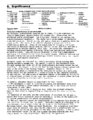
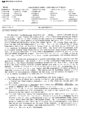
Show 8. Significance Period prehistoric / 1400-1 499 1500-1 599 1600-1699 1700-1799 1800-1899 1900- Specific dates Areas of Significance Check and justify below community planning archeology-prehistoric conservation archeology-historic economics agriculture education .architecture engineering Tart exploration/settlement commerce . industry communications . invention landscape architecture. law literature military music philosophy politics/government religion science . sculpture social/ humanitarian .theater . transportation . other (specify) Builder/Architect Statement of Significance (in one paragraph) The Westwater Archeological District has 55 sites, 47 sites represent one stage of Basketmaker through Pueblo III occupations. Three sites have petroglyph and/or pictographs. Two sites have lithics on the surface but nothing culturally diagnostic. The region has a large number of habitation sites and granaries. Lithic scatter and quarry sites are ubiquitous above the canyon walls. The canyon floor and the adjacent plateaus are rich in archeological material. There is the probability of virtually continuous habitation of Westwater Canyon from ca. 200 A.D. to ca. 1250 A.D. and then a reoccupation by Navajos sometime after 1400. The preceramic Basketmaker cultures constructed vessels from woven fibers and manufactured large atlatl projectile points. Puebloid culture developed in site from a Basketmaker substratum and evolved through three designated stages. Puebloid Cultures are characterized by bow and arrow technology, ceramic vessels, corn, bean, squash agriculture and masonry structures. Westwater canyon was sculpted by a nearly perrennial stream cutting down through sandstone formations. The canyon is part of the Cottonwood Creek drainage system that flows out of the Aba jo-Linnaeus mountains toward the San Juan River. The Canyon is within the Mesa Verdean Anasazi culture variant and just to the north of the Kayenta Anasazi. Westwater Canyon is rich in archeological material representing the evolution of culture in a particular canyon region and the adaptation of those cultures to the limiting resources of that region. The nomination of Westwater Canyon is warranted by the wealth of archeological evidence in the area; the nomination is urgent since the site is easily accessible to tourists and to vandalism. In summary, Westwater Canyon is significant for four reasons: (1) The abundance of sites in a narrow ecological and geographic area allow study of variables in sites readily available, all of the sites are within three miles of each other; (2) The major excavation at Westwater Ruin (Sal4) has produced extensive material that could be expected from or compared with the other habitation sites. (3) Condition of the sites and the preservation of artifacts are of such a nature that future excavation would be worthwhile, as well as the possiblity of inplace preservation for public interpretation. (4) The most important reason for significance is the expected data categories that could be retreived from the canyon. Westwater Canyon is a drainage in an area between areas of major archeological study in the southeastern Utah, Montezuma Canyon, Cedar Mesa and Abajo Mountains. The information from these areas seems to indicate that there may be a basis for a determination that this area nay not be the preriphery of the Mesa Verde Anasazi. A new cultural area tentatively called the San Juan Anasazi has been hypothesized; this canyon should be a key to proving or disproving the hypothesis. |