| OCR Text |
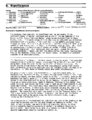
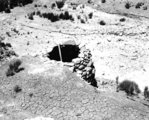
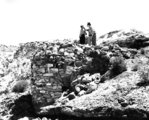
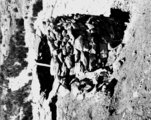
Show FHR-8-300A (11/78) UNITED STATES DEPARTMENT OF THE INTERIOR HERITAGE CONSERVATION AND RECREATION SERVICE NATIONAL REGISTER OF HISTORIC PLACES INVENTORY -- NOMINATION FORM CONTINUATION SHEET ITEM NUMBER 8 PAGE This particular lime kiln was aptly located for such a task. It was built on the edge of a wash just next to a very concentrated deposit of natural limestone. The wash itself had to be bridged or dammed for the railroad track. Hence the kiln is located not only near its source of supply, but also next to its area of use. Although it was used for a time, roughly 1881-82, It was abandoned when the Denver and Rio Grande shifted their route from the Buckhorn Flat to the Woodside - Price River - Colton route. Why was the Buckhorn Flat route abandoned? The main reason was the railroads need for a direct connection with Salt Lake, rather than going through the intermediate Castle Valley line as well as to tap the coal resources in the Pleasant Valley area. Additionally, in the early 1880's businesses around Provo started to boom, providing a ready market for rail transportation. Finally, the Buckhorn Flat route was unprotected. Butch Cassidy and his gang did not become active in the area for fifteen more yeras but, as one local historian observed, "A single-tracked line through that desolate country would have offered any number of good locations for raids, since it would be impossible to summon aid to pursue the bandits". The avoidance of the Robbers' Roost area may have been purely fortuitous, but the D&RG did sustain a loss of $213,470 which it spent in the Buckhorn Flat route up to 1882, including its expenditure for the lime kiln. The track was never laid over the Buckhorn Flat, but the grade remains. The D&RG went on to enrich itself in the commercial traffic of northern Utah and the coal mines of Carbon County, leaving Emery County in rural isolation. This lime kiln was built in an era of prosperous optimism, and remains a reminder of an abandoned scheme. |