| OCR Text |
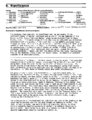
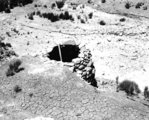
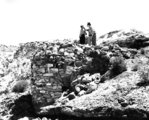
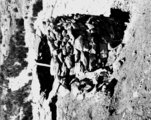
Show 8. Significance Period prehistoric 1400-1499 1 500-1 599 1600-1699 1700-1799 _J^1 800-1 899 1900- Areas of Significance Check and justify below archeoloav-orehistoric communitv olannina archeology-historic conservation economics agriculture architecture art education engineering _k^exploration/settlement '^communications industry invention Specific dates 1881-1882 religion landscape architecture science law sculpture literature military social/ humanitarian music theater philosophy t-"*'transportation politics/government other (specify) Builder/Architec^~~Denver and Rio Grande Western Railroid Statement off Significance (in one paragraph) The Buckhorn Flat Lime Kiln is significant both as emblematic of the self-sufficiency of western railroads and as one of the few remnants of the Denver and Rio Grande Railroad Western grade across Buckhorn Flat in Emery County, Utah. The construction of this lime kiln in 1881-1882 was intimately associated with the grading of the track bed for the D&RGW's prosposed route through the area. Part of the job consisted in building bridges or damming up washes so that tracks could be laid in a relatively straight line. Both types of construction involved the use of cement or mortar of which lime is an essential ingredient. This particular kiln was aptly located for the task, but was abandoned in about 1882 when the D&RGW shifted the route from Buckhorn Flat to the Woodside, Price River, and Colton route. It remains an isolated reminder of an abandoned scheme. The importance of railways in the West cannot be overestimated. They provided transportation of goods and people, encouraged the growth of towns and cities along their route and aided in the exploitation of natural resources. The Denver and Rio Grande Western Railway had long proposed laying track across Utah, connecting Denver with Salt Lake City and ultimately with Los Angeles or Old Mexico. In 1882 three alternate routes were under consideration. One proposal was a route from Green River, through Cottonwood Wash, to Buckhorn Flat, to Castle Valley, southwest through Castle Valley to Ivie Creek and Salina Canyon, and down Salina Canyon to Salina. This route, known as the Buckhorn Flat Route, would join a railway running north and south through the Sevier Valley from Salt Lake to Salina to Los Angeles. A second suggested route would leave Green River, head to Woodside, continue to the Grassy Trail Creek vicinity, and follow the Price River to meet up with the Pleasant Valley route near Colton. This route would make connection with the Salt Lake to Los Angeles line at Provo. A third alternative involved building the main line from Colorado, through the San Rafael Swell to Salina, and from there to Los Angeles. The connection with Salt Lake would be via the Pleasant Valley line from a wye located in Castle Valley. Undecided, the Denver and Rio Grande Western began making the grade along the third alternate route, roughly following the Old Spanish Trail. The construction of the Buckhorn Flat Lime Kiln was used in the grading of the track bed to provide lime for building bridges or damming up washes. The lime, or calcium oxide, was made by burning limestone, shells, or other calcium-carbonate-bearing substance to convert the chemical structure to calcium oxide. Burning had to be done in a furnace or kiln so that the desired temperature could be reached and maintained. |