| OCR Text |
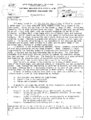
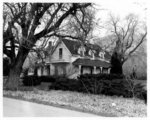
Show r STATE j 1SM NATIONAL REGISTER OF HISTORIC PLACES ! T 8. INVENTORY - NOMINATION FORM (Continuation Sheet) Utah COUNTY Box Elder FOR NPS USE ONLY ENTRY NUMBER JUN » Significance demonstrated in the craftsmanship of the towns' master-builder, Shadrach Jones, A native of Wales, Shadrach was converted to Mormonism in 1850. After emigrating to Utah, he made his home in Mil lard. As a stone mason, his work reflects the style of the houses in his native Wales. In 1083, Shadrach was called by L.D.S. Church authorities to return to his homeland as a missionary. He died June 24, 1883 at Swansea, Wales after a three week bout with pneumonia. The Willard Historic District illustrates several significant facts relating to America's and Utah's history and heritage, as follows: a. The concentration of rock homes reflecting the influence and use of European house styles on the Mormon frontier, b. The craftsmanship of Shadrach Jones and his helpers who used their tremendous skills with a minimum of hand tools to create some of the most beautiful structures still standing, c. The Mormon philosophy of building as permanently and beautifully as their resources would allow, d. The adaptability of these settlers to their environment. Rocks were used in the homes because of their abundance and the ability of the settlers to work with them. In other parts of the Mormon territory adobe and bricks were used in constructing much the same styles of homes, e. Willard still reflects, in large measure, the design and composition of the typical Mormon agricultural village. It is believed that Milliard's rock buildings were designed from memories of Wales, since the master stonemason credited with their construction came directly to Willard from Wales. Although northern Utah is endowed with many pioneer rock structures, the greatest concentration existed in Willard. Also, certain features of WiHard's homes differ from those found elsewhere. For example, the rock homes built in Willard between 1861-1881 did not have fireplaces. Although many communities along the Wasatch front had ready access to rocks, the extent and success of this material's use is especially pronounced in WHlard. The settlers and early residents of Willard were as substantial as their architecture. One of Shadrach Jones 1 apprentices, Evan Stephens, nurtured his musical talents in Willard then went on to direct the famous Mormon Tabernacle Choir. Robert Bell Baird, another accomplished musician, composed many hymns still used in L.D.S. Churches today. John L. Edwards was one of northern Utah's most prominent cattlemen and entertained Lei and Stanford and Brigham Young in his home (#20, Historical Buildings Map). George Mason was a well-todo dairyman and George and Charles Harding were prominent ranchers. Matthew Dalton had the first sailboat on Great Salt Lake and set out the first orchard in northern Utah. It is believed that more residents of Willard per capitc achieved college educations than from any other town in Utah. Willard was (and still is) a hub of fruit-growing activity. Some associate Willard most clearly with the devastating floods of 1923 and 1936. GP 0 921-7 24 |