| OCR Text |
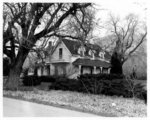
Show STATE NATIONAL REGISTER OF HISTORIC PLACES INVENTORY - NOMINATION FORM (Continuation Sheet) entries) Utah COUNTY Box Elder FOR NFS USE ONLY ENTRY NUMBER JUN 7. Description The narrow configuration of land between the foothills and lakebed has imi ted the expansion and growth of Willard, Since the Mormon settlement pattern was one of tightly-knit villages surrounded by cultivated fields and pastures (not the dispersed farmsteads common to the midwestern U.S.), the n'storic qualities of Willard stand out against a backdrop of natural landscape features. Town edges are the rock watercourse north of town, the foothills to the east, and the cultivated flatlands to the west which extend to the bay. he town edge to the south is best outlined by a rugged, cedar-dotted ridge extending down from the mountain. The Willard Historic District comprises 12 blocks of the original townsite, to include both sides of the street boundaries. All of the major architectural and historically significant buildings will be included in the historic district if. both sides of streets are included and this will also help to ensure uture continuity. There are approximately 130 buildings within the Willard Historic District, not including the outbuildings. See the attached map for the street boundaries of the historic district. Of the historical buildings identified on the enclosed map, one-half (or 19) are of rock (or partly of rock). Other significant rock structures include the Mason granary, the rock dike to divert Willard Creek and some of the ruins of the original fort walls. The enclosed maps identifies the number of residences, outbuildings and the amount of open space within the original townsite of Willard. These were derived from an enlarged aerial photograph and should be quite accurate. Several of the original pioneer agricultural buildings still stand. Some barns date back to the 1850's and were constructed without nails. The out)uildings are characteristically of earth-tones there are no red-painted barns in Willard! Many original sheds still exist, with several good examples of the n inside-out !I granary. A few original pioneer log cabins remain scatterec throughout Willard. Some early fences still exist and several hay derricks and examples of antiquated agricultural machinery are visible at random locations. Many of the original pioneer trees still grace the townscape, including A/hat are suspected to be the oldest Box Elders in northern Utah. Several rnul)erry trees, whose leaves fed the silkworms imported from France by Brigham Young, are to be found also. The original poplars "the Mormon tree 1' are scarce but some have planted new stock to replace them. Many of the interior blocks still support the orchards set out by the first pioneers. Black locust trees are quite common and there are several shrub hedges. Many of the original ditches still parallel the roads. Vestiges of the floods of 1923 and 193C remain, especially the tons of earth that inundated one of the rock homes directly in the floodpath. One rock wing of this home is still full of flood debris. Huge boulders are strewn east of the highway and are ready to fit into landscaping patterns. Until 1973, no zoning ordinances existed in Willard. Since adoption of a moderate ordinance in order to tie Willard into the Box Elder County Master Plan, residential lots must be at least one-half acre and on a permanent foundation,and mobile homes must adhere to this restriction. The new ordinance did not rule out animals for reasonable domestic use so barnyard animals are common throughout the town and people on horseback seem at times to use the rppaods2la£'24 much as cars. |