| OCR Text |
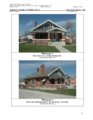
Show United States Department of the Interior National Park Service / National Register of Historic Places Registration Form NPS Form 10-900 OMB No. 1024-0018 Anderson, George and Mabel, House Name of Property (Expires 5/31/2012) Box Elder County, Utah County and State Statement of Significance Summary Paragraph (Provide a summary paragraph that includes level of significance and applicable criteria.) The George and Mabel Anderson House, built in 1913, is locally significant under Criterion C as an exceptionally well-preserved and unique example of a bungalow house that embodies distinctive characteristics of a type and style in Brigham City, Utah. Stylistically, the 1½-story brick residence is a hybrid of the popular Arts & Crafts and Prairie School styles of domestic architecture in the early twentieth century. The building has many features that indicate a level of design sophistication beyond the tract bungalows that were common in the period. These features include decorative false half timbering in the gable end, geometric capital on the brick piers, a decorative porch vent, and a unique double-arch inglenook separating the two main interior spaces. The building is eligible under the Multiple Property Submission, Historic Resources of Brigham City, Utah, within the following historic context: "Economic Development and Residential Architecture, 1854-1950." The historic period of significance for the house is the original construction, 1913. During this period, the house was occupied by only three families: George A. and Mabel W. Anderson, Lewis S. and Julia W. Pond, and Clyde B. and Nadine D. Stratford. These Brigham City families were involved in banking, agriculture and retail in the community. The Anderson House has had minimal modification since its original construction in 1913 and contributes to the historic character of its Brigham City neighborhood. ________________________________________________________________________________________________________________ Narrative Statement of Significance (Provide at least one paragraph for each area of significance.) Architectural Significance The Anderson House, built in 1913, is a unique example of an early brick bungalow in Brigham City. The bungalow was the most popular dwelling type for single-family homes in Utah in the years before World War I. Typical Utah bungalows were one-story, ground-hugging houses with rectangular plans.2 The Anderson House is one of the less common, but also popular, 1½-story bungalows that are Arts & Crafts-influenced. These bungalows feature a broad gable roof that projects over a full-width front porch. The house exhibits many elements of the Arts & Crafts movements such as a variety of surface materials, square lights in the window sashes, and interior built-ins. The Anderson House differs from most Utah bungalows, which were built by "local contractors following ideas contained in popular pattern books and home-improvement magazines."3 In particular, the unusual double arch dividing the living and dining rooms suggest a personalized design created by the unknown builder or architect. The Anderson House also incorporated elements of the popular Prairie School movement, including raked mortar joints to emphasize the horizontal lines, a broad brick chimney and heavy, square, brick piers supporting the hipped porch roof with small gable over the stairs. The piers are topped by implied capitols of incorporating a geometric pattern that is very typical of the Prairie School style. However, the form of the bungalow, with a more steeply pitched gabled (rather than hipped) roof is much more typical of the Arts and Crafts style in Utah. The street-facing gable end features stucco and false half timbering that is also a hallmark of the Arts and Crafts style. The brickwork includes some unique features such as the porch vent and header-stretcher sills that also point to an individualized design. After a century of use, the Anderson House is also remarkable for the state of preservation of both the exterior and interior features. 2 Thomas Carter and Peter Goss, Utah's Historic Architecture: A Guide, 1847-1940, (Salt Lake City, Utah: University of Utah Press, 1988): 54. 3 Ibid. 7 |