| OCR Text |
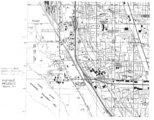
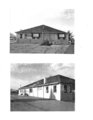
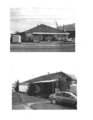
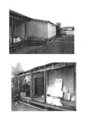
Show OMB No_ 1024-001 B, NPS Fonn United States Department of the Interior National Park Service National Register of Historic Places Continuation Sheet Section No. § Page ~ Timpanogos Cooperative Marketing Association Building, Orem, Utah County, UT church/school centers some two miles apart, with the express purpose of consolidating the water resources for irrigation purposes. The new municipality was named Orem in honor of Walter C. Orem, president of the Salt Lake and Utah Railway, and development followed the rail corridor as new residences and businesses continued to locate along the highway."4 In addition to the agricultural industry, other early businesses consisted of a molasses mill , an adobe yard, and a well-digging operation. A country store was opened by Melissa L. McBride in 1890, and a blacksmith shop opened in 1900 at the comer of 400 South State Street. The first fruit stand on Provo Bench was opened c. 1913 at 1301 North State Street. 5 In the earliest days of the town, surplus agricultural products were marketed, via wagon-load, on a small scale throughout the region and state. However, in order for the city's economic base to survive, it was necessary to expand the market for agricultural products outside the local area. The arrival of the Salt Lake and Utah Railroad, or "Orem Line" in July 1913 provided the avenue for transporting the locally-grown products all over the greater West. The Salt Lake and Utah interurban train system was significant to the development of both the local and emerging na6onal freight transporta6on systems. The 1916 railroad timetable shows twenty trains a day traveling through Orem, making stops at the four Orem stations located along what is now Orem Boulevard at 700 North (Orem Station), 400 South (Snow Station), 800 South (Lincoln Station), and 1200 South (Curtis Station). The most significant of these stations was Snow Station, where several fruit and produce packing buildings or sheds were built as part of the station and depot area for the purpose of preparing local crops for shipment across the country. Many older Orem residents remember bringing loads of fruit to these packing sheds as children, then helping to unJoad and prepare them for shipping. The only building from the Snow Station depot still present is the TCMA Building. 6 The Timpanogos Cooperative Marketing Association purchased a 1.15 acre plot of land lying directly adjacent to the railroad tracks from Russell K. Homer on 22 June 1925. The TCMA Building was constructed around 1926 in a vernacular version of the then popular Prairie School style. This architectural form was based on the work of Frank Lloyd Wright and was popular in Utah primarily during the years 1905-1925. Prairie Schoolstyle buildings in Utah were predominantly residential, although a few ecclesiastical and civic buildings were constructed using the design. Less common in Utah was the utilization of the Prairie School style in buildings constructed for industrial or commercial use, making this building a unique addition to the architectural history ofOrem. 7 By 1947, the Salt Lake and Utah Railroad was no longer operating, its assets were placed into receivership, and most of the buildings of Snow Station were demolished. In 1951 , the railroad right-of-way was purchased by Orem City. The tracks were removed in order to construct the thoroughfare Orem Boulevard. Although no longer associated with the railroad, the TCMA Building continued to be used as a produce processing and packing facility until 1960, when the property was sold to Moroni Woodruff and June Jensen. Ownership of the property changed several times from 1960 to 1978, when it was purchased by the construction firm of Prestwich and Healey (Glen S. Healey and Harold L. Prestwich, principals). In 1984, the property was sold to Edmond P . |