| OCR Text |
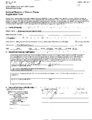
Show United States Department of the Interior National Park Service 0MB No. 1024-0018, NFS Form National Register of Historic Places Continuation Sheet Section No. 8 Page 2 Evergreen Avenue Historic District, East Mill Creek Township, Salt Lake County, UT In the same year that John Neff built his flour mill, pioneer surveyors laid out what became known as the Big Field Survey beyond the southern boundary of the original Salt Lake City plats (today's 900 South). Between 900 South and 2100 South, the land was laid out in rectangular blocks divided into five-acre lots known as the Five-Acre Survey. Further south, between 2100 South and 4500 South, the land was divided into larger lots of ten acres and known as the Ten-Acre Survey. These large lots were intended for agriculture and initially did not extend into the foothills where the East Mill Creek-Evergreen neighborhood is located. However the main east-west corridor, known as 3300 South, is an extension of one of the block boundaries established by the Ten-Acre Survey. Likewise, the north-south running 2300 East follows the block pattern established by the 1848 survey. The oldest extant homes in the neighborhood are found along 3300 South and 2300 East. Evergreen Avenue, which bisects the survey area, was reportedly named for the wide variety of evergreen trees found in the area. Neffs Lane, the southern boundary of the survey area, has obvious associations with the Neff family. Oakwood Street, which runs north to south, is also one of the oldest streets in the neighborhood. The Neff grist mill played an invaluable role in helping the Mormon pioneers survive the early settlement years. When an invasion of crickets began devouring the pioneers' first substantial wheat crop, the precious wheat that was salvaged and harvested by determined pioneers (with the aid of hungry seagulls), was brought to the Neff mill for grinding. Unbolted flour was available for sale by December 1848. The first white flour in Utah was produced at the mill by February 1949. That year many California-bound gold seekers offered John Neff a dollar for a bag of flour. He refused to sell, keeping the flour to sell to other pioneers for six cents a pound. John and Mary Neff often gave the flour free to those who couldn't afford it. Farmers from Provo to Ogden would bring their flour to the Neff mill, sometimes waiting up to a week to have it ground. For many years, the mill pond was used for baptisms. The first settlers had a difficult time raising crops in the area, although some corn and potatoes were raised in the early years. Daniel Russell, who settled near the mouth of Mill Creek Canyon soon after John Neff built the flour mill, was very successful planting fruit trees and raising a variety of fruit. Although his orchards were outside of the survey area, his success encouraged more agricultural development in the area. Within a few years, the area was dotted with orchards, berry patches, vegetable gardens and vineyards. In addition, the family subsistence economy included dairy products, eggs, honey bees, beef and pork. Elk and deer helped supplement the settlers' meat supply. In 1848, Archibald Gardner established a saw mill south and west of the area near present day Highland Drive. Lumber from the saw mill provided much of the wood for the earliest community buildings. Lumber and other products were taken to Salt Lake City and sold to the growing population. While Mill Creek provided the energy to run the grist mill, it also supplied irrigation water to the family farms through a system of ditches. Water rights became increasingly important as the population of the area grew. As is typical of most settlements, the development patterns of early settlements were tied to water ways and transportation corridors. In Utah, the ecclesiastical divisions of the church units also played an important role. When the Mill Creek Ward was first organized in 1849, it extended from 2100 South on the north to Big Cottonwood Creek on the south (approximately 4500 to 4800 South), and the Jordan River on the west to the Wasatch Mountains on the east. In 1852, the ward was divided at Highland Drive and the east area became known as the Upper District of the Mill Creek Ward, later part of the Big Cottonwood Ward. The |