| OCR Text |
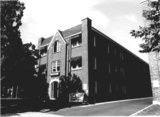
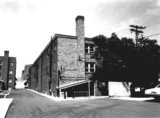
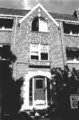
Show OMB No. 1024-0018, NPS Form United States Department of the Interior National Park Service National Register of Historic Places Continuation Sheet Section No. 8 Page 3 Bigelow Apartments, Salt Lake City, Salt Lake County, UT By the turn of the century, Salt Lake City had grown from an agrarian village to a bustling urban metropolis. The coming of the railroads brought an increase in every type of manufacturing and commerce, as well as an enormous influx of immigrant laborers and their families. The population of Salt Lake City increased from 20,000 in the 1880s to over 92,000 by 1910. The original lots of the each ten-acre block had been divided and subdivided and most of the Plat B lands had inner block streets. During this period there was a great range of architecture in the early neighborhoods. Pioneer settlement adobe and frame hall-parlors were intermingled with brick and frame Victorian cottages. Multiple-family dwellings first appeared as double houses, which became very popular in the 1890s. By the turn of the century the city core had developed into an urban commercial district with high-rise office buildings and multiple streetcar lines. During the first half of the twentieth century, the rapid increase in the city's population created a demand for housing that was met by two diametrically opposed types of housing: central city apartments and subdivision homes.3 The city instigated massive urban improvement projects such as water mains, sewage facilities, electrical lines and telephone service, both in the central city and in the emerging suburbs. Rising land values and urban congestion made the apartment house a feasible investment for developers. This was noted in a Salt Lake Tribune that appeared in 1902, just as the first major apartments were being constructed: "It is generally recognized by farseeing investors that the period of cottages in Salt Lake has reached its highest point and the period of flat buildings, marking another stage in the evolution from town to city, has just begun."4 Over 180 apartment buildings, all built by private investors, were constructed in Salt Lake City during the first three decades of the twentieth century The emergence of apartment building also presented a practical housing alternative for those residents who could not (or would not) take advantage the increasing attractive and convenient suburbs. Though a few early urban apartments were luxury units, the vast majority consisted of apartments for the middle class. The gradual transformation of some of these buildings into housing for the inner-city poor did not take place until the last quarter of the century. In fact, the economic status of the early apartment dwellers was virtually the same as that of suburban homeowners of the same period, middle and upper-middle class. The major difference between the two groups was transitory nature of apartment dwellers. Tenants were often in transitional phases of their lives. Common occupants include newly married or childless couples, widows and widowers, retirees, and working single adults. The early tenants of the Bigelow Apartments were representative of these demographic trends. Architecturally, the Bigelow Apartments, built between 1930 and 1931, is typical for the period. There are two basic building types that account for 93 percent of the city's urban apartments: the walk-up and the doubleloaded corridor. The Bigelow Apartments is an example of the double-loaded corridor. A pioneer-era adobe house near the street was demolished to make way for the apartment house. The deep narrow lot was suited to the long narrow apartment type and there was even room for a row of covered parking for those tenants with automobiles. The Jacobethan style was very popular in the 1920s and 1930s and a number of apartments with 3 Roger Roper, Salt Lake Urban Apartments MPS, 1989. 4 Salt Lake Tribune, July 27, 1902: 32. Quoted in MPS. |