| OCR Text |
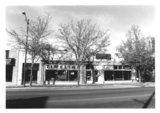
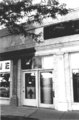
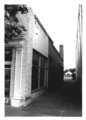
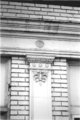
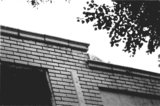
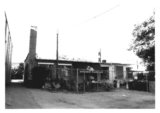
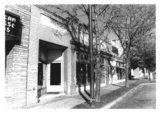
Show OMB No. 1024-0018, NFS Form United States Department of the Interior National Park Service National Register of Historic Places Continuation Sheet Section No. 8 Page 2 Richardson-Bower Building, Salt Lake City, Salt Lake County, UT Biesinger, a contractor; John and Ada Burt, Jr., a barber; and Junius B. and Inez Keddington, a manager at K & K Engineering company. In 1925 they jointly took out a $7,500 mortgage and hired a contractor, George Bowles, to construct a one-story brick garage for $6,000.4 George Bowles was a builder and an active member of the LDS Church during his life. He was born in Surrey, England, in 1866, and came to Salt Lake City in 1888 as an LDS convert. He was involved in ecclesiastical affairs throughout his life as well as overseeing construction of several LDS church buildings. He was bishop of the Belvedere Ward and built its chapel (607 Downington Avenue, Salt Lake City) and the Kalihi chapel in Hawaii before his death in 1942. Richardson-Bower, Inc., was a distributor of Dodge Brothers motorcars and Graham Brothers Trucks with its main showroom in downtown Salt Lake City in a building designed by Taylor Woolley, a noted local architect and apprentice of Frank Lloyd Wright, at 143 Social Hall Avenue. Richardson-Bower also had a Murray branch on 176 Motor Avenue in Murray as well as the Sugar House branch. H. H. Richardson was the president and L.E. Bower was vice-president in 1926. The Sugar House building was only used in 1926 by Richardson-Bower and was listed as vacant in the 1927 Polk directory, however, the other locations of the company continued in business. The building was separated into two business spaces and there were two tenants throughout the historic period. One of the businesses was always automotive-related, a garage or auto parts and supplies. By 1928 P & D Garage occupied 1019 and the Binnington Brothers occupied 1021. Harry and J.G. Binnington were tinsmiths and the previous year had sheet metal works in Sugar House at 1984 1100 East. By 1930 Ashton Auto Company had replaced the P & D Garage and John G. Binnington continued the tin business alone. G. R. Ashton and A.G. Pyper ran the Ashton Auto Company. Both shops remained in the space through 1940, the latter as the Binnington Tin Shop. A 1947 photo shows an auto-related business and a shoe repair service (Milt's Shoe Service). In 1951 the building was occupied by Ace Auto Supply Company, Inc. at 1019 and Tip Top Shoe Service at 1021. In the 1933 the partners lost the property in a sheriffs deed to the Sugar Banking Company and lone M. Overfield purchased it in 1934. lone Overfield was married to Chauncey P. Overfield, the president of the Overfield Investment Company, located at 309, the Dooly Building. The property remains in her family today. Architecture Period Revival Neoclassical styling, popular in Utah from 1900-1925, was commonly used to give dignity to institutional buildings like banks, churches, post offices, and courthouses that were often large, two-story buildings in the central part of towns. The use of Neoclassical styling is less common in commercial buildings in Utah, particularly a modest one-story one-part block. There are forty-nine (49) 5 Neoclassical commercial buildings in all of Utah. Of these, ten (10) are one-part blocks. There are only five (5) other Neoclassical onepart block commercial buildings in Salt Lake City. Neoclassical styling references the classical motifs of Greek and Roman temples with colonnades and/or porticos. The vernacular version of the style used for the 4 Salt Lake City building permit # B7101,12/12/1925. 5 Data is from the SHPO computerized database of historic buildings in Utah. |