| OCR Text |
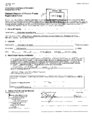
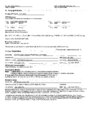
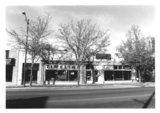
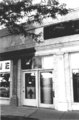
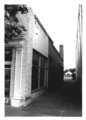
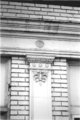
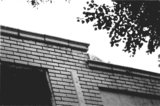
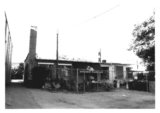
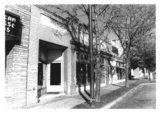
Show 0MB No. 1024-0018, NPS Form United States Department of the interior National Park Service National Register of Historic Places Continuation Sheet Section No. 8 Page 1 Richardson-Bower Building, Salt Lake City, Salt Lake County, UT Narrative Statement of Significance The Richardson-Bower, Inc. Annex, built in 1925, is significant for Criterion A under the "City Within a City, 1910- 1954" context of the Sugar House Business District Multiple Resource Area nomination. It is significant for its reflection of the time before the postwar interstate highway system when the Lincoln Highway/Highway 40/2100 South was a major east-west route, bisecting Sugar House, and exposing the inter- and intra-state travelers to businesses that lined 2100 South through Sugar House. Auto and travel-related businesses grew up along 2100 South to provide services and goods to the people traveling by car as well as to the surrounding area. The Richardson-Bower Building was constructed as a garage and had automotive-related tenants through the 1950s. It features Neoclassical style details on the primary fa9ade, but is otherwise a nondescript commercial building. It retains its historic integrity and is being nominated as part of the multiple property submission, the Sugar House Business District Multiple Resource Area. History of Sugar House District The settlement of the area later known as Sugar House began in 1848; the year after the Mormon (LDS or Church of Jesus Christ of the Latter-day Saints) pioneers entered the Salt Lake valley in 1847. Sugar House is four and a half miles southeast of the downtown area of Salt Lake City and located on land that was initially set apart for agricultural use in what was known as the Big Field Survey. Unlike most other early Utah Mormon communities, Sugar House was not a planned town but a settlement that grew in response to industrial and later transportation needs and opportunities. It was initially known as Canyon (or Kanyon) Creek from the stream that came through the area from the canyon directly to the east.3 The creek was important in the development of Sugar House as it provided water for early settlement and agriculture and later powered the machinery for the early mill-related industries. During the historic period, Sugar House changed from its beginnings as an early industrial center based on the waterpower of Parley's Creek to a commercial center for the population living in the southeast section of Salt Lake City. Transportation connections were important in the growth and development of Sugar House. Streetcar access made it possible to live in the outlying areas and get rapidly to and from work in downtown Salt Lake City. Railroad connections helped the commercial center expand by directing passengers and freight through Sugar House. The major street in Sugar House, 2100 South, was part of the nation-spanning Lincoln Highway and later interstate U.S. 40. It was a major east-west road across the United States and routed traffic through the Sugar House business district. History of the building The property was originally part of the extensive landholdings of Brigham Young, the second President of the Church of Jesus Christ of the Latter-day Saints. After his death in 1877 it passed through several owners before being purchased by three partners in 1925. The partners and their wives were: George L. and Alice R. Now known as Parley's Canyon and Parley's Creek after Parley C. Pratt, an early LDS leader. |