| OCR Text |
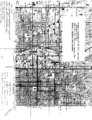
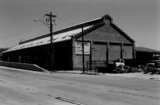
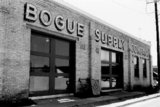
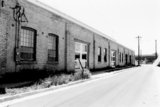
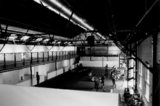
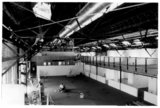
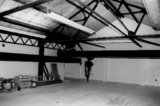
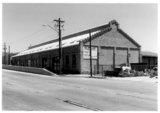
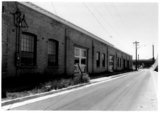
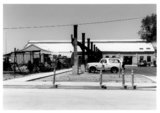
Show 0MB No. 1024-0018, NPS Foirn United States Department of the Interior National Park Service National Register of Historic Places Continuation Sheet Section No. 8 Page 4 Salt Lake Engineering Works/Bogue Supply Company Building Salt Lake City, Salt Lake County, UT the area. Warehouse is a term for a building type introduced circa 1885 that was relatively expensive because of the structural components, yet simple and undecorated. What little ornamentation the Bogue building possesses (brick corbelling and a stepped gable) was simply an extension of the earlier building to the east. Warehouses were one of the earliest buildings to stress utility and functional honesty in its architecture. The main elements were structural strength and access to natural light. The strength was largely articulated on the outside by the brick pier, which was an unbroken line from sidewalk to skyline: and served as pilasters to divide the wall into bays as well as stiffen the walls. The light came through multi-light windows set in a slender sash. Because of the many varied industrial uses, fire protection was an important part of the evolving construction technology of the warehouse. Buildings of fire-resistant heavy timbers and thick brick masonry walls were common for the period. The other three buildings associated with the Salt Lake Engineering Works were all built of timber and masonry. This type of mill construction was ubiquitous in Salt Lake's commercial and industrial district. In fact, according to a survey taken in 1997, the vast majority of extant contemporary buildings are mill construction. The Bogue building actually falls into a separate category of large masonry buildings supported on the interior by a structural framework of iron or steel. According to information provided on the 1911 Sanborn map, the Bogue building was the only industrial warehouse in Salt Lake supported entirely on a steel frame. The majority of buildings using structural steel in 1911 used the material in combination with other materials (e.g. wood truss on steel frame, steel truss on wood or iron posts, steel truss with load-bearing masonry or concrete, etc.). The map notes six other all-steel frame buildings, but these building were commercial blocks with multiple floors, masonry exteriors and no visible expression of the structural steel (either on the interior or exterior). Half of these have since been razed. There were only about a dozen buildings comparable in size and use to the Bogue building. The most notable surviving examples are the Silver Brothers' Iron Works foundry building located at 700 South and 500 West, and the Denver & Rio Grande Railroad engine repair shop located at 300 South and approximately 600 West in the midst of the rail yards. The Silver Brothers' building was constructed in 1907 with an iron frame and is currently surrounded by three decades (1950s-1970s) worth of concrete block additions. The engine repair shop (circa 1905) is very similar to Bogue building with its brick pilasters and monitor roof. It is wider and shorter, and was constructed on iron supports with a steel truss roof. The Salt Lake Engineering Works/Bogue Supply Company Building was Salt Lake's earliest turn-of-thecentury warehouse supported entirely on a steel frame. It is also a unique combination of soon-to-be-common construction technology of structural steel and decorative nineteenth-century brickwork in a fairly utilitarian structure. The Trolley Square complex of trolley barns, built between 1908 through 1911, would be Salt Lake's next example of the technology. The rehabilitation of the Bogue Building highlights the unique structural framework (spanning more than 60 feet) while extending the productive life of the building. The Bogue building has excellent historic integrity and is a contributing resource in Salt Lake historic industrial district. |