| OCR Text |
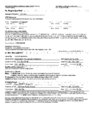
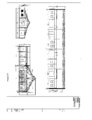
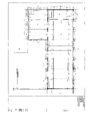
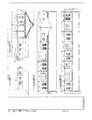
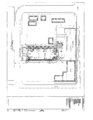
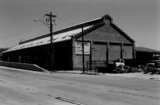
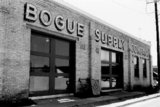
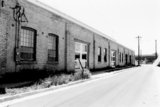
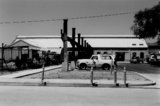
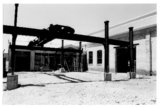
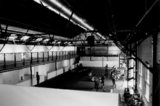
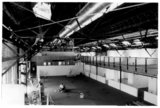
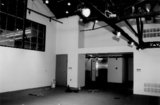
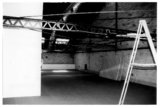
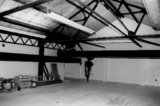
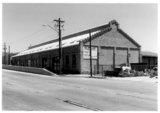
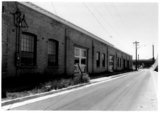
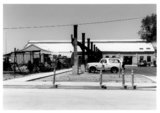
Show OMB No. 1024-0018, NPS Form United States Department of the Interior National Park Service National Register of Historic Places Continuation Sheet Section No. 7 Page 6 Salt Lake Engineering Works/Bogue Supply Company Building Salt Lake City, Salt Lake County, UT There is no single prominent elevation. The east end abuts the foundry building. The west end is blank with no openings, although with distinctive corbelling and a crow-stepped gable. The north elevation features eight bays with four large loading doors and four pairs of large warehouse windows. The south elevation is similar to the north, though the original west end is obscured by the 1942 addition. The original loading doors featured style and rail double doors with diagonal wood planking and a smaller door inset. The doors were in generally poor condition and have been replaced with glass. Two interior doors have been refurbished in place. The majority of windows are multi-light (twenty-over-fifteen) set in a wood sash. The windows were repaired except when too damaged to salvage, and replacements were built to match existing. The 1942 addition was built at the west end of the south elevation. The 1911 Sanborn map indicates a frame addition was built on that side of the building and probably demolished when the current addition was built. The 1942 addition is constructed of cinder block and iron/steel frame sheathed in corrugated galvanized steel top to bottom. The building has been sheathed in new corrugated metal and a new roof installed. The addition measures approximately 45 feet by 73 feet, with its gabled roof perpendicular to the circa 1904 building. The adaptive reuse plan converted this space into main entrance-reception area and storage room. A new aluminum storefront-type entrance was added to the east elevation of the addition. Also along the south elevation was a carport-type shelter (circa 1940s) of corrugated metal supported on metal poles. It was dilapidated and removed at the beginning of the rehabilitation. On the interior, the 1906 portion has 12,096 square feet of space. The farthest west bay was partitioned into office space by a set of two-over-two windows, wood panels and paneled doors, and two sliding half-glass doors with a mezzanine above. The office does not appear on the 1912 photograph and was probably added in the 1920s. During the rehabilitation the partition assembly was removed, refurbished, and reinstalled one bay east to provide conference rooms, both above and below. The mezzanine was also extended and supported on steel columns along the west wall. A second floor was added in the addition. New staircases and an elevator were added to the structure to accommodate the second level. The space in the circa 1904 portion is divided visually into eight 24-foot bays. Prior to the current rehabilitation, a large traveling, overhead crane system (circa 1905?) was mounted on steel I-beams and columns, and traversed the central section of the building. The crane system has been removed, refurbished, and reinstalled at the property entrance. The building originally had rails installed down the center for conveying supplies in cars from one end of the building to the other. The rails were probably removed in the 1940s when the building changed usage. With the crane system removed, the structural system of the building is more apparent. The brick masonry is mainly infill with little load-bearing function. The building is supported on a framework of steel columns and beams. The roof is supported on a series of modified Fink-style trusses held together with gusset plates. The steel used in the construction was a type of soft steel, which the 1911 Sanborn map labels "unprotected." The members are remarkably small and light for the period. This gives the building's fairly delicate skeleton frame a span over 60 feet. Another unique feature is the series of inverted bowstring trusses that function as purlins of the roof structure. The building was used mainly for assembly and storage. The floor is concrete. The adaptive |