| OCR Text |
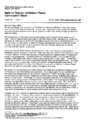
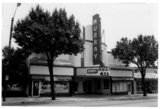
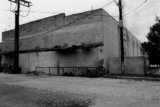
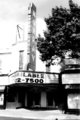
Show United States Department of the Interior National Park Service OMB NO 1020-0018, National Register of Historic Places Continuation Sheet Section No. 8 Page 1 Murray Theater. Murray. Salt Lake County. Utah Narrative Statement of Significance Built in 1938, the Murray Theater is significant under Criterion A and C as part of the multiple property nomination Historic Resources of Murray City. Under Criterion A, the building is significant for its association with the development of "Industrial and Commercial Buildings of Murray, 1869 1950." Movie theaters were important entertainment venues in Murray, particularly at the time the Murray Theater was built, following the Great Depression and on the eve of World War II. Under Criterion C, the theater is architecturally significant as a well-preserved example of an Art Moderne or Streamline Moderne style neighborhood theater. Although many theaters were built in Murray during this era, only three remain, and the Murray Theater is the only one that has not been altered from its original use as a movie theater. History Murray City lies eight miles south of Salt Lake City between Big and Little Cottonwood Creeks. It is named for Eli Murray, territorial governor from 1880 to 1886. Murray was settled in 1849 as part of the initial expansion south of Salt Lake City. Early residents of the area divided the grasslands into homesteads or parcels where they raised cattle and cereal grains. Most of the cattle provided dairy products, while wheat, corn, and some rye were grown to feed the family and animals. By 1880 the small town of scattered farmsteads boasted a small commercial business district located on State Street between Vine Street and 4800 South. Its central-valley location and plentiful water have allowed Murray to evolve from an agricultural to an industrial and suburban community. Construction of the Woodhull Brothers' smelter in 1869 initiated Murray's industrial history. Murray produced the first silver bars smelted in Utah in 1870. Business and commercial enterprise prospered along with the smelter industry. The smelters continued to dominate the local economy until 1950 when the ASARCO lead smelter, the city's largest employer, closed. Murray was praised as a shining example of cooperation between business, industry, and government in the early twentieth century; it was hailed for having its own water plant, lighting system, smelter, canning factory, flour mills and brick yards. Industries in Murray were hit hard by the 1930s depression. The smelters began to close in 1931, and major industry had all but disappeared by 1940. Murray City took advantage of the new federal projects, and the Works Project Administration (WPA) was responsible for many public improvements between 1930 and 1940. The city was well organized, and with clear goals officials actively sought federal money to refurbish public buildings as well as its twenty-two-acre park. Unfortunately, in the years between 1930 and 1950 the smelters, brickyards, and mills that fueled the industrial economy had either closed down or moved. Community Development & Social History The town of Murray was incorporated on November 25,1902; soon after several licensing and nuisance ordinances were passed. Saloons, dance halls, billiard parlors, and later bowling alleys and movie houses were denied operating permits on Sunday, and in some cases had business hours restricted. Slot machines and other forms of gambling were prohibited, while nickelodeons and pool tables were allowed; however the latter had expensive licenses associated with their operation. The new licensing and bonding requirements for saloons served to slow their growth |