| OCR Text |
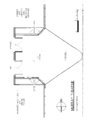
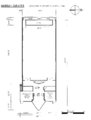
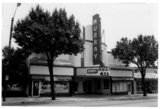
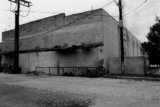
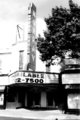
Show United States Department of the Interior National Park Service OMB NO 1021-0018, National Register of Historic Places Continuation Sheet Section No. 7 Page J_ Murray Theater. Murray. Salt Lake County. Utah Narrative Description The Murray Theater is a two-part block, Art Moderne or Streamline Moderne-style movie theater with concrete block walls and a flat roof. Located in the historic core of Murray City, the theater's marquee and tower serve as a landmark along heavily traveled State Street, a major arterial in the Salt Lake Valley. The two-part block is one of the most common historic commercial architectural types found in Utah. 1 The Art Moderne style was popular in Utah from 1930 to 1940. Also known as "Streamline Moderne"; its influences come from the International Style and the work of industrial designers.2 The Murray Theater exhibits several of these Art Moderne characteristics including a flat roof, smooth stuccoed walls with rounded corners, glass block windows, stainless steel panels, as well as stainless steel trim between ceramic tiles. The primary fagade of the theater is the west elevation; the central entrance on this fagade is flanked by commercial space on each side. Historically there was a ticket booth in the center of the entrance. Although this has been removed, its former location can easily be seen in the geometric pattern of the terrazzo floor. The terrazzo floor is in excellent condition; the colors used include shades of ochre yellow, dark rose and aqua; a popular combination in the 1930s. 3 The stainless steel entrance and exit doors remain, but three of the four doors are missing their pulls. The design of the pull is simple and geometric, reflecting the attention to detail displayed in the building. The marquee projects to the outer edge of the sidewalk; the underside is lined with fluorescent tubes. There are four stainless steel poster cases in the exterior lobby area. The tower of the theater has been slightly modified; fortunately, the overall size and shape, as well as the size and style of the letters remain the same. The original support structure for the tower consisted of two square metal vertical poles that appeared to rise from the marquee and curve around to the back of the parapet. Stabilizing the vertical poles were six horizontal poles, although these no longer remain. Additionally, the art deco style letters were secured to these horizontal members and appeared to float in between the two vertical poles.4 The tower sign was replaced, possibly in the late 1950s; the new sign is a pan type fabricated of solid metal. The new tower is also taller than the original; this may have been why a false front was installed on top of the parapet directly behind the sign. The new tower and flying fagade emphasize the vertically of the fagade and help the theater give an impression of being taller; this alteration was no doubt done in order to draw more attention from the rapidly increasing automobile traffic along State Street. On each side of the tower are tall glass block windows; each is three blocks wide and twelve blocks in height. The tower continues to draw attention to the theater and serve as a Murray landmark. In an effort to attract driver's attention, two new marquee signs were placed above the commercial storefront windows; a c.1958 photograph is the first to document this minor alteration. 5 More recently, in approximately 1980, a retractable canvas awning was installed over each of the two commercial storefront windows. Other than the awnings, the commercial storefronts appear to have had no alterations since 1938. The large, fixed glass windows are framed in stainless steel cases; the knee walls below are finished with six-inch by six-inch dark burgundy ceramic tile. There are two horizontal strips of stainless steel dividing the knee wall into thirds. At the time of this writing, some 1 Carter, Thomas, & Goss, Peter. Utah's Historic Architecture. 1847-1947.1991. \ Carter, Thomas, & Goss, Peter. Utah's Historic Architecture. 1847-1947.1991. ;? Valentine, Maggie. The Show Starts on the Sidewalk. 1994"] % Shipler photo 1940. 0 The exact dates of these changes are not known; the best estimates can be made from dated photographs. |