| OCR Text |
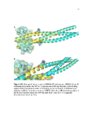
Show 6 the N- and C-peptide regions have high affinity for each other. The crystal structure of the post-fusion conformation of gp41 shows the formation of a sixhelix bundle. The trimeric N-peptides (N-trimer) form the central core of the bundle and the three C-peptides of gp41 fold back on the outside of the core in an anti-parallel manner to lie in the hydrophobic grooves formed between the Npeptides [7]. This structure is illustrated in Figure 1.1B. ! Our current model of HIV entry (shown in Figure 1.2) is based on the core post-fusion structure of gp41 and its similarity to the influenza virus Env postfusion conformation [8]. While little is known about the native conformation of gp160 before being cleaved to gp120 and gp41, it is likely that the interaction of gp120 with gp41 traps it in a metastable conformation and prevents it from refolding into the more stable six-helix bundle. The interaction of gp120 with CD4 induces large conformational changes in gp120 which, via its interaction with gp41, causes the insertion of the fusion peptide region of gp41 into the host cell membrane. This conformation exposing the N- and C-peptide regions, termed the pre-hairpin intermediate, is thought to be rather long-lived, on the minutes time scale. It isnʼt until gp120 interacts with a chemokine receptor (CCR5 or CXCR4) that its interaction with gp41 is loosened enough to allow the N- and Cpeptide regions to fold back along each other to form the six-helix bundle. The formation of this "trimer of hairpins" drives the viral and host cell membranes into close proximity to induce fusion of the two membranes and complete viral entry [8]. |