| OCR Text |
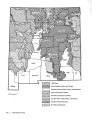
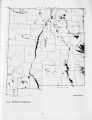
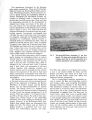
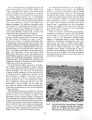
Show varies with elevation. Except in the high mountainous areas, most days are warm, and temperatures drop about 30 degrees Fahrenheit at night. The state has been divided into eight land resource areas (figure 1 ).6 Each of these has a unique combination of climate, vegetation, topography, and soils. One of the best known of these is the High Plains of the eastern part of the state. It is essentially an extensive plain in which the gently sloping, smooth-lying surface is broken only by a few drainage depressions and minor acreages with steep slopes and dune-like topography. Undulating dunelike relief prevails on lands occupied by extremely sandy soils, and steeply sloping lands consist chiefly of the breaks contiguous to the larger drainageways. The area has a gentle slope to the south and east. Elevations range from about 3,600 feet near Hobbs in the southeastern part to about 6,000 feet at the northwest boundary. The average annual precipitation is 15 to 18 inches. About 19 percent of the area is used as dry cropland; an additional 6 percent is irrigated; and about 75 percent is used as range. The topography is nearly level to gently sloping, and the soils are dominantly deep with loamy fine sand, fine sandy loam, and loam surface textures. Another land resource area in eastern New Mexico is the Pecos-Canadian Plains and Valleys. This area, which lies between the High Plains and the mountains, is drier, with an average of 13 to 16 inches of precipitation. It is dominated by gently undulating to rolling uplands interspersed with nearly level to gently sloping valleys, plains, and basins. Isolated mountains, mesas, and canyon walls have steep to very steep slopes. The soils on these rough, broken, and steeply sloping lands are dominantly very shallow to shallow. The soils on the gently undulating to rolling uplands are dominantly shallow and moderately deep, and have loam and clay loam surfaces. Those occurring in the valleys and basins or on the fans and terraces are typically deep with loam, clay loam, or silty clay loam surface layers. Fine-textured clayey and silty soils occur in the north and east-central part of this area where the parent materials of the soils are of shale origin. These soils vary from shallow to deep. Range is the predominant land use, and less than one percent of the land is irrigated. The New Mexico Plateaus and Mesas resource area, in the western part of the state, is somewhat similar, but it does not include extensive gently sloping to undulating and rolling uplands, plains, and basins. This area is characterized by broad mesas 6Maker, H.J. and H.L. Drcgne. Major land resource areas in New Mexico. N.M. State Univ. Agri. Experiment Station Res. Rpt. 147. and plateaus interspersed with numerous deep canyons and dry washes, steep picturesque mesa-breaks, canyon walls, and some lava flows and cinder cones. The valley lands along the major intermittent drainages are nearly level to very gently sloping. The wide variety of geologic formations and differences in climate and landscapes have contributed to the formation of many kinds of soil in this resource area. In the uplands and on the mesas, there are extensive moderately deep and deep soils, developing in moderately coarse to medium-textured materials of eolian origin as well as in materials forming residually from the underlying rocks. The soils in the valleys are dominantly nearly level to gently sloping, and have medium- to fine-textured surfaces. Shallow soils and rock outcrops are common on the steeply sloping mesa breaks, moderately steep and hilly uplands, and very steep canyon walls. The average annual precipitation ranges from 10 to about 17 inches. Most of the land is used as range, and less than one percent is irrigated. Two land resource areas are in the arid and semi-arid parts of the state. The San Juan River Valley, Mesas, and Plateaus resource area is located in the northwestern corner of the state, where the mean annual precipitation ranges from 7 to 10 inches. This is a moderately undulating to rolling plain with small mesas, steep hogback ridges, and nearly level to gently sloping bottomlands along the principal drainages. The soils are typically light-colored, low in organic matter, and have thin surface layers. Although the soil depth varies, there are extensive uplands of shallow and very shallow soils overlying shale and sandstone. There are also some relatively large acreages of moderately deep to deep soils forming in old alluvial and eolian sediments. Those in the valley bottoms are usually deep, weakly to distinctly stratified, and quite variable in texture. Most of the land is used for range and supports a sparse to fair cover of native vegetation, consisting of short and mid grasses and shrubs. The small acreages of irrigated land are dominantly in the valleys and on the terraces of the San Juan, La Plata, and Animas rivers. The Southern Desertic Basins, Plains, and Mountains resource area, in the southern part of the state, is similar to the San Juan River Valley, Mesas, and Plateaus area in that the climate is generally arid or semiarid. The average annual precipitation is 8 to 12 inches. The average annual temperature is slightly higher, however, and the growing season is longer. This resource area includes basin floors, gently sloping alluvial fans, flood plains of the Rio Grande and Pecos rivers, and desert mountains. The soils are quite variable, ranging from shallow stony soils with numerous |