| OCR Text |
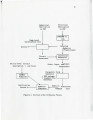
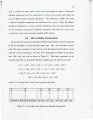
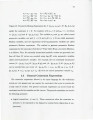
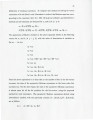
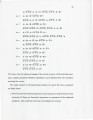
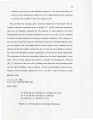
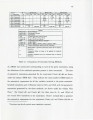
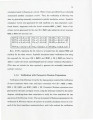
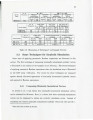
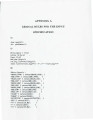
Show simulation-based verification of a circuit. These vectors are referred to as minimally instantiated symbolic simulation vectors. First, the verification of Minmax was done by generating minimally instantiated symbolic simulation vectors. Symbolic simulation vectors were generated for each condition of a data dependent conditional branch, augmented with the circuit invariant MINI < MAXI. Some of the sixteen vectors generated, for the case IN > MAXI (also taking the circuit invariant MINI < MAXI into account) are: MI N I o = [0,0, nl,nO] M IN I\ = [0,n2,0,n0] M I N I 2 = [0,n2,nl,0] M IN I 15 = [z3, z‘2, zl, 0] IN 0 = [l,*2,tl,*0] INi = [ l ,i2 , zl, z0] IN 2 = [1, z2, z 1, z0] I - [z'3, z'2, z l , 1] M A X I o = [0,1, ml , mO] MAX1\ = [0,n2, l,m0] M A X I 2 = [0, n2, n l , 1] M A X I\ s = [z3, z2, z 1,0] Here, M IN I i represents the zth vector to be loaded into the register MINI and similarly for the other vectors. Symbolic simulation-based verification time using this approach for the cases (IN > MAXI) and (MINI < IN < MAXI) are listed in Table 5.1 under the circuit name Minmax4 and the column "minimal instantiation.'1 (This does not include the time required to generate the minimally instantiated symbolic vectors.) 5.1.3 Verification with Parametric Boolean Expressions Verification of the Minmax circuit for the Ien operation required the verification of three transitions whose state and input constraints were IN < MINI < MAXI, MINI < IN < MAXI, and MINI < MAXI < IN. Parametric Boolean expressions were generated for the state and input vectors, using the technique outlined in the earlier chapters, satisfying these three constraints to verify the three transitions for Ien operation of the Minmax circuit. The use of parametric Boolean expressions for the verification of Minmax reduced the number of symbolic simulation vectors to 1 for each of the three transitions mentioned above, and it also reduced the verification |