| Title |
Serge Golian, Santa Ana, California, Utah Uranium Oral History Project |
| Alternative Title |
Serge Golian, Utah Uranium Oral History Project |
| Creator |
Golian, Serge |
| Contributor |
Engle, Clare |
| Date |
1970-06-28 |
| Date Digital |
2016-05-04 |
| Access Rights |
I acknowledge and agree that all information I obtain as a result of accessing any oral history provided by the University of Utah's Marriott Library shall be used only for historical or scholarly or academic research purposes, and not for commercial purposes. I understand that any other use of the materials is not authorized by the University of Utah and may exceed the scope of permission granted to the University of Utah by the interviewer or interviewee. I may request permission for other uses, in writing to Special Collections at the Marriott Library, which the University of Utah may choose grant, in its sole discretion. I agree to defend, indemnify and hold the University of Utah and its Marriott Library harmless for and against any actions or claims that relate to my improper use of materials provided by the University of Utah. |
| Subject |
Golian, Serge--Interviews; Radar--Military applications--United States; Radar--Research--United States; Nuclear weapons--Research--United States; Nuclear energy--United States |
| Keywords |
OSRD |
| Description |
Transcript (84 pages) of an interview by Clare Engle with Serge Golian, on June 28, 1970. From tape number UR-195 in the Utah Uranium Oral History Project |
| Abstract |
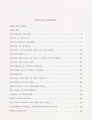
Clare Engle interviewed Golian in Santa Ana, California. Subjects: childhood and MIT, radar in Britain, jerry-rigged devices, Battle of Britain, the war in Germany and the Far East, paratroopers, German research on the A-bomb and rockets, cosmic ray research, atomic energy, submarines, nuclear testing in the Pacific, radiation shielding, Hiroshima bomb, dangers of reactors, public perception, the environment and the cold war, earthquake theory, waste disposal, isotopes for pasteurization, medical applications, agricultural applications, radioactive dating, neutron analysis and the U. S. Navy, future applications (84 pages). |
| Type |
Text |
| Format |
application/pdf |
| Extent |
19 pages, 57 pages |
| Language |
eng |
| Rights |
 |
| Rights Holder |
For further information please contact Special Collections, J. Willard Marriott Library, University of Utah at spcreference@lists.utah.edu or (801)581-8863 or 295 South 1500 East, 4th Floor, Salt Lake City, Utah 84112 |
| Scanning Technician |
Mazi Rakhsha |
| Conversion Specifications |
Original scanned with Kirtas 2400 and saved as 400 ppi uncompressed TIFF. PDF generated by Adobe Acrobat Pro X for CONTENTdm display |
| ARK |
ark:/87278/s6nw1r70 |
| Topic |
Radar--Military applications; Radar--Research; Nuclear weapons--Research; Nuclear energy |
| Genre |
oral histories (literary works) |
| Finding Aid |
http://archiveswest.orbiscascade.org/ark:/80444/xv03439/ |
| Setname |
uum_uoh |
| ID |
1055994 |
| Reference URL |
https://collections.lib.utah.edu/ark:/87278/s6nw1r70 |
| Title |
Page 86 |
| Format |
application/pdf |
| Setname |
uum_uoh |
| ID |
1055988 |
| OCR Text |
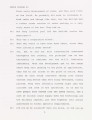
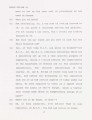
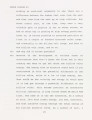
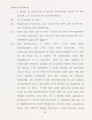
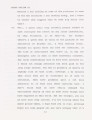
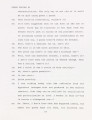
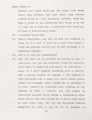
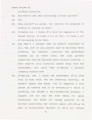
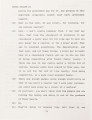
Show SERGE GOLIAN #2 SG: In a sense, because neutron analysis generally, one can analyze the presence of very small amounts of material if it is subject to capture by a neutron. If I want to know--every nucleus that gets captured by a neutron turns into another different kind of nucleus that can become radioactive. Now if I want to know if this particular kind of nucleus was there. I can bombard it with neutrons and I can identify that this was now a decaying something or other, a decaying aluminum say. Well, then I say, "Ah-ha," if I have this decaying aluminum identified by the rate of decrease with time, identified as being one particular i tern, then I can say there was a small amount of this material present, and that quantity can be very small; it's a very sensitive method. As a matter of fact, you may be surprised to know the neutron analysis is used in criminology, where you want to find out a trace of something in the hair or-- CE: Arsenic. SG: Arsenic or--a very sensitive method. As a matter of fact, my old stamping grounds, the Naval Research Laboratory, they do some of that for-- CE: The F.B.I., or someone? SG: For--well, yes, the F.B.I. Strangely enough there is 80 |
| Reference URL |
https://collections.lib.utah.edu/ark:/87278/s6nw1r70/1055988 |