| Title |
Topaz Oral History Project research files: News reports and articles (1942-1943) |
| Creator |
Gaeth, Arthur; Tagire, Larry; Howard, Harry Paxton; McWilliams, Carey; Rowland, Wilmina; Sekerak, Emil; Kinghorn, Glen; Ford, John Dixon |
| Contributor |
Taylor, Sandra C. |
| Publisher |
Digitized by J. Willard Marriott Library, University of Utah |
| Date |
1942; 1943 |
| Date Digital |
2014-03-25 |
| Access Rights |
I acknowledge and agree that all information I obtain as a result of accessing any oral history provided by the University of Utah's Marriott Library shall be used only for historical or scholarly or academic research purposes, and not for commercial purposes. I understand that any other use of the materials is not authorized by the University of Utah and may exceed the scope of permission granted to the University of Utah by the interviewer or interviewee. I may request permission for other uses, in writing to Special Collections at the Marriott Library, which the University of Utah may choose grant, in its sole discretion. I agree to defend, indemnify and hold the University of Utah and its Marriott Library harmless for and against any actions or claims that relate to my improper use of materials provided by the University of Utah. |
| Spatial Coverage |
Topaz Camp, Millard County, Utah, United States, http://sws.geonames.org/5548582/ |
| Subject |
Japanese Americans--Forced removal and internment, 1942-1945; Central Utah Relocation Center |
| Description |
Transcripts of articles published in various newspapers and journals, about the Japanese-American evacuation of World War II and the Topaz and other internment camps |
| Collection Number and Name |
1002; Topaz Oral Histories |
| Table of Contents |
Utah's strangest community: Topaz relocation camp, by Arthur Gaeth (typescript, 5 pages); Nisei U.S.A., by Larry Tagire (Typescript, 3 pages, transcript of a 1942 article); Letters from Japanese evacuated from the West Coast (typescript, 6 pages, from International Quarterly, Autumn 1942); Americans in concentration camps, by Harry Paxton Howard (Typescript, 8 pages, transcript of an article dating from the Summer of 1942); Moving the West-Coast Japanese, by Carey McWilliams (typescript, 5 pages, transcript of an article from the 1940s); Realism about relocation, by Wilmina Rowland (typescript, 2 pages, transcript of an article in the Intercollegian during World War II); Our Japanese are Americans, by Emil Sekerak (typescript, 5 pages, transcript of an article from the Antioch Alumni Bulletin, Feb. 1943); Japanese evacuation: policy and perspectives, by Carey McWilliams (typescript, 10 pages, transcript of an article from "Common Ground," Summer 1942); Copy of an editorial from I. G. Kinghorn, editor, from the Colorado State College periodical, Agriculture in the News, no. 90, from the week of October 19, 1942, discussing the Japanese relocation camp at Granada, Colorado (typescript, 6 pages); Inside Jap-Crow camp, by John Dixon Ford (typescript, 4 pages, transcript of an article dated April 17, 1943); Instructions for the individual request for repatriation, document from the Western Defense Command and Fourth Army (2 pages) |
| Type |
Text |
| Genre |
oral histories (literary works) |
| Format |
application/pdf |
| Language |
eng |
| Rights |
 |
| Relation |
http://archiveswest.orbiscascade.org/ark:/80444/xv97265 |
| Scanning Technician |
Matt Wilkinson |
| Conversion Specifications |
Original scanned with Kirtas 2400 and saved as 400 ppi uncompressed TIFF. PDF generated by Adobe Acrobat Pro 9 for CONTENTdm display |
| ARK |
ark:/87278/s6418d6s |
| Topic |
Japanese Americans; Evacuation and relocation of Japanese Americans (United States : 1942-1945); Central Utah Relocation Center |
| Relation is Part of |
Mitsugi M. Kasai Memorial Japanese American Archive |
| Setname |
uum_toh |
| ID |
1042729 |
| Reference URL |
https://collections.lib.utah.edu/ark:/87278/s6418d6s |
| Title |
Page 19 |
| Format |
application/pdf |
| Setname |
uum_toh |
| ID |
1042688 |
| OCR Text |
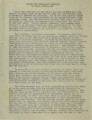
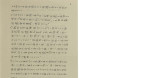
Show AMERICANS IN CONCENTRATION CAMPS-----5 not last another two weeks--thq.ugh the soldiers were not told this. On March 29 came the Army's order on the west coast, reversing ita previous orders and forbidding further voluntary evacuation. Members o£ General DeWitt's staff gave as a reason his fear lest the evacuees suffer physical violence on account of the strong hostility to them in many communities east of the First Military Area. Events on Bataan soon made clear why this fear developed at that particular moment. By April 10 several thousand sick and starving American prisoners were in Japanese hands--and several times that number of Filipino prisoners. If General Dellitt 's idea was really to protect Japanese-Americans from their white fellow-citizens, he must be given duecredit. It must be noted, however, that this laudable impulse does not seem to have developed until it became certain that the Japanese would soon have thousands of American prisoners in their hands--upon whom reprisals might be taken. The lynchings of yellow American would be no light matter if it were countered by shootings of white American prisoners by the Japanese. Japanese-Americans had to be protected--not for their own sakes, but for the protection of American soldiers in Japanese hands. The Japanese now had American hostages for our good behavior. There was, indeed, another way out. The government, with its thousands of official censors and propagandists, could have clamped down on the Hitler-like racial fury of the anti-Japanese press could have given wide circulation to the facts regarding Pearl Harbor and the splendid loyalty of most Americans of Japanese descent, could have emphasized Secretary Hull's official ~tatement that he expected the Japanese reply to his note of November 26 to be "war, 11 could have strssed the fact that Washington had notified Hawaii on November 27 that negotiations with Japan "had ended" and that an attack was to be expected at any time. But this would have gone counter to the official propaganda about uJap trachary,' and might not have helped war morale. So, instead, we slapped the ~Japs• into concentration camps--for the protection of American soldiers in Japanese hands. So our Army also got some ••prisoners"--and hostages. FILTH AND SQUALOR If the Army's aim was the protection of Japanese-Americans, this aim seems to have been forgotten as soon as the evacuees were got into the pleasantly named "reception centers" and ttassembly centers." They were treated as dangerous aliens, and their accommodation was of 'the worst. The Army \v.as in charge, and it was almost impossible to obtain permits to leave; the Army accused evacuees of "trying to escape {from "protection ) Ten thousand or more persons would be confin d to an area of less than a square miles, sometimes surrounded by barbed wire and always by armed guards. At Manzanar and some other centers the guards would not permit parcel~--soap, clothing, shoes, baby things--to be brought into the camp. For a long time such urgent necessities as goggles--to keep dust from the eyes in windy and semi-desert centers--could not be brought in. |
| Reference URL |
https://collections.lib.utah.edu/ark:/87278/s6418d6s/1042688 |