| Title |
Topaz Oral History Project research files: News reports and articles (1942-1943) |
| Creator |
Gaeth, Arthur; Tagire, Larry; Howard, Harry Paxton; McWilliams, Carey; Rowland, Wilmina; Sekerak, Emil; Kinghorn, Glen; Ford, John Dixon |
| Contributor |
Taylor, Sandra C. |
| Publisher |
Digitized by J. Willard Marriott Library, University of Utah |
| Date |
1942; 1943 |
| Date Digital |
2014-03-25 |
| Access Rights |
I acknowledge and agree that all information I obtain as a result of accessing any oral history provided by the University of Utah's Marriott Library shall be used only for historical or scholarly or academic research purposes, and not for commercial purposes. I understand that any other use of the materials is not authorized by the University of Utah and may exceed the scope of permission granted to the University of Utah by the interviewer or interviewee. I may request permission for other uses, in writing to Special Collections at the Marriott Library, which the University of Utah may choose grant, in its sole discretion. I agree to defend, indemnify and hold the University of Utah and its Marriott Library harmless for and against any actions or claims that relate to my improper use of materials provided by the University of Utah. |
| Spatial Coverage |
Topaz Camp, Millard County, Utah, United States, http://sws.geonames.org/5548582/ |
| Subject |
Japanese Americans--Forced removal and internment, 1942-1945; Central Utah Relocation Center |
| Description |
Transcripts of articles published in various newspapers and journals, about the Japanese-American evacuation of World War II and the Topaz and other internment camps |
| Collection Number and Name |
1002; Topaz Oral Histories |
| Table of Contents |
Utah's strangest community: Topaz relocation camp, by Arthur Gaeth (typescript, 5 pages); Nisei U.S.A., by Larry Tagire (Typescript, 3 pages, transcript of a 1942 article); Letters from Japanese evacuated from the West Coast (typescript, 6 pages, from International Quarterly, Autumn 1942); Americans in concentration camps, by Harry Paxton Howard (Typescript, 8 pages, transcript of an article dating from the Summer of 1942); Moving the West-Coast Japanese, by Carey McWilliams (typescript, 5 pages, transcript of an article from the 1940s); Realism about relocation, by Wilmina Rowland (typescript, 2 pages, transcript of an article in the Intercollegian during World War II); Our Japanese are Americans, by Emil Sekerak (typescript, 5 pages, transcript of an article from the Antioch Alumni Bulletin, Feb. 1943); Japanese evacuation: policy and perspectives, by Carey McWilliams (typescript, 10 pages, transcript of an article from "Common Ground," Summer 1942); Copy of an editorial from I. G. Kinghorn, editor, from the Colorado State College periodical, Agriculture in the News, no. 90, from the week of October 19, 1942, discussing the Japanese relocation camp at Granada, Colorado (typescript, 6 pages); Inside Jap-Crow camp, by John Dixon Ford (typescript, 4 pages, transcript of an article dated April 17, 1943); Instructions for the individual request for repatriation, document from the Western Defense Command and Fourth Army (2 pages) |
| Type |
Text |
| Genre |
oral histories (literary works) |
| Format |
application/pdf |
| Language |
eng |
| Rights |
 |
| Relation |
http://archiveswest.orbiscascade.org/ark:/80444/xv97265 |
| Scanning Technician |
Matt Wilkinson |
| Conversion Specifications |
Original scanned with Kirtas 2400 and saved as 400 ppi uncompressed TIFF. PDF generated by Adobe Acrobat Pro 9 for CONTENTdm display |
| ARK |
ark:/87278/s6418d6s |
| Topic |
Japanese Americans; Evacuation and relocation of Japanese Americans (United States : 1942-1945); Central Utah Relocation Center |
| Relation is Part of |
Mitsugi M. Kasai Memorial Japanese American Archive |
| Setname |
uum_toh |
| ID |
1042729 |
| Reference URL |
https://collections.lib.utah.edu/ark:/87278/s6418d6s |
| Title |
Page 15 |
| Format |
application/pdf |
| Setname |
uum_toh |
| ID |
1042684 |
| OCR Text |
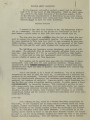
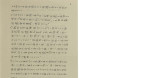
Show - AMERICANS IN CONCENTRATION CAMPS By Harry Paxton Howard Over 70,000 native Americans, citizens born, are now lodged in concentration camps in the American West, with no criminal charges of any kind against them. No court has fo~nd them guilty or any offense against American law; indeed, no formal indictment has ever been dravm up against them. It is acknowledged that the great majority of them are loyal, law-abiding Americans, true to the country o£ their birth. Some of them have given most useful assistance to the American government against enemy spies and other agents. Even in their present situation, most of them are trying bravely to make the best of things, and are willing to accept the government's explanation of military necessity. Vfuy are they there? First of all, because the United States is at war, and the Army has secured tremendous power in national affairs. The hapless citizens who have been deprived o£ their constitutional rights and constitutional protection have the misfortune to include among their ancestors persons of a non white country with which the United States is now at war. It is the "non white"· which must be emphasized. American citizens of German, Italian, Hungarian, Bulgarian, or Roumanian ancestry have not been legally discriminated against. It is only our citizens o£ Japanese ancestry who have been put into concentration camps. They are not ttwhi te. n They are "not to be. trusted.'" There are also so~e 40,000 enemy aliens' in the same camps. These aliens also are not "white." If they were ttwhite», the great majority of them would not be aliens at all. Most of them have been in this country over ,thirty years; their average age is sixty,three ye-ars. But they have not been permitted to become American citizens, as they are .. Asiatics." During the generation and more that they have been in this country, over a million Germans and Italians have entered the country and been naturalized as American citizens. German Nazis and Italian Fascists are "white" - whatever their politics. But American naturalization laws, as interpreted by the United States supreme court, deny the right of naturalization to Asiatics. So Asiatic innnigrants remain "aliens. n If we are at war with their homeland, they become "enemy aliens" -- including hundreds who fought in the American armed forces in the first world war1 They are "aliens•• only because America has refused them citizenship. ITALIAN-AMERICAN VS. JAPANESE-AMERICAN Along the eastern coast of the United States, where the number of Americans of Japanese ancestry is comparatively small, no concentration camps have been establish~d. From a military viewpoint, the· |
| Reference URL |
https://collections.lib.utah.edu/ark:/87278/s6418d6s/1042684 |