| Title |
Paul O. Huber, Salt Lake City, Utah: an interview by Winston P. Erickson, July 14, 2000 : Saving the Legacy tape nos. 69 and 70 |
| Alternative Title |
Paul O. Huber, Saving the legacy: an oral history of Utah's World War II veterans, ACCN 2070, American West Center, University of Utah |
| Creator |
Huber, Paul O., 1915-2014 |
| Contributor |
Erickson, Winston P., 1943-; University of Utah. American West Center |
| Publisher |
Digitized by J. Willard Marriott Library, University of Utah |
| Date |
2000-07-14 |
| Date Digital |
2015-12-16 |
| Access Rights |
I acknowledge and agree that all information I obtain as a result of accessing any oral history provided by the University of Utah's Marriott Library shall be used only for historical or scholarly or academic research purposes, and not for commercial purposes. I understand that any other use of the materials is not authorized by the University of Utah and may exceed the scope of permission granted to the University of Utah by the interviewer or interviewee. I may request permission for other uses, in writing to Special Collections at the Marriott Library, which the University of Utah may choose grant, in its sole discretion. I agree to defend, indemnify and hold the University of Utah and its Marriott Library harmless for and against any actions or claims that relate to my improper use of materials provided by the University of Utah. |
| Spatial Coverage |
Tunisia; Algeria; Morocco; Sicily, Italy;; France; Belgium; Germany; Salt Lake City, Salt Lake County, Utah, United States |
| Subject |
Huber, Paul O., 1915-2014--Interviews; Veterans--United States--Biography; World War, 1939-1945--Personal narratives, American; World War, 1939-1945--Military operations, American; World War, 1939-1945--Campaigns--Africa, North--Personal narratives, American; World War, 1939-1945--Campaigns--Europe, Northern--Personal narratives, American; World War, 1939-1945--Campaigns--France--Normandy--Personal narratives, American; Ardennes, Battle of the, 1944-1945--Personal narratives, American |
| Keywords |
D-Day; Battle of the Bulge; Nordhausen Concentration Camp |
| Description |
Transcript (51 pages) of an interview by Winston P. Erickson with Paul O. Huber on July 14, 2000. From tape numbers 69 and 70 in the "Saving the Legacy" Oral History Project |
| Collection Number and Name |
Accn2070, Saving the Legacy oral history project, 2001-2010 |
| Abstract |
Huber (b. 1915) recalls his boyhood in Salt Lake City. He graduated from the University of Utah with a BS in mechanical engineering. He was involved in the ROTC program, and reported to active duty in January 1941. He was a field artillery anti-tank officer, serving in Tunisia, Sicily, Algeria-French Morocco, Normandy, Northern France, the Ardennes, Central Europe, and in the Rhineland. Interviewed by Winston Erickson. 51 pages. |
| Type |
Text |
| Genre |
oral histories (literary works) |
| Format |
application/pdf |
| Extent |
51 pages |
| Language |
eng |
| Rights |
 |
| Scanning Technician |
Mazi Rakhsha |
| Conversion Specifications |
Original scanned with Kirtas 2400 and saved as 400 ppi uncompressed TIFF. PDF generated by Adobe Acrobat Pro X for CONTENTdm display |
| ARK |
ark:/87278/s66132cm |
| Topic |
Personal narratives--American; Veterans; World War (1939-1945); Ardennes, Battle of the (1944-1945) |
| Setname |
uum_slohp |
| ID |
1035358 |
| Reference URL |
https://collections.lib.utah.edu/ark:/87278/s66132cm |
| Title |
Page 20 |
| Format |
application/pdf |
| Setname |
uum_slohp |
| ID |
1035326 |
| OCR Text |
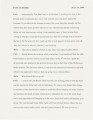
Show PAUL 0. HUBER J 14 2000 WIN: Some ofthemjumped? PAU: Yes. WIN: Were you aware of those who were shot mistakenly by American troops? PAU: Yes, we heard about it, the whole thing before we landed. WIN: Anti -aircraft guns were shooting down American planes as they were coming into a landing? PAU: Yes, and it was very definite. Nobody ever says that in the big books. If that had happened today, Patton would have been crucified. You know, it was terrible. What happened, as those planes came over, a lot of them were gliders. They had two planes gliding and the first plane started to get anti-aircraft. They just cut those gliders loose and they landed. There was glider after glider. The fields right near the beach all had telephone poles set up with barbed wire entanglements, and there was no way they could land. They would just go to pieces. You would see these things lying there with ten or twenty people inside dead and what was left of the fuselages. It was really bad. WIN: The U.S. hadn't coordinated everything yet. The military had a lot to learn. PAU: They had all kinds of things to learn. I mean, it was terrible. It was just like I said. Why couldn't they have told us, "Now, you are not going to have this. This is what you are going to have." Then we would have been prepared for what was coming. If the Germans knew and had any sense- WIN: If you'd had any opposition on that landing you would have been slaughtered. PAU: It would never have been a success. Now, as things went on, we got better. I mean, in Sicily, it was rough. The objective was Palermo, and that is where we headed. 20 |
| Reference URL |
https://collections.lib.utah.edu/ark:/87278/s66132cm/1035326 |