| Title |
Earl S. Jarrett, Nephi, Utah: an interview by Benjamin Bahlmann, November 7, 2002: Saving the Legacy tape no. 632 |
| Alternative Title |
Earl S. Jarrett, Saving the legacy: an oral history of Utah's World War II veterans, ACCN 2070, American West Center, University of Utah |
| Creator |
Jarrett, Earl S., 1925-2012 |
| Contributor |
Bahlmann, Benjamin J.; University of Utah. American West Center |
| Publisher |
Digitized by J. Willard Marriott Library, University of Utah |
| Date |
2002-11-07 |
| Date Digital |
2015-12-16 |
| Access Rights |
I acknowledge and agree that all information I obtain as a result of accessing any oral history provided by the University of Utah's Marriott Library shall be used only for historical or scholarly or academic research purposes, and not for commercial purposes. I understand that any other use of the materials is not authorized by the University of Utah and may exceed the scope of permission granted to the University of Utah by the interviewer or interviewee. I may request permission for other uses, in writing to Special Collections at the Marriott Library, which the University of Utah may choose grant, in its sole discretion. I agree to defend, indemnify and hold the University of Utah and its Marriott Library harmless for and against any actions or claims that relate to my improper use of materials provided by the University of Utah. |
| Spatial Coverage |
Philippines; Okinawa, Japan |
| Subject |
Jarrett, Earl S., 1925-2012--Interviews; Veterans--Utah--Biography; World War, 1939-1945--Personal narratives, American; World War, 1939-1945--Military operations, American; World War, 1939-1945--Campaigns--Pacific Area--Personal narratives, American; World War, 1939-1945--Campaigns--Japan--Okinawa Island--Personal narratives, American |
| Description |
Transcript (75 pages) of an interview by Benjamin Bahlmann with Earl S. Jarrett on November 7, 2002. From tape number 632 in the "Saving the Legacy" Oral History Project |
| Collection Number and Name |
Accn2070, Saving the Legacy oral history project, 2001-2010 |
| Abstract |
Jarrett (b. 1925) was born in Nephi, Utah, and had a rural childhood, working on his father's farm. There were eight children in his family, all in a small two room house with no electricity or running water. Mr. Jarrett married in March of 1944, knowing that he would probably have to go into the service. He began his military service in August of 1944. After basic training and training as a basic infantryman, he was sent to Leyte Island, The Philippines. He fought against almost no resistance. Next he went to Ie Shima, where again there wasn't much resistance and then to Okinawa where there was very strong resistance. He was wounded on his 30th day on Okinawa and evacuated to, first Hawaii and then to San Francisco, CA. He was separated from the service in September 1945. Mr. Jarrett goes into some detail about his reflections at the end of the war, and about actions he'd participated in. He was also affected by the war for many years. Interviewed by Benjamin Bahlmann. 75 pages. |
| Type |
Text |
| Genre |
oral histories (literary works) |
| Format |
application/pdf |
| Extent |
75 pages |
| Language |
eng |
| Rights |
 |
| Scanning Technician |
Mazi Rakhsha |
| Conversion Specifications |
Original scanned with Kirtas 2400 and saved as 400 ppi uncompressed TIFF. PDF generated by Adobe Acrobat Pro X for CONTENTdm display |
| ARK |
ark:/87278/s66995m1 |
| Topic |
Personal narratives--American; Veterans; World War (1939-1945) |
| Setname |
uum_slohp |
| ID |
1034517 |
| Reference URL |
https://collections.lib.utah.edu/ark:/87278/s66995m1 |
| Title |
Page 38 |
| Format |
application/pdf |
| Setname |
uum_slohp |
| ID |
1034478 |
| OCR Text |
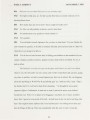
Show EARL . JARRETT MB R 7 2002 sergeant, they run back, he had a light field pack on bent over running th in mud and you could just see that machine gun tearing the material out of that. However they didn't hit him. They was shooting high and he was bent over trying to run. Well, I stayed there and I was the last one around there and then the little Japanese officer come out of the little wash hollering at the two guys on the machine gun. Course, I don't understand Japanese-ya, ya, ya, ya-all that. So I thought, now is the time for me to get out of here. So I beat it back to the rest, and I said to the sergeant-this one particular sergeant that really wasn't with our company, but he was a good guy-I said, "They're going to have a bonsai." I said, "They were off, this officer was out talking to these ... " You know, you couldn't see them plain, but he was down there a ways and they had stepped off. I hadn't seen anyone over there other than heard the fire. I said, "They're going to make a bonsai on us." He said, "Let's a bunch of us hit a line here." Well, we pulled the light machine guns down and the automatic weapons. So about six or eight of us hit a line there in the mud. Then when they moved toward us we knocked them down. I had a mortar light that close to my feet that was a dud and then I had one just off to the right in front of me that was a dud. It hit the mud and never went off. I think it was about the same type of thing that we was shooting. Maybe it was ours; I don't know. But they was throwing these mortars to wound a bunch and I lucked out of that deal. Didn't get a scratch. When they said, let's go-and I could really run-and I think I passed two-thirds of them, the whole damn company, before we got back to where we'd been the night before. But when we broke, we broke good. BB: So did they actually make an assault? ESJ: Yes, a few of them. But we mowed them down, what there was at that time. 37 |
| Reference URL |
https://collections.lib.utah.edu/ark:/87278/s66995m1/1034478 |