| Title |
Todd P. Smith, Salt Lake City, Utah: an interview by Becky B. Lloyd, August 5, 2004: Saving the Legacy tape no. 695 |
| Alternative Title |
Todd P. Smith, Saving the legacy: an oral history of Utah's World War II veterans, ACCN 2070, American West Center, University of Utah |
| Creator |
Smith, Todd P., 1919- |
| Contributor |
Lloyd, Becky B.; University of Utah. American West Center |
| Publisher |
Digitized by J. Willard Marriott Library, University of Utah |
| Date |
2004-08-05 |
| Date Digital |
2015-12-16 |
| Access Rights |
I acknowledge and agree that all information I obtain as a result of accessing any oral history provided by the University of Utah's Marriott Library shall be used only for historical or scholarly or academic research purposes, and not for commercial purposes. I understand that any other use of the materials is not authorized by the University of Utah and may exceed the scope of permission granted to the University of Utah by the interviewer or interviewee. I may request permission for other uses, in writing to Special Collections at the Marriott Library, which the University of Utah may choose grant, in its sole discretion. I agree to defend, indemnify and hold the University of Utah and its Marriott Library harmless for and against any actions or claims that relate to my improper use of materials provided by the University of Utah. |
| Spatial Coverage |
France; Germany |
| Subject |
Smith, Todd P., 1919- --Interviews; Veterans--United States--Biography; World War, 1939-1945--Personal narratives, American; World War, 1939-1945--Military operations, American; World War, 1939-1945--Campaigns--Europe, Northern--Personal narratives, American; World War, 1939-1945--Campaigns--France--Normandy--Personal narratives, American |
| Description |
Transcript (29 pages) of an interview by Becky B. Lloyd with Todd P. Smith on August 5, 2004. From tape number 695 in the "Saving the Legacy" Oral History Project |
| Collection Number and Name |
Accn2070, Saving the Legacy oral history project, 2001-2010 |
| Abstract |
Smith (b. 1919) grew up in Iowa, where he dropped out of school to join the Civilian Conservation Corps. He enlisted in the army in April 1942 and was assigned to the 90th Infantry Division, Company M. He trained in Nebraska, Texas, Louisiana, and the Mojave Desert. Landed at Utah Beach after D-Day and traveled across France into Germany. His job at regimental headquarters was filling out reports of soldiers missing, wounded, and killed. He was discharged in October 1945. Interviewed by Becky Lloyd. 29 pages. |
| Type |
Text |
| Genre |
oral histories (literary works) |
| Format |
application/pdf |
| Extent |
29 pages |
| Language |
eng |
| Rights |
 |
| Scanning Technician |
Mazi Rakhsha |
| Conversion Specifications |
Original scanned with Kirtas 2400 and saved as 400 ppi uncompressed TIFF. PDF generated by Adobe Acrobat Pro X for CONTENTdm display |
| ARK |
ark:/87278/s6wd62mw |
| Topic |
Personal narratives--American; Veterans; World War (1939-1945) |
| Setname |
uum_slohp |
| ID |
1034124 |
| Reference URL |
https://collections.lib.utah.edu/ark:/87278/s6wd62mw |
| Title |
Page 23 |
| Format |
application/pdf |
| Setname |
uum_slohp |
| ID |
1034117 |
| OCR Text |
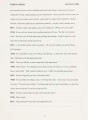
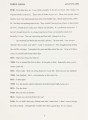
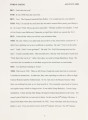
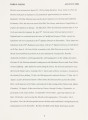
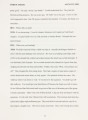
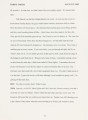
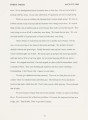
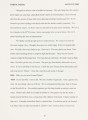
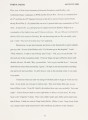
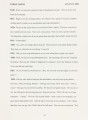
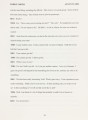
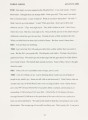
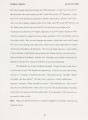
Show TODDP. MITH '2004 division headquarters or wherever. Sometimes we were with division h adquart r but mostly we were just up at regimental headquarters. They would take the records back to Army headquarters, I presume. I never did see Army headquarters. BEC: So wherever you were bivouacked then, in the morning, you would get up. If there was a set place, you would just all go in and work at your typewriter. If there wasn't an organized place, you'd just sit there in the dirt and type up your report? TOD: Yes. We never knew where we were. We didn't know if we were near the front lines or behind it or sometimes, even ahead of it. I remember one time a captain came along. I'd never seen him before. He said, "What are you guys doing up here?" I said, "Beats me. I don't know." He said, "It's a bad place to be." Then he left. I thought, "Gee, that was good news" (laughs). We were at Bastogne. We were part of the relief force sent up by Third Army. It was the Screaming Eagles (lOlst Airborne Division) who did the most work there. Our Third Army did a back track and went around. About that time, the weather cleared up and we gave the Germans a lot of misery. [Editor 's note: During the opening days of the Battle of the Bulge, the 1 01st Airborne Division was rushed into the area to bolster the sagging Allied lines and became surrounded at Bastogne. Patton pulled elements of Third Army out of their eastward drive south of the Bulge and sent them north to relieve the 1 01s1 • These forces reached Bastogne and broke the German siege on the day after Christmas, 1944.] So we went along day after day after day. We never knew whether each day was going to be our last day or not. We wound up just not thinking about it. I saw a lot of people in different conditions. We finally became sort of numb to it. I guess that's probably how we got used to it was by becoming numb to it. We didn't let it sink 23 |
| Reference URL |
https://collections.lib.utah.edu/ark:/87278/s6wd62mw/1034117 |