| Title |
Todd P. Smith, Salt Lake City, Utah: an interview by Becky B. Lloyd, August 5, 2004: Saving the Legacy tape no. 695 |
| Alternative Title |
Todd P. Smith, Saving the legacy: an oral history of Utah's World War II veterans, ACCN 2070, American West Center, University of Utah |
| Creator |
Smith, Todd P., 1919- |
| Contributor |
Lloyd, Becky B.; University of Utah. American West Center |
| Publisher |
Digitized by J. Willard Marriott Library, University of Utah |
| Date |
2004-08-05 |
| Date Digital |
2015-12-16 |
| Access Rights |
I acknowledge and agree that all information I obtain as a result of accessing any oral history provided by the University of Utah's Marriott Library shall be used only for historical or scholarly or academic research purposes, and not for commercial purposes. I understand that any other use of the materials is not authorized by the University of Utah and may exceed the scope of permission granted to the University of Utah by the interviewer or interviewee. I may request permission for other uses, in writing to Special Collections at the Marriott Library, which the University of Utah may choose grant, in its sole discretion. I agree to defend, indemnify and hold the University of Utah and its Marriott Library harmless for and against any actions or claims that relate to my improper use of materials provided by the University of Utah. |
| Spatial Coverage |
France; Germany |
| Subject |
Smith, Todd P., 1919- --Interviews; Veterans--United States--Biography; World War, 1939-1945--Personal narratives, American; World War, 1939-1945--Military operations, American; World War, 1939-1945--Campaigns--Europe, Northern--Personal narratives, American; World War, 1939-1945--Campaigns--France--Normandy--Personal narratives, American |
| Description |
Transcript (29 pages) of an interview by Becky B. Lloyd with Todd P. Smith on August 5, 2004. From tape number 695 in the "Saving the Legacy" Oral History Project |
| Collection Number and Name |
Accn2070, Saving the Legacy oral history project, 2001-2010 |
| Abstract |
Smith (b. 1919) grew up in Iowa, where he dropped out of school to join the Civilian Conservation Corps. He enlisted in the army in April 1942 and was assigned to the 90th Infantry Division, Company M. He trained in Nebraska, Texas, Louisiana, and the Mojave Desert. Landed at Utah Beach after D-Day and traveled across France into Germany. His job at regimental headquarters was filling out reports of soldiers missing, wounded, and killed. He was discharged in October 1945. Interviewed by Becky Lloyd. 29 pages. |
| Type |
Text |
| Genre |
oral histories (literary works) |
| Format |
application/pdf |
| Extent |
29 pages |
| Language |
eng |
| Rights |
 |
| Scanning Technician |
Mazi Rakhsha |
| Conversion Specifications |
Original scanned with Kirtas 2400 and saved as 400 ppi uncompressed TIFF. PDF generated by Adobe Acrobat Pro X for CONTENTdm display |
| ARK |
ark:/87278/s6wd62mw |
| Topic |
Personal narratives--American; Veterans; World War (1939-1945) |
| Setname |
uum_slohp |
| ID |
1034124 |
| Reference URL |
https://collections.lib.utah.edu/ark:/87278/s6wd62mw |
| Title |
Page 11 |
| Format |
application/pdf |
| Setname |
uum_slohp |
| ID |
1034105 |
| OCR Text |
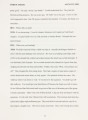
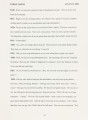
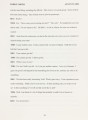
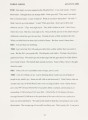
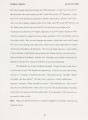
Show TODDP. MITH 5 2004 o in fact I was a reporter. We didn't go out and hunt for anybody. W didn t run fr m anybody either. I carried that M-1 and the portable typewriter. We used to do a lot of walking in this country. In Europe, we almost didn t walk at all. We rode a truck. We appreciated that. We were in the Third Army with General Patton. He was the guy who wanted to get out in front of everybody and usually did. We were right with them. As they used to say, we were in front of the artillery and behind the riflemen on the point so we had a lot of shells going overhead. So we were kind of in the middle of the advance without actually being a rifleman right out front. Our boss was a staff sergeant from service company and he said to me one day, "Do you want to get promoted?" I said, "Yes, what's the deal?'' He said, "Well, I can make you a staff sergeant." I said, "That would be pretty good." But he said, "I'd have to take it away from one of the riflemen up front." I said, "No, I don't want the promotion." So I just stayed where I was. I got to the point where I thought maybe this was a lucky break. I might survive this. We did survive it for the most part. Many of our boys didn't but many did. So, "What did you do in the war, Daddy?" I dug a lot of holes all over Europe. We were always happy about getting down into a hole, especially if there was a lot of racket up top. I went to the beach after we had landed. I had a terrible pain in the stomach right here. I thought, "I don't know whether I'm going to make this war or not." They took me back to the beach in a little old jeep without any lights on it at all in the dark. I saw these guys in the medical evacuation tents with all sorts of problems. I looked at them and I thought, boy, I don't feel bad at all with this little pain that I have. A doctor looked 11 |
| Reference URL |
https://collections.lib.utah.edu/ark:/87278/s6wd62mw/1034105 |