| Title |
William LaMonte Robison, Murray, Utah: an interview by Becky B. Lloyd, July 1, 2004: Saving the Legacy tape no. 675 |
| Alternative Title |
William LaMonte Robison, Saving the legacy: an oral history of Utah's World War II veterans, ACCN 2070, American West Center, University of Utah |
| Creator |
Robison, William LaMonte, 1920-2011 |
| Contributor |
Lloyd, Becky B.; University of Utah. American West Center |
| Publisher |
Digitized by J. Willard Marriott Library, University of Utah |
| Date |
2004-07-01 |
| Date Digital |
2015-12-16 |
| Access Rights |
I acknowledge and agree that all information I obtain as a result of accessing any oral history provided by the University of Utah's Marriott Library shall be used only for historical or scholarly or academic research purposes, and not for commercial purposes. I understand that any other use of the materials is not authorized by the University of Utah and may exceed the scope of permission granted to the University of Utah by the interviewer or interviewee. I may request permission for other uses, in writing to Special Collections at the Marriott Library, which the University of Utah may choose grant, in its sole discretion. I agree to defend, indemnify and hold the University of Utah and its Marriott Library harmless for and against any actions or claims that relate to my improper use of materials provided by the University of Utah. |
| Spatial Coverage |
Philippines; Japan |
| Subject |
Robison, William LaMonte, 1920-2011--Interviews; Veterans--United States--Biography; World War, 1939-1945--Personal narratives, American; World War, 1939-1945--Campaigns--Pacific Area--Personal narratives, American |
| Keywords |
Radar observation; Army Air Corps; Rescue operations; USS Indianapolis |
| Description |
Transcript (48 pages) of an interview by Becky B. Lloyd with Richard W. Johnson on June 3, 2004. From tape number 654 in the "Saving the Legacy" Oral History Project |
| Collection Number and Name |
Accn2070, Saving the Legacy oral history project, 2001-2010 |
| Abstract |
Mr. Robison was born May 31, 1920, in Salt Lake City, Utah. His father farmed in Rupert, Idaho. Mont worked as a bookkeeper before enlisting in the Army Air Corps in March 1944. He received basic training at Sheppard Field, Texas, and attended radio operator mechanics school at Scott Field, Illinois. He was sent to Biloxi, Mississippi, to train with PBYs and shipped to California to crew up with a rescue squad. He was then shipped to Luzon, Philippines. He discusses his experiences, inluding dropping lifeboats to survivors of the USS Indianapolis and flying with bombers to provide rescue, when necessary. He participated in occupation duty in Japan before his discharge in 1945. Mr. Robison became a licensed CPA and co-owned the firm of Robison, Hill & Company for over fifty years. Interviewed by Becky Lloyd. 30 pages. |
| Type |
Text |
| Genre |
oral histories (literary works) |
| Format |
application/pdf |
| Extent |
30 pages |
| Language |
eng |
| Rights |
 |
| Scanning Technician |
Mazi Rakhsha |
| Conversion Specifications |
Original scanned with Kirtas 2400 and saved as 400 ppi uncompressed TIFF. PDF generated by Adobe Acrobat Pro X for CONTENTdm display |
| ARK |
ark:/87278/s6jx0h00 |
| Topic |
Personal narratives--American; Veterans; World War (1939-1945) |
| Setname |
uum_slohp |
| ID |
1033188 |
| Reference URL |
https://collections.lib.utah.edu/ark:/87278/s6jx0h00 |
| Title |
Page 16 |
| Format |
application/pdf |
| Setname |
uum_slohp |
| ID |
1033173 |
| OCR Text |
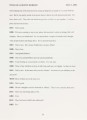
Show WILLIAM LAMONTE ROBI ON L 1 2004 lndianapoli was sunk by a Japanese submarine. [Editor ' note: At 12:14 a.m. on July 30, 1945, the heavy cruiser USS Indianapolis, CA-35, was torpedoed by a Japane e submarine in the Philippine Sea and sank in 12 minutes. Of 1,196 men on board, approximately 300 went down with the ship. The remainder, about 900 men, were left floating in shark-infested waters with no lifeboats except a couple of small rafts and most with no food or water. The ship was never missed and over the next few days the survivors, drifting in the water with the oil slick from the ship, were scattered over a large area. By the time the oil slick and the survivors were spotted by accident four days later, only 316 men were still alive.] All of our crew wasn't with us at that time. They were coming on a separate aircraft. Anyway, when we landed we were approached by an emergency unit there. I don't know what type of emergency unit it was, but we were approached by them and told that the Indianapolis had been sunk by a Japanese submarine and the survivors needed rescuing. We didn't have the lifeboat on the bottom of the airplane at that time. It hadn't been converted yet. So we just loaded a whole bunch of life rafts in the bomb bay doors and flew out over the Pacific to the location of the survivors and dropped the rafts to the men in the water. BEC: So you were there when those men were still in the water? MON: Oh, yes. They were just scattered all over the place. We were dropping the life rafts to them. We were there at the bomb bay doors pushing the life rafts out. The rafts were, of course, wrapped up and when they hit the water they'd inflate and open up. I don't know how many we dropped, but there were close to thirty life rafts in the bomb bay doors. Anyway, we participated in the rescue of many of those who were saved from the Indianapolis. Of course we received some citations for that. 16 |
| Reference URL |
https://collections.lib.utah.edu/ark:/87278/s6jx0h00/1033173 |