| Title |
James Clare Lamph, Bountiful, Utah: an interview by Becky B. Lloyd, March 4 & 9, 2004: Saving the Legacy tape no. 646 |
| Alternative Title |
James Clare Lamph, Saving the legacy: an oral history of Utah's World War II veterans, ACCN 2070, American West Center, University of Utah |
| Creator |
Lamph, James Clare, 1921-2013 |
| Contributor |
Lloyd, Becky B.; University of Utah. American West Center |
| Publisher |
Digitized by J. Willard Marriott Library, University of Utah |
| Date |
2004-03-04; 2004-03-09 |
| Date Digital |
2015-12-16 |
| Access Rights |
I acknowledge and agree that all information I obtain as a result of accessing any oral history provided by the University of Utah's Marriott Library shall be used only for historical or scholarly or academic research purposes, and not for commercial purposes. I understand that any other use of the materials is not authorized by the University of Utah and may exceed the scope of permission granted to the University of Utah by the interviewer or interviewee. I may request permission for other uses, in writing to Special Collections at the Marriott Library, which the University of Utah may choose grant, in its sole discretion. I agree to defend, indemnify and hold the University of Utah and its Marriott Library harmless for and against any actions or claims that relate to my improper use of materials provided by the University of Utah. |
| Spatial Coverage |
Sacramento, Sacramento County, California, United States; Algeria; Tunisia; Italy; England, United Kingdom; Okinawa, Japan |
| Subject |
Lamph, James Clare, 1921-2013--Interviews; Veterans--United States--Biography; World War, 1939-1945--Personal narratives, American; World War, 1939-1945--Military operations, American; World War, 1939-1945--Campaigns--Africa, North--Personal narratives, American; World War, 1939-1945--Campaigns--Europe, Southern--Personal narratives, American |
| Keywords |
Great Depression; Army Air Corps; Cooks; Bakers; Parachutes; Thermite bombs; Forest fires; Ghost of Ramsbury Hill; Submarines |
| Description |
Transcript (125 pages) of an interview by Becky B. Lloyd with James Clare Lamph on March 4 and 9, 2004. From tape number 706 in the "Saving the Legacy" Oral History Project |
| Collection Number and Name |
Accn2070, Saving the Legacy oral history project, 2001-2010 |
| Abstract |
Lamph (b. 1921) enlisted in the Army Air Corps in January 1940. He attended cook and bakers school in Presidio, San Francisco. He served in Portland, Oregon, and at Westover Field, Massachusetts, prior to sailing on the USS West Point, which landed in Liverpool, England. He was sent to Ramsbury Air Base and reassigned as a parachute rigger. He also built gliders. He served in Italy, and the British West Indies before being demobilized at Fort Douglas, Utah. Interviewed by Becky Lloyd. 125 pages. |
| Type |
Text |
| Genre |
oral histories (literary works) |
| Format |
application/pdf |
| Extent |
125 pages |
| Language |
eng |
| Rights |
 |
| Scanning Technician |
Mazi Rakhsha |
| Conversion Specifications |
Original scanned with Kirtas 2400 and saved as 400 ppi uncompressed TIFF. PDF generated by Adobe Acrobat Pro X for CONTENTdm display |
| ARK |
ark:/87278/s6224wtv |
| Topic |
Personal narratives--American; Veterans; World War (1939-1945) |
| Setname |
uum_slohp |
| ID |
1032817 |
| Reference URL |
https://collections.lib.utah.edu/ark:/87278/s6224wtv |
| Title |
Page 112 |
| Format |
application/pdf |
| Setname |
uum_slohp |
| ID |
1032803 |
| OCR Text |
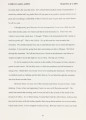
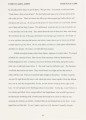
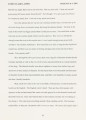
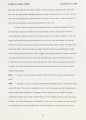
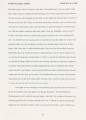
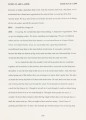
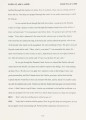
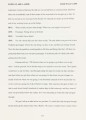
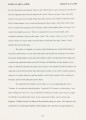
Show JAM CLARE L MPH R 9,2004 we were lined up to go because when we got off the ship we got on board a train. By th way, the Japanese have the best trains in the world. They're on time. They run to the second. You can set your watch when they start, and set your watch to when they stop. They're that accurate. So we went traveling down the country; went from Tokyo clear down to almost the southern end of Kyushu, which is the middle island. I thought, oh, I marked that lighthouse down. When we stopped there was a beacon light, and I remember marking it down on the maps. I said, "Oh, so that's where we're at." I knew exactly where we was at when I saw that beacon flash the first time, I knew. I had marked that one on the map. The place we stopped was a place called Iwakumi, just south of Hiroshima. It was just a stones throw, so one of the trips that I had to take was to get up to see where the atomic bomb landed. I even sat in the shadow where a civilian had been sitting on a concrete step when the bomb went off. Of course, it killed him, but his shadow, even today, is still there. Because the steps were saved as a war memorial, and his shadow, the steps that was hit by the atomic blast had turned to glass it was so hot it melted concrete, and now it's a glass stairway, and the shadow is still in the concrete. So I was there in Iwakuni, and we toured the place down there. We supported, the reason we went there, is we was supporting the war in Vietnam. It was quite an interesting place. I enjoyed it. Of course, at a later time, I was able to bring my wife over. I was in Okinawa for thirteen months, and I stayed in Japan for I think it was almost four years. It was a long tour of duty. I got to learn some Japanese. I finally became in charge of the parachute shop over there. The Japanese that worked for us could speak English, a little English, but I did learn enough Japanese to 112 |
| Reference URL |
https://collections.lib.utah.edu/ark:/87278/s6224wtv/1032803 |