| Title |
Wayne Bowen, Springville, Utah: an interview by Benjamin Bahlmann, October 25, 2001: Saving the Legacy tape no. 370 |
| Alternative Title |
Wayne Bowen, Saving the legacy: an oral history of Utah's World War II veterans, ACCN 2070, American West Center, University of Utah |
| Creator |
Bowen, Wayne, 1924-2002 |
| Contributor |
University of Utah. American West Center; Bahlmann, Benjamin J. |
| Publisher |
Digitized by J. Willard Marriott Library, University of Utah |
| Date |
2001-10-25 |
| Date Digital |
2015-12-16 |
| Access Rights |
I acknowledge and agree that all information I obtain as a result of accessing any oral history provided by the University of Utah's Marriott Library shall be used only for historical or scholarly or academic research purposes, and not for commercial purposes. I understand that any other use of the materials is not authorized by the University of Utah and may exceed the scope of permission granted to the University of Utah by the interviewer or interviewee. I may request permission for other uses, in writing to Special Collections at the Marriott Library, which the University of Utah may choose grant, in its sole discretion. I agree to defend, indemnify and hold the University of Utah and its Marriott Library harmless for and against any actions or claims that relate to my improper use of materials provided by the University of Utah. |
| Spatial Coverage |
New Caledonia |
| Subject |
Bowen, Wayne, 1924-2002--Interviews; Veterans--Utah--Biography; World War, 1939-1945--Personal narratives, American; World War, 1939-1945--Military operations, American; World War, 1939-1945--Campaigns--Pacific Area--Personal narratives, American; Peleliu, Battle of, Palau, 1944; World War, 1939-1945--Campaigns--Japan--Okinawa Island--Personal narratives, American |
| Keywords |
Marine Corps |
| Description |
Transcript (80 pages) of an interview by Benjamin Bahlmann with Wayne Bowen on October 25, 2001. From tape number 370 in the "Saving the Legacy" Oral History Project |
| Collection Number and Name |
Accn2070, Saving the Legacy oral history project, 2001-2010 |
| Abstract |
Bowen was born on 15 September 1924 in Cokeville, Wyoming. He recalls his childhood and schooling, Marine boot camp in San Diego (1943), and further training at Camp Elliott. He was shipped to New Caledonia (New Hebrides) as part of the 1st Marine Division, 1st Marine Regiment, 2nd Battalion, E Company. He participated in battles on Peleliu and Okinawa, where he was wounded and evacuated to Hawaii, then Oakland. Discharged November 1945. Interviewed by Benjamin Bahlmann. 80 pages. |
| Type |
Text |
| Genre |
oral histories (literary works) |
| Format |
application/pdf |
| Extent |
80 pages |
| Language |
eng |
| Rights |
 |
| Scanning Technician |
Mazi Rakhsha |
| Conversion Specifications |
Original scanned with Kirtas 2400 and saved as 400 ppi uncompressed TIFF. PDF generated by Adobe Acrobat Pro X for CONTENTdm display |
| ARK |
ark:/87278/s6sf4z98 |
| Topic |
Personal narratives--American; Veterans; World War (1939-1945); Peleliu, Battle of (Palau : 1944) |
| Setname |
uum_slohp |
| ID |
1032691 |
| Reference URL |
https://collections.lib.utah.edu/ark:/87278/s6sf4z98 |
| Title |
Page 17 |
| Format |
application/pdf |
| Setname |
uum_slohp |
| ID |
1032627 |
| OCR Text |
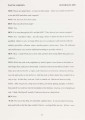
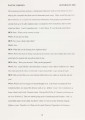
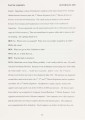
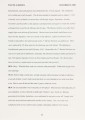
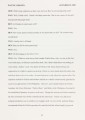
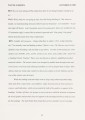
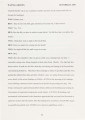
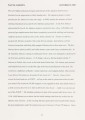
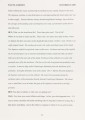
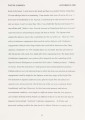
Show W YNE J. BOWEN T B R2 2 BEN: Was it at Camp Elliott- or was it in boot camp - where y u tart d t l arn h w to use the BAR and other such weapons? WAY: Oh, that was all in boot camp. BEN: That was all in boot camp? WAY: Yes. BEN: You went through the M-1 and the BAR? They showed you various weapons? WAY: Yes. And that's where ... the rifle range, where we had to do that to see how we qualified. [Editor's note: At Camp Elliot men were assigned to and trained in Marine infantry specialties: rifleman, sniper, machine gunner, mortar man. Some, like radiomen and artillerymen, were sent for additional training in specialty schools.] BEN: Okay. Camp Elliott just a short while and then from Camp Elliott they gave you orders to .. . WAY: Well, they took us by nighttime, by truck (I guess it was) down to the harbor in San Diego there, and put us aboard ship. I had never been on one before. [Editor 's note: Ships generally left harbor at night, under blackout to avoid enemy submarines lurking near the approaches to the harbors.] And they took us below deck; they wouldn't let us stay on top. So then they went out. Until we started out, I had never been on a ship before. After we got out, a long ways out there, just barely getting daylight, we looked back and all we could see was the mountains in the distance. Anyway, a lot of people got sick. I think I did myself, seasick; I had never been on a ship before. BEN: Sure. WAY: We was on the ship, if I remember, eighteen days. It was just kind of weaving back and forth so that the Japs wouldn't find us-we hoped like anyway. [Editor 's note: 17 |
| Reference URL |
https://collections.lib.utah.edu/ark:/87278/s6sf4z98/1032627 |