| Title |
Israel C. Wilson, Clearfield, Utah: an interview by Winston Erickson, July 9, 2002: Saving the Legacy tape no. 462 |
| Alternative Title |
Israel C. Wilson, Saving the legacy: an oral history of Utah's World War II veterans, ACCN 2070, American West Center, University of Utah |
| Creator |
Wilson, Israel C., 1922- |
| Contributor |
Erickson, Winston P., 1943-; University of Utah. American West Center |
| Publisher |
Digitized by J. Willard Marriott Library, University of Utah |
| Date |
2002-07-09 |
| Date Digital |
2015-12-16 |
| Access Rights |
I acknowledge and agree that all information I obtain as a result of accessing any oral history provided by the University of Utah's Marriott Library shall be used only for historical or scholarly or academic research purposes, and not for commercial purposes. I understand that any other use of the materials is not authorized by the University of Utah and may exceed the scope of permission granted to the University of Utah by the interviewer or interviewee. I may request permission for other uses, in writing to Special Collections at the Marriott Library, which the University of Utah may choose grant, in its sole discretion. I agree to defend, indemnify and hold the University of Utah and its Marriott Library harmless for and against any actions or claims that relate to my improper use of materials provided by the University of Utah. |
| Spatial Coverage |
Hawaii; Philippines; New Britain Island, Papua New Guinea; Guadalcanal, Solomon Islands |
| Subject |
Wilson, Israel C., 1922- --Interviews; Veterans--Utah--Biography; World War, 1939-1945--Personal narratives, American; World War, 1939-1945--Military operations, American; World War, 1939-1945--Campaigns--Pacific Area--Personal narratives, American |
| Keywords |
National Guard; Field artillery battalion |
| Description |
Transcript (31 pages) of an interview by Winston Erickson with Israel C. Wilson on July 9, 2002. From tape number 462 in the "Saving the Legacy" Oral History Project |
| Collection Number and Name |
Accn2070, Saving the Legacy oral history project, 2001-2010 |
| Abstract |
Wilson (b. 1922) grew up in Bountiful, Utah. He discusses his family and his schooling years. In his senior year of high school he joined the Utah National Guard and was inducted into federal service in March 1941. He trained in San Louis Obispo, California before being sent to the Hawaiian Islands on the SS Maui. Mr. Wilson served in the First Battalion, 145th Field Artillery Regiment, later changed to the 213th Field Artillery Battalion, 40th Infantry Division. He describes his service time on the Hawaiian Islands. His group moved from the Hawaiian Islands to New Britain, then on to the Philippians. Mr. Wilson was discharged in August 1945. Interviewed by Winston Erickson. 31 pages. |
| Type |
Text |
| Genre |
oral histories (literary works) |
| Format |
application/pdf |
| Extent |
31 pages |
| Language |
eng |
| Rights |
 |
| Scanning Technician |
Mazi Rakhsha |
| Conversion Specifications |
Original scanned with Kirtas 2400 and saved as 400 ppi uncompressed TIFF. PDF generated by Adobe Acrobat Pro X for CONTENTdm display |
| ARK |
ark:/87278/s6jt1shc |
| Topic |
Personal narratives--American; Veterans; World War (1939-1945) |
| Setname |
uum_slohp |
| ID |
1032395 |
| Reference URL |
https://collections.lib.utah.edu/ark:/87278/s6jt1shc |
| Title |
Page 16 |
| Format |
application/pdf |
| Setname |
uum_slohp |
| ID |
1032378 |
| OCR Text |
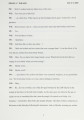
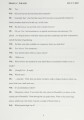
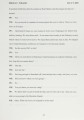
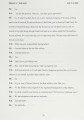
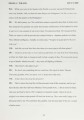
Show IRA LC. WIL 0 IW: Well more staging than training. More staging g tting r ady t g . WE: What would be a typical day's activities for you at that p int. 20 2 IW: At that point? Well, up at five o'clock or six o clock in the morning. W w uld g on hikes or we would go out and get on ships, landing craft and go to aneth r part of th island and set up command posts and practice. Then come back to our quarters at night. WE: So you'd go around and actually practice an invasion? IW: Yes, we'd actually practice invasions. WE: Beach landings? IW: Beach landings, that's right. WE: So, a typical day, then, was training and being ready for an invasion of New Ireland? Did you eventually go to New Ireland? IW: No. Later on, with the ... one of the things that happened was General Yamamoto was on his way to Rubal when aircraft intercepted his plane and shot him down. And it left a quarter of a million Japanese on New Britain at Rubal. They were there underessentially, with MacArthur and his control of the seas had shut off their shipping lanes. They had no way of getting off of the island or getting any place else. In the meantime, about the time we went to Guadalcanal, the First Marine Division landed on Cape Gloucester on New Britain, and they started moving up. They'd moved up about twenty miles and established a perimeter. They couldn't go any further because of the weather. Well, in the meantime, they needed to be relieved, so they took us from Guadalcanal, moved us over to Cape Gloucester on New Britain. New Britain is about a five hundred mile long island, maybe fifty miles wide at the widest, and we moved up that island to about midway, established a perimeter line, and secured that 15 |
| Reference URL |
https://collections.lib.utah.edu/ark:/87278/s6jt1shc/1032378 |