| Title |
Grant J. Harris, Spanish Fork, Utah: an interview by Benjamin Bahlmann, January 26, 2001: Saving the Legacy tape nos. 521, 522 & 523 |
| Alternative Title |
Grant J. Harris, Saving the legacy: an oral history of Utah's World War II veterans, ACCN 2070, American West Center, University of Utah |
| Creator |
Harris, Grant J., 1922-2013 |
| Contributor |
University of Utah. American West Center; Bahlmann, Benjamin J. |
| Publisher |
Digitized by J. Willard Marriott Library, University of Utah |
| Date |
2001-01-26 |
| Date Digital |
2015-12-16 |
| Access Rights |
I acknowledge and agree that all information I obtain as a result of accessing any oral history provided by the University of Utah's Marriott Library shall be used only for historical or scholarly or academic research purposes, and not for commercial purposes. I understand that any other use of the materials is not authorized by the University of Utah and may exceed the scope of permission granted to the University of Utah by the interviewer or interviewee. I may request permission for other uses, in writing to Special Collections at the Marriott Library, which the University of Utah may choose grant, in its sole discretion. I agree to defend, indemnify and hold the University of Utah and its Marriott Library harmless for and against any actions or claims that relate to my improper use of materials provided by the University of Utah. |
| Spatial Coverage |
Hawaii; Ulithi, Caroline Islands; Okinawa, Japan; Japan |
| Subject |
Harris, Grant J., 1922-2013--Interviews; Veterans--Utah--Biography; World War, 1939-1945--Personal narratives, American; World War, 1939-1945--Naval operations, American; World War, 1939-1945--Aerial operations, American; World War, 1939-1945--Campaigns--Pacific Area--Personal narratives, American; Bomber pilots--Biography |
| Description |
Transcript (104 pages) of an interview by Benjamin Bahlmann with George W. Jenkins on January 26, 2001. From tape numbers 521, 522, and 523 in the "Saving the Legacy" Oral History Project |
| Collection Number and Name |
Accn2070, Saving the Legacy oral history project, 2001-2010 |
| Abstract |
Harris (b. 1922) discusses his childhood, family life, and schooling in Utah. He enlisted in the Navy in January 1942 and was assigned to the V5 flight program associated with the College of Eastern Utah. After additional flight training at Los Alamitos, Corpus Christie, and Cape May, he took carrier landing training and was assigned to the USS Essex VBF-83 Fighter Group. Haris describes combat duties and flights in detail. Interviewed by Benjamin Bahlmann. 104 pages. |
| Type |
Text |
| Genre |
oral histories (literary works) |
| Format |
application/pdf |
| Extent |
104 pages |
| Language |
eng |
| Rights |
 |
| Scanning Technician |
Mazi Rakhsha |
| Conversion Specifications |
Original scanned with Kirtas 2400 and saved as 400 ppi uncompressed TIFF. PDF generated by Adobe Acrobat Pro X for CONTENTdm display |
| ARK |
ark:/87278/s6sb67t1 |
| Topic |
Personal narratives--American; Veterans; World War (1939-1945); Military operations, Naval--American; Military operations, Aerial--American; Bomber pilots |
| Setname |
uum_slohp |
| ID |
1031524 |
| Reference URL |
https://collections.lib.utah.edu/ark:/87278/s6sb67t1 |
| Title |
Page 89 |
| Format |
application/pdf |
| Setname |
uum_slohp |
| ID |
1031507 |
| OCR Text |
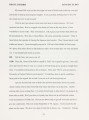
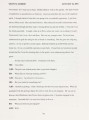
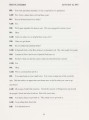
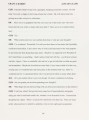
Show GRANT J. HARRIS J R 26 2001 GJH: No, we aw it from a distance. We flew over the damage by the fir bombing that they'd conducted in the Tokyo area. Oh, that wa deva tation, mile after mile of it. Finally, the night we started back aboard the Essex, somebody down in the ewing section-they call it the sail-locker-had devised a big long red white and blue banner that stretched out, I guess, for a hundred feet or so. [Brief interruption as wife leaves room]. Before, we flew the American flag in the daytime but at night, we didn't light up anything. But that night, they turned all the lights on that great big huge banner that floated out behind us. The wind was whipping it from fore to aft. It was a beautiful thing. I felt patriotic. Before that time, my efforts were to stay alive and do what I could do against the Japanese. But then I finally could see, "Hey, this great country that I'm a part of has done it, and I'm a part of it!" That flag looked so pretty flying that night, lit up against the darkness, that huge red, white and blue banner. BB: You bring up an interesting point there. Was there a time that, where previously you'd been flying as an individual or for just your group, you finally could see you were part of a huge effort?" GJH: I could finally see the totality of it, yes. BB: It was first survival and then suddenly, once it was over, you could see the bigger cause of the thing. GJH: Yes, I was one of thousands of people who had been doing and suffering. BB: Did you stay for the actual signing of the surrender on the USS Missouri? GJH: We flew around it. If you see pictures of the ceremonies, you'll see a few hundred planes in the air at the time. I was one of them, a little flyspeck somewhere on the film. 88 |
| Reference URL |
https://collections.lib.utah.edu/ark:/87278/s6sb67t1/1031507 |