| Title |
Floren Bennion "Nails" Nelson, Layton, Utah: an interview by Becky B. Lloyd, July 15, 2006: Saving the Legacy tape no. 762-763 |
| Alternative Title |
Floren Bennion "Nails" Nelson, Saving the legacy: an oral history of Utah's World War II veterans, ACCN 2070, American West Center, University of Utah |
| Creator |
Nelson, Nails (Floren Bennion), 1921-2007 |
| Contributor |
Lloyd, Becky B.; University of Utah. American West Center |
| Publisher |
Digitized by J. Willard Marriott Library, University of Utah |
| Date |
2006-07-15 |
| Date Digital |
2015-12-16 |
| Access Rights |
I acknowledge and agree that all information I obtain as a result of accessing any oral history provided by the University of Utah's Marriott Library shall be used only for historical or scholarly or academic research purposes, and not for commercial purposes. I understand that any other use of the materials is not authorized by the University of Utah and may exceed the scope of permission granted to the University of Utah by the interviewer or interviewee. I may request permission for other uses, in writing to Special Collections at the Marriott Library, which the University of Utah may choose grant, in its sole discretion. I agree to defend, indemnify and hold the University of Utah and its Marriott Library harmless for and against any actions or claims that relate to my improper use of materials provided by the University of Utah. |
| Spatial Coverage |
Korea; Chinese; Vietnam |
| Subject |
Nelson, Nails (Floren Bennion), 1921-2007--Interviews; Veterans--United States--Biography; World War, 1939-1945--Personal narratives, American; World War, 1939-1945--Aerial operations, American; Korean War, 1950-1953--Personal narratives, American; Vietnam War, 1961-1975--Personal narratives, American; Bomber pilots--Biography |
| Keywords |
Army Air Corps |
| Description |
Transcript (53 pages) of an interview by XinterviewerX with Floren Bennion "Nails" Nelson on July 15, 2006. From tape numbers 762 and 763 in the "Saving the Legacy" Oral History Project |
| Collection Number and Name |
Accn2070, Saving the Legacy oral history project, 2001-2010 |
| Abstract |
Nelson (b. 1921) describes his childhood in Salt Lake City, Utah. He attended the University of Utah, where he was a lineman on the football team. He joined the Army Air Corps in June 1942 and trained on the B-26 ("Widow maker") prior to being transferred to P-51 fighters. He flew four combat missions and was assigned to the 322 Fighter Group of the 8th Air Force. He spent one year in the occupation forces in Germany before his discharge in 1947. He joined the Utah Air National Guard. His unit was activated and sent to Korea, where he flew fifty three combat missions. He also served in Vietnam as commander of the 13th Bomb Squadron, flying one hundred thirteen combat missions. He received the Silver Star, the Bronze Star, and numerous other personal and unit citations. He retired from the military in October 1969. Interviewed by Becky Lloyd. 53 pages. |
| Type |
Text |
| Genre |
oral histories (literary works) |
| Format |
application/pdf |
| Extent |
53 pages |
| Language |
eng |
| Rights |
 |
| Scanning Technician |
Mazi Rakhsha |
| Conversion Specifications |
Original scanned with Kirtas 2400 and saved as 400 ppi uncompressed TIFF. PDF generated by Adobe Acrobat Pro X for CONTENTdm display |
| ARK |
ark:/87278/s68s6rzv |
| Topic |
Personal narratives--American; Veterans; World War (1939-1945); Military operations, Aerial--American; Bomber pilots; Korean War (1950-1953); Vietnam War (1961-1975) |
| Setname |
uum_slohp |
| ID |
1031090 |
| Reference URL |
https://collections.lib.utah.edu/ark:/87278/s68s6rzv |
| Title |
Page 15 |
| Format |
application/pdf |
| Setname |
uum_slohp |
| ID |
1031051 |
| OCR Text |
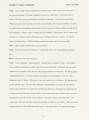
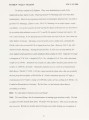
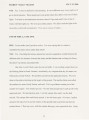
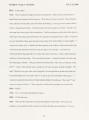
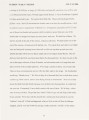
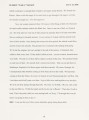
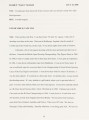
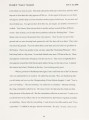
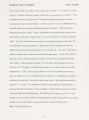
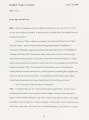
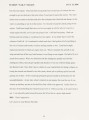
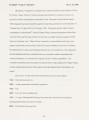
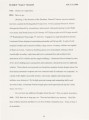
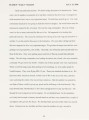
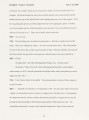
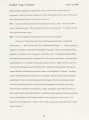
Show FL RE " AIL " LO J 1 200 BE : o after you took all that training in the U you flew yourself v r th r ? NAI: I picked up an aircraft in Sacramento and I flew that over to Japan. They w r doing some atomic test work at Kwajalein at the time. So it was quite a hop. From Sacramento, we went to Honolulu. That was the first leg of the journey and the longest one. That was about twenty-four, twenty-five hundred miles. I went from Honolulu to I believe, Johnson Island. From there I went, I believe, to Wake Island. I can't recall the route I would have taken had they not been doing some test work with the H-bombs down at Kwajalein. From there, I detoured around and went to Iwo Jima. I landed at lwo Jima and from Iwo Jima, I flew into Tokyo. So to get the aircraft over there doing all that island-hoping, I was almost thirty-days getting that aircraft over there, jumping from one island to another. BEC: You kept the same aircraft the whole time, and landed it there? NAI: Yes. BEC: How many people were on your crew? NAI: We had three, a pilot, a navigator, and one gunner. We had two versions of that aircraft. It had a hard-nose that had eight fifty-caliber machine guns in the nose. We had another version that had a navigator up in the nose area. He was the bombardier. On many occasions, we had that hard-nose. A lot of our work was interdiction work. We were mainly shooting up rolling stock at night, the enemy trucks, locomotives and and other vehicles that were coming from North Korea, moving supplies down to the thirtyeighth parallel. If you'll recall Korea on the map, it looks very much like Florida hanging out there. The thirty-eighth parallel actually was our bomb line. Everything south of the thirty-eighth parallel was South Korea and everything north was the combat zone. The 15 |
| Reference URL |
https://collections.lib.utah.edu/ark:/87278/s68s6rzv/1031051 |