| Title |
Nick Lopez, Salt Lake City, Utah: an interview by John C. Worsencroft, October 6, November 23, December 17, and December 29, 2009: Saving the Legacy tape nos. IA-10, IA-25, , IA-27, and IA-28 |
| Alternative Title |
Nick Lopez, Saving the legacy: an oral history of Utah's World War II veterans, ACCN 2070, American West Center, University of Utah; Nick Lopez, Salt Lake City, Utah: an interview by John C. Worsencroft, November 23, 2009: Saving the Legacy tape no. IA-25 |
| Creator |
Lopez, Nick, 1965- |
| Contributor |
Worsencroft, John C., 1981-; University of Utah. American West Center |
| Publisher |
Digitized by J. Willard Marriott Library, University of Utah |
| Date |
2009-10-06; 2009-11-23; 2009-12-17; 2009-12-29 |
| Date Digital |
2015-12-16 |
| Access Rights |
I acknowledge and agree that all information I obtain as a result of accessing any oral history provided by the University of Utah's Marriott Library shall be used only for historical or scholarly or academic research purposes, and not for commercial purposes. I understand that any other use of the materials is not authorized by the University of Utah and may exceed the scope of permission granted to the University of Utah by the interviewer or interviewee. I may request permission for other uses, in writing to Special Collections at the Marriott Library, which the University of Utah may choose grant, in its sole discretion. I agree to defend, indemnify and hold the University of Utah and its Marriott Library harmless for and against any actions or claims that relate to my improper use of materials provided by the University of Utah. |
| Spatial Coverage |
Saudi Arabia; Kuwait; Iraq |
| Subject |
Lopez, Nick, 1965- --Interviews; Veterans--Utah--Biography; Persian Gulf War, 1991--Personal narratives, American; Iraq War, 2003-2011--Personal narratives, American |
| Description |
Transcript (44, 31, 48, 33 pages) of four interviews by John C. Worsencroft with Nick Lopez on October 6, November 23, December 17, and December 29, 2009. From tape numbers IA-10, IA-25, IA-27, and IA-28 in the "Saving the Legacy" Oral History Project |
| Collection Number and Name |
Accn2070, Saving the Legacy oral history project, 2001-2010 |
| Abstract |
Lopez (b.1965) was born and raised in Utah. His family has a strong military tradition, and he always wanted to be a Marine. After graduating high school in 1983 Nick began to have legal and financial problems that first drove him to Columbus, Ohio, and then into the Marine Corps. He talks about his experience in boot camp on Parris Island and how he was going to make something of his life. He graduated as a heavy equipment operator and was stationed at Fort Leonard Wood, Missouri. His switch to the Marine Corps Reserve was made to spend more time with his kids but he found that he was not keeping himself busy enough so he went back to active duty in time for Desert Storm in August, 1990. His unit flew into Saudi Arabia where they spent eight months working an average of ten hours a day supplying other units for Operation Desert Shield. He explains the chaotic nature of the first gulf war from his vantage points in Saudi Arabia and Kuwait. Nick talks about the patriotic American pandemonium during his return home. Soon after his return, he was promoted to Staff Sergeant and looked into becoming a Drill Instructor. For Drill Instructor training, he went back to Parris Island to face an even more intense boot camp. He didn't care much for his position after training and also began to have serious marital problems. In an attempt to save his marriage he chose not to reenlist and instead joined the 1457th Army National Guard unit in Murray, Utah. Quickly frustrated by the dynamics of the Army National Guard, Nick decided to switch to the Marine Corps Reserve with Charlie Company at the rank of Gunnery Sergeant. During the Utah winter Olympics in 2002, Nick decided to switch to Fox Company as a 1st Sergeant. Nick discusses the initial problems with communication, rumors, and disputes between officers. He recalls feeling like his unit was often short of supplies simply because it was a Reserve battalion. In addition, he describes the problems he experienced with the embedded Japanese journalist in his unit. He describes the combat his unit encountered, the effect combat had on his Marines, and the basic strategy his unit took approaching Baghdad. Furthermore, Nick explains the dynamics of the chain of command and his opinion on the state of Iraq today along with how it has changed since he was there. He discusses returning home and the medical problems his unit experienced, particularly PTSD symptoms. Interviewed by John C. Worsencroft. 160 pages. |
| Type |
Text |
| Genre |
oral histories (literary works) |
| Format |
application/pdf |
| Extent |
160 pages |
| Language |
eng |
| Rights |
 |
| Scanning Technician |
Mazi Rakhsha |
| Conversion Specifications |
Original scanned with Kirtas 2400 and saved as 400 ppi uncompressed TIFF. PDF generated by Adobe Acrobat Pro X for CONTENTdm display |
| ARK |
ark:/87278/s6767hd0 |
| Topic |
Personal narratives--American; Veterans; Persian Gulf War (1991); Iraq War (2003-2011) |
| Setname |
uum_slohp |
| ID |
1030682 |
| Reference URL |
https://collections.lib.utah.edu/ark:/87278/s6767hd0 |
| Title |
Page 85 |
| Format |
application/pdf |
| Setname |
uum_slohp |
| ID |
1030606 |
| OCR Text |
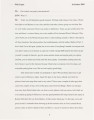
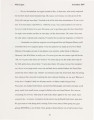
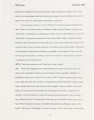
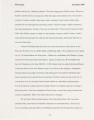
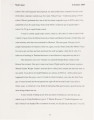
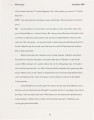
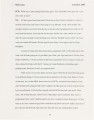
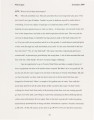
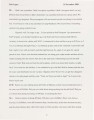
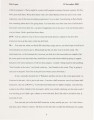
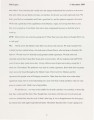
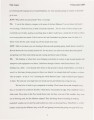
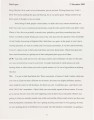
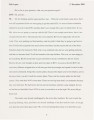
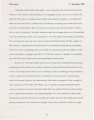
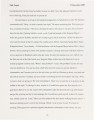
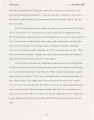
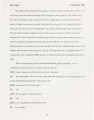
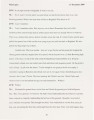
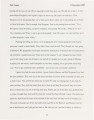
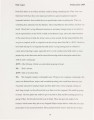
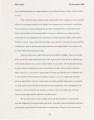
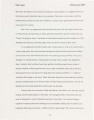
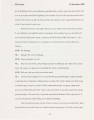
Show Nick Lopez 17 c mb r 2009 you do your own sandbags." There was word that the sandbags were pushed off the back f the trucks in many cases, basically fill your own sandbags. So that was the kind of bullshit that we took all the time as a Reserve battalion. It went really fast. All of the sudden the ammo showed up. The company gunnys were busy trying to split it up. There wasn't enough. Again we got the leftovers. Of the twelve-I can't remember, twelve or thirteen-trucks that we had, we had only one [WAV2, -3:28] weapon, and it was a Martin 19 that would only fire one round at a time and had to be unjammed after each round, so it was basically a one-shot deal. It looked good up there, but it didn 't work. Our machine guns were given, I think, two belts of ammo each, so our 240s only had two belts of ammo. I think our SA Ws were a little bit better than that, but our heavy guns didn't have much of anything. Our [WAV2, -3:59] communication plan wasn't there. We didn't have all the smoke or all the flares or all that stuff for the signal plan. We didn't have any of that. Matter of fact, I think I had, just for casualty evac, we had green smoke to bring in a helicopter. I think I had two within ours out of the whole thing. Hand grenades, I think we got one for seventy-five Marines. So we didn't have one for everybody. I think we had seventy-five hand grenades. Ammo was scarce. So that kind of stuff was just what we had; we don't get anymore. Of course, we all raised hell about it; there was nothing we could do about it. We loaded it and off we went. We went up to the staging area, I think it was north of where we were originally at, sat in a big barren place with tens of thousands of other Marines and equipment waiting to cross over. At that point, we just sat and waited some more. We waited for a long period of time to the point that I think we were keeping busy and because there was a threat, like a SCUD threat or whatever, we decided there was a call to dig a shallow fighting hole, shelter hole, and that was done. The Marines just kind of sat in the trucks. Some slept, 7 |
| Reference URL |
https://collections.lib.utah.edu/ark:/87278/s6767hd0/1030606 |