| Title |
Mark Douglas Lamb, Ogden, Utah: an interview by Winston P. Erickson, August 20, 2005: Saving the Legacy tape no. 735 |
| Alternative Title |
Mark Douglas Lamb, Saving the legacy: an oral history of Utah's World War II veterans, ACCN 2070, American West Center, University of Utah |
| Creator |
Lamb, Mark Douglas, 1956- |
| Contributor |
Erickson, Winston P., 1943-; University of Utah. American West Center |
| Publisher |
Digitized by J. Willard Marriott Library, University of Utah |
| Date |
2005-08-20 |
| Date Digital |
2015-12-16 |
| Access Rights |
I acknowledge and agree that all information I obtain as a result of accessing any oral history provided by the University of Utah's Marriott Library shall be used only for historical or scholarly or academic research purposes, and not for commercial purposes. I understand that any other use of the materials is not authorized by the University of Utah and may exceed the scope of permission granted to the University of Utah by the interviewer or interviewee. I may request permission for other uses, in writing to Special Collections at the Marriott Library, which the University of Utah may choose grant, in its sole discretion. I agree to defend, indemnify and hold the University of Utah and its Marriott Library harmless for and against any actions or claims that relate to my improper use of materials provided by the University of Utah. |
| Spatial Coverage |
Crete; Panama |
| Subject |
Lamb, Mark Douglas, 1956- --Interviews; Veterans--United States--Biography; United States--Air Force--Biography; Panama--History--American Invasion, 1989--Personal narratives, American |
| Keywords |
Veterinarians; Food inspection; Operation Just Cause |
| Description |
Transcript (39 pages) of an interview by Winston P. Erickson with Mark Douglas Lamb on August 20, 2005. From tape number 735 in the "Saving the Legacy" Oral History Project |
| Collection Number and Name |
Accn2070, Saving the Legacy oral history project, 2001-2010 |
| Abstract |
Mr. Lamb was born on September 24, 1956, in Mt. Pleasant, Utah. He discusses his schooling and growing up years. He joined the Air Force in December 1974 and took basic training at Lackland Air Force Base in Texas. He received veterinary technician training at Shepherd Air Force Base in Wichita Falls, Texas for 26 weeks. He was then sent to Goodfellow AFB in San Angelo, Texas, first as a food inspector, later as facilities inspector, and finally caring for small animals. He was then sent to Iraklion Air Station on Crete for 2 years as a master sergeant caring for animals. From there, he was sent to Carswell AFB in Fort Worth, Texas, where he switched to human care. He served in Panama with the 24th Medical Group and was on duty during Operation Just Cause to depose Manuel Noriega. His final assignment was at Hill AFB as superintendent of the aerospace medicine squadron. He ending rank was as Master Sergeant. Interviewed by Winston P. Erickson. 39 pages. |
| Type |
Text |
| Genre |
oral histories (literary works) |
| Format |
application/pdf |
| Extent |
39 pages |
| Language |
eng |
| Rights |
 |
| Scanning Technician |
Mazi Rakhsha |
| Conversion Specifications |
Original scanned with Kirtas 2400 and saved as 400 ppi uncompressed TIFF. PDF generated by Adobe Acrobat Pro X for CONTENTdm display |
| ARK |
ark:/87278/s66m58wf |
| Topic |
Personal narratives--American; Veterans; Airmen; American Invasion of Panama (1989) |
| Setname |
uum_slohp |
| ID |
1030096 |
| Reference URL |
https://collections.lib.utah.edu/ark:/87278/s66m58wf |
| Title |
Page 22 |
| Format |
application/pdf |
| Setname |
uum_slohp |
| ID |
1030088 |
| OCR Text |
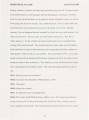
Show MARK DOUGLA LAMB 20,20 hear gunfire and bombs going off and stuff. We were All right! We w r h oting and hollering and everything. We thought, "If we go downstairs, we have a cov red patio and we can watch it." So we we're sitting down there smoking cigarettes and drinking our sodas and watching the gunfire and stuff going off around us. Finally, we decided that it probably wasn't too good of an idea to be sitting around outside watching the war. So we went back inside. But about this time, they came and grabbed me and said, "Hey, we need you to be an ambulance driver. We've got some injuries." So me and two other guys went and got flak jackets and helmets. We grabbed an ambulance. We had to drive in blackout conditions. There were no lights. We got out to the .. .I'd driven the main road between the main gate and the main base so that even without lights I knew the road and I could see where I was going. I got down towards the end and it was really dark and I couldn't see anything. I thought, "I've got to tum on the lights to see where I'm going." I flashed the lights on and they'd set up barricades out by the main gate and I was about two inches from hitting one of them. I thought, "Okay." So I got over to the Marine Corps base where they had the casualties. We went to go through the main gate there and a young Marine came up and I said, "We're here to get your casualties." He said, "Yes, one's got a broken back." They hadn't given me the extent of his injuries. I was just told to go pick him up over at Pier One. About this time, I felt an M-16 barrel laying on my shoulder. One of his compadres had come up to make sure I wasn't an unfriendly. It dawned on me he was waiting for the sign and counter sign. I said, "I apologize, they didn't tell me the sign or 22 |
| Reference URL |
https://collections.lib.utah.edu/ark:/87278/s66m58wf/1030088 |