| Title |
Kenneth Butler, February 23. 2004, Salt Lake City, Utah: an interview by Frances Merrill |
| Alternative Title |
Kenneth Butler, Saving the legacy: an oral history of Utah's World War II veterans, ACCN 2070, American West Center, University of Utah |
| Creator |
Butler, Kenneth, 1923-2010 |
| Contributor |
Merrill, Frances; University of Utah. American West Center |
| Publisher |
Digitized by J. Willard Marriott Library, University of Utah |
| Date |
2004-02-23 |
| Date Digital |
2015-12-16 |
| Access Rights |
I acknowledge and agree that all information I obtain as a result of accessing any oral history provided by the University of Utah's Marriott Library shall be used only for historical or scholarly or academic research purposes, and not for commercial purposes. I understand that any other use of the materials is not authorized by the University of Utah and may exceed the scope of permission granted to the University of Utah by the interviewer or interviewee. I may request permission for other uses, in writing to Special Collections at the Marriott Library, which the University of Utah may choose grant, in its sole discretion. I agree to defend, indemnify and hold the University of Utah and its Marriott Library harmless for and against any actions or claims that relate to my improper use of materials provided by the University of Utah. |
| Spatial Coverage |
China |
| Subject |
Butler, Kenneth, 1923-2010--Interviews; Veterans--United States--Biography; World War, 1939-1945--Personal narratives, American; World War, 1939-1945--Aerial operations, American; World War, 1939-1945--Campaigns--Asia--Personal narratives, American; Radio, Military; Radio operators--Biography |
| Description |
Transcript (20 pages) of an interview by Frances Merrill with Kenneth Butler on February 23, 2004. Part of the "Saving the Legacy" Oral History Project |
| Collection Number and Name |
Accn2070, Saving the Legacy oral history project, 2001-2010 |
| Abstract |
Butler (b. 1923) was drafted in 1942. He had worked at Hill Air Force Base repairing radio equipment, so he was assigned to the Air Force and sent to California, then to school in Madison, Wisconsin. He served in the China-Burma-India theater of operations working in the control tower. Interviewed by Frances Merrill. 20 pages. |
| Type |
Text |
| Genre |
oral histories (literary works) |
| Format |
application/pdf |
| Extent |
20 pages |
| Language |
eng |
| Rights |
 |
| Scanning Technician |
Mazi Rakhsha |
| Conversion Specifications |
Original scanned with Kirtas 2400 and saved as 400 ppi uncompressed TIFF. PDF generated by Adobe Acrobat Pro X for CONTENTdm display |
| ARK |
ark:/87278/s6cn961t |
| Topic |
Personal narratives--American; Veterans; World War (1939-1945); Military operations, Aerial--American; Radio, Military; Radio operators |
| Setname |
uum_slohp |
| ID |
1029703 |
| Reference URL |
https://collections.lib.utah.edu/ark:/87278/s6cn961t |
| Title |
Page 14 |
| Format |
application/pdf |
| Setname |
uum_slohp |
| ID |
1029695 |
| OCR Text |
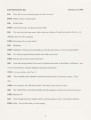
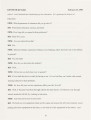
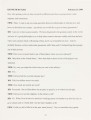
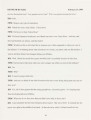
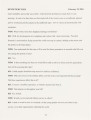
Show KENNETH BUTLER February 2 , 2004 FHM: Do you have any photographs that the American government would be inter t din fr m your time in the service; something they don't already have? KB: When I had a camera in China, and I tried to develop my own pictures, they all came out not too good; very grainy. So I don't have anything that would be really good. FHM: Did you keep a personal diary while you were there? KB: No, I was lucky. My mother saved all the letters that I wrote home. And so I just, a year ago, took all the letters and put them in chronological order. I read the letters, and that reminded me of the things that I did. And then I just wrote down and made a history of my time in the war. FHM: Do you think that's unusual that a mother would do that, or do you think all the mothers did that? KB: Oh, I think a lot of them did. FHM: Okay. Could you say something about the soldiers you served with, and the officers that you served with? What was your opinion of them? KB: Well, we just had one lieutenant that was in charge of our group, and he was all right. There were not too many in the Army Airways Communication there, and they were all very good. I enjoyed them all. Some of them-we came home together on the boat, and so we were together as we left the disembarkation center. FHM: Do you recall the day that your service ended? KB: January 31, 1946. FHM: And where was it that you were discharged? KB: We took the boat home. 13 |
| Reference URL |
https://collections.lib.utah.edu/ark:/87278/s6cn961t/1029695 |