| Title |
Alfred Robert Matern, February 16, 2004, Salt Lake City, Utah: an interview by Frances Merrill |
| Alternative Title |
Alfred Robert Matern, Saving the legacy: an oral history of Utah's World War II veterans, ACCN 2070, American West Center, University of Utah |
| Creator |
Matern, Alfred Robert, 1923- |
| Contributor |
Merrill, Frances; University of Utah. American West Center |
| Publisher |
Digitized by J. Willard Marriott Library, University of Utah |
| Date |
2004-02-16 |
| Date Digital |
2015-12-16 |
| Access Rights |
I acknowledge and agree that all information I obtain as a result of accessing any oral history provided by the University of Utah's Marriott Library shall be used only for historical or scholarly or academic research purposes, and not for commercial purposes. I understand that any other use of the materials is not authorized by the University of Utah and may exceed the scope of permission granted to the University of Utah by the interviewer or interviewee. I may request permission for other uses, in writing to Special Collections at the Marriott Library, which the University of Utah may choose grant, in its sole discretion. I agree to defend, indemnify and hold the University of Utah and its Marriott Library harmless for and against any actions or claims that relate to my improper use of materials provided by the University of Utah. |
| Spatial Coverage |
England, United Kingdom; France |
| Subject |
Matern, Alfred Robert, 1923- --Interviews; Veterans--United States--Biography; World War, 1939-1945--Personal narratives, American; World War, 1939-1945--Military operations, American; Chemical warfare--United States--History--20th century |
| Description |
Transcript (22 pages) of an interview by Frances Merrill with Alfred Robert Matern on February 16, 2004. Part of the "Saving the Legacy" Oral History Project |
| Collection Number and Name |
Accn2070, Saving the Legacy oral history project, 2001-2010 |
| Abstract |
Matern (b. 1923) was drafted into the army in May 1943 and attended basic training at Camp Callan. He was stationed at Twyford, England, and later served at Bretel Friara Creamery in France. He received the bronze star prior to his discharge in July 1945. Interviewed by Frances Merrill. 22 pages. |
| Type |
Text |
| Genre |
oral histories (literary works) |
| Format |
application/pdf |
| Extent |
22 pages |
| Language |
eng |
| Rights |
 |
| Scanning Technician |
Mazi Rakhsha |
| Conversion Specifications |
Original scanned with Kirtas 2400 and saved as 400 ppi uncompressed TIFF. PDF generated by Adobe Acrobat Pro X for CONTENTdm display |
| ARK |
ark:/87278/s6sr12h5 |
| Topic |
Personal narratives--American; Veterans; World War (1939-1945); Chemical warfare |
| Setname |
uum_slohp |
| ID |
1029621 |
| Reference URL |
https://collections.lib.utah.edu/ark:/87278/s6sr12h5 |
| Title |
Page 8 |
| Format |
application/pdf |
| Setname |
uum_slohp |
| ID |
1029605 |
| OCR Text |
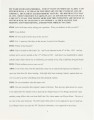
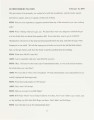
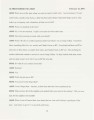
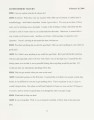
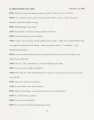
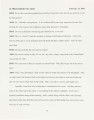
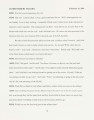
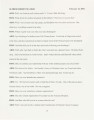
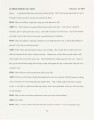
Show ALFRED ROBERT MATERN February 16, 2004 look at the markings. Usually on the bombs there would be stamped as to a letter f someplac where the bomb was manufactured. And headquarters would always be in a hurry to get this information which would be passed on to SHAFE Headquarters. And they would give it to the air corps to bomb the place where they'd manufactured these things. So, we were always interested in the fresh bombs that were newly dropped. FHM: How did you pass that information on? ARM: I didn't pass it on. My company commander received all the information, and had it typed, and passed it on. He may have done it by telephone. However, lots of times he would personally go to SHAFE Headquarters in London. And when we were in France he would go to SHAFE Headquarters which was at Versailles near Paris. Most of the personnel and noncom's were married men, and they had all the rank. So, there was just a few of us as privates. I was the youngest one in the company, and that was a reason why I maintained my rank as private. Even though most of us shared about the same responsibilities, some of the fellows in the unit were assigned to be photographers. And we had a toxicology department where we had mice and rats to experiment with, as far as agents such as mustard gas and lewisite, and all those types of things. We had our own glassblower that made glass equipment that we needed for the lab. And, so, we were kind of a very independent unit as far as operations go. But it didn't seem to make a whole lot of difference if you were a private, a PFC, a corporal, or a sergeant. We were assigned various duties, and we changed all the time; such as guard duty. We would run about four hour shifts twice a night. We would have about four, sometimes five, other persons to help with guard 7 |
| Reference URL |
https://collections.lib.utah.edu/ark:/87278/s6sr12h5/1029605 |