| Title |
Alfred Robert Matern, February 16, 2004, Salt Lake City, Utah: an interview by Frances Merrill |
| Alternative Title |
Alfred Robert Matern, Saving the legacy: an oral history of Utah's World War II veterans, ACCN 2070, American West Center, University of Utah |
| Creator |
Matern, Alfred Robert, 1923- |
| Contributor |
Merrill, Frances; University of Utah. American West Center |
| Publisher |
Digitized by J. Willard Marriott Library, University of Utah |
| Date |
2004-02-16 |
| Date Digital |
2015-12-16 |
| Access Rights |
I acknowledge and agree that all information I obtain as a result of accessing any oral history provided by the University of Utah's Marriott Library shall be used only for historical or scholarly or academic research purposes, and not for commercial purposes. I understand that any other use of the materials is not authorized by the University of Utah and may exceed the scope of permission granted to the University of Utah by the interviewer or interviewee. I may request permission for other uses, in writing to Special Collections at the Marriott Library, which the University of Utah may choose grant, in its sole discretion. I agree to defend, indemnify and hold the University of Utah and its Marriott Library harmless for and against any actions or claims that relate to my improper use of materials provided by the University of Utah. |
| Spatial Coverage |
England, United Kingdom; France |
| Subject |
Matern, Alfred Robert, 1923- --Interviews; Veterans--United States--Biography; World War, 1939-1945--Personal narratives, American; World War, 1939-1945--Military operations, American; Chemical warfare--United States--History--20th century |
| Description |
Transcript (22 pages) of an interview by Frances Merrill with Alfred Robert Matern on February 16, 2004. Part of the "Saving the Legacy" Oral History Project |
| Collection Number and Name |
Accn2070, Saving the Legacy oral history project, 2001-2010 |
| Abstract |
Matern (b. 1923) was drafted into the army in May 1943 and attended basic training at Camp Callan. He was stationed at Twyford, England, and later served at Bretel Friara Creamery in France. He received the bronze star prior to his discharge in July 1945. Interviewed by Frances Merrill. 22 pages. |
| Type |
Text |
| Genre |
oral histories (literary works) |
| Format |
application/pdf |
| Extent |
22 pages |
| Language |
eng |
| Rights |
 |
| Scanning Technician |
Mazi Rakhsha |
| Conversion Specifications |
Original scanned with Kirtas 2400 and saved as 400 ppi uncompressed TIFF. PDF generated by Adobe Acrobat Pro X for CONTENTdm display |
| ARK |
ark:/87278/s6sr12h5 |
| Topic |
Personal narratives--American; Veterans; World War (1939-1945); Chemical warfare |
| Setname |
uum_slohp |
| ID |
1029621 |
| Reference URL |
https://collections.lib.utah.edu/ark:/87278/s6sr12h5 |
| Title |
Page 6 |
| Format |
application/pdf |
| Setname |
uum_slohp |
| ID |
1029603 |
| OCR Text |
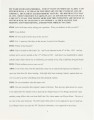
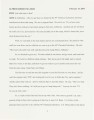
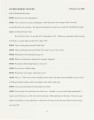
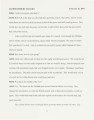
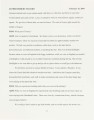
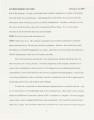
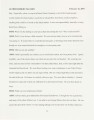
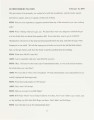
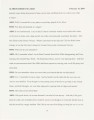
Show ALFRED ROBERT MATERN FHM: Could you explain what that is? February 16, 2004 ARM: Well, KP on the ship was- they had these great big cookers, like kettles, and we would steam them out with hoses that had steam so that all the grease and stuff would go down. They would, also, not only take the grease out, but they would sterilize these great big giant kettles they cooked the food in. After we left the ship we boarded some trains at Liverpool, went through the Midlands, and we finally came to our destination, a place called Twyford, England. We went to London first, and then to Twyford. And we walked with our stuff to a place called Hare hatch Estates where we stayed. FHM: How many were in your group? ARM: There was-officers and all-there was like eighty something personnel. We set up the lab in Twyford where we were really assigned as to what we would be doing. Our first projects were working with incendiary bombs that were dropped mostly over London. The planes would drop the incendiaries. They had various men put sand on the incendiaries. They would strike on top of a roof, and a civilian defense man would pour sand on it. FHM: Was this in the middle of the war? ARM: Yes. We found out-the German spies learned what the British were doing. They changed the incendiaries, so when the British poured sand on them the incendiaries would not ignite. They would then bum inside, and later explode on the inside a few seconds later, and cause more fire. The civilian defense men would pick them up and put them in barrels of water. The 5 |
| Reference URL |
https://collections.lib.utah.edu/ark:/87278/s6sr12h5/1029603 |