| Title |
Max Eugene Harding, Salt Lake City, Utah: an interview by Becky B. Lloyd, March 4, 2006: Saving the Legacy tape no. 757 |
| Alternative Title |
Max Eugene Harding, Saving the legacy: an oral history of Utah's World War II veterans, ACCN 2070, American West Center, University of Utah |
| Creator |
Harding, Max Eugene, 1925-2012 |
| Contributor |
Lloyd, Becky B.; University of Utah. American West Center |
| Publisher |
Digitized by J. Willard Marriott Library, University of Utah |
| Date |
2006-03-04 |
| Date Digital |
2015-12-16 |
| Access Rights |
I acknowledge and agree that all information I obtain as a result of accessing any oral history provided by the University of Utah's Marriott Library shall be used only for historical or scholarly or academic research purposes, and not for commercial purposes. I understand that any other use of the materials is not authorized by the University of Utah and may exceed the scope of permission granted to the University of Utah by the interviewer or interviewee. I may request permission for other uses, in writing to Special Collections at the Marriott Library, which the University of Utah may choose grant, in its sole discretion. I agree to defend, indemnify and hold the University of Utah and its Marriott Library harmless for and against any actions or claims that relate to my improper use of materials provided by the University of Utah. |
| Spatial Coverage |
New Caledonia; Philippines; Hawaii |
| Subject |
Harding, Max Eugene, 1925-2012--Interviews; Veterans--United States--Biography; World War, 1939-1945--Personal narratives, American; World War, 1939-1945--Military operations, American; World War, 1939-1945--Campaigns--Pacific Area--Personal narratives, American |
| Keywords |
Warehouses |
| Description |
Transcript (43 pages) of an interview by Becky B. Lloyd with Max Eugene Harding on March 4, 2006. From tape number 757 in the "Saving the Legacy" Oral History Project |
| Collection Number and Name |
Accn2070, Saving the Legacy oral history project, 2001-2010 |
| Abstract |
Harding (b. 1925) was born in Provo, Utah. He discusses growing up on a farm, and his education. He was drafted in 1943, attended basic training, and was shipped to Noumea, New Caledonia, where he worked in a warehouse. He was also assigned to a post in the Philippines, where he was wounded and evacuated to Guam, then Hawaii. After his recovery he was assigned as an MP in the motor pool. After his discharge in 1945, Harding worked for Sears Roebuck for thirty-five years. Interviewed by Becky Lloyd. 43 pages. |
| Type |
Text |
| Genre |
oral histories (literary works) |
| Format |
application/pdf |
| Extent |
43 pages |
| Language |
eng |
| Rights |
 |
| Scanning Technician |
Mazi Rakhsha |
| Conversion Specifications |
Original scanned with Kirtas 2400 and saved as 400 ppi uncompressed TIFF. PDF generated by Adobe Acrobat Pro X for CONTENTdm display |
| ARK |
ark:/87278/s6059j08 |
| Topic |
Personal narratives--American; Veterans; World War (1939-1945) |
| Setname |
uum_slohp |
| ID |
1029516 |
| Reference URL |
https://collections.lib.utah.edu/ark:/87278/s6059j08 |
| Title |
Page 11 |
| Format |
application/pdf |
| Setname |
uum_slohp |
| ID |
1029483 |
| OCR Text |
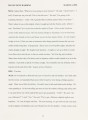
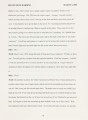
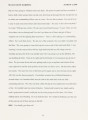
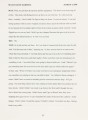
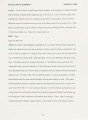
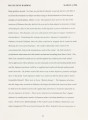
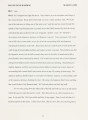
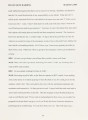
Show MAX EUGENE HARDING M R H 4 2006 dozen stops, I asked this non-commissioned officer 'Where s the motor pool? M t r pool? What do you want to know that for?" Well, I said,' That s where I ll be assign d. He said, "What's your name?" I told him. He said, "You're not going to any motor pool. You're in the infantry." It shocked me. So finally I found the place where I was to go. I didn't have a rifle. I spent my first day on the front lines without a rifle or anything to protect myself with. One had never been issued to me. I had been in a rear area where they didn't need rifles. So one of the fellows was wounded by a mortar shell that had landed there and so they gave me his rifle. I said to them, "If it doesn't do any better for me than it did for him, I don't even want it." BEC: Where was the Ninety-sixth when you joined it? MAX: It was the Ninety-sixth Division. That's when I first got in it. [Editor 's note: The 96th Infantry Division trained in the Hawaiian Islands before entering combat in an assault landing on Leyte, Philippine Islands, between Tanauan and Dulag, 20 October 1944. Enemy resistance in the beachhead area was quickly broken and the Division had advanced to and secured the Tanauan-Dagami-Tabontabon sector by 9 November after heavy fighting. The Division continued to wipe out resistance on the island, engaging in small unit actions, patrolling, probing, and wiping out pockets of Japanese. Chalk Ridge was taken 12 December 1944, and major organized resistance was at an end by Christmas Day. The next three months were spent in mopping up, security duty, training, and loadingfor the coming invasion of Okinawa. The division left the Philippines, 27 March 1945, for Okinawa, making an assault landing on the island, 1 April 1945. The landing was unopposed and a beachhead was establishe, between 1 April to 3 April 1945. Resistance stiffened considerably as the division advanced to Gakazu Ridge, where 11 |
| Reference URL |
https://collections.lib.utah.edu/ark:/87278/s6059j08/1029483 |