| Title |
Jeremiah Siggard, April 18, 2004, Salt Lake City, Utah: an interview by Frances Merrill |
| Alternative Title |
Jeremiah Siggard, Saving the legacy: an oral history of Utah's World War II veterans, ACCN 2070, American West Center, University of Utah |
| Creator |
Siggard, Jeremiah |
| Contributor |
Merrill, Frances; University of Utah. American West Center |
| Publisher |
Digitized by J. Willard Marriott Library, University of Utah |
| Date |
2004-04-18 |
| Date Digital |
2015-12-16 |
| Access Rights |
I acknowledge and agree that all information I obtain as a result of accessing any oral history provided by the University of Utah's Marriott Library shall be used only for historical or scholarly or academic research purposes, and not for commercial purposes. I understand that any other use of the materials is not authorized by the University of Utah and may exceed the scope of permission granted to the University of Utah by the interviewer or interviewee. I may request permission for other uses, in writing to Special Collections at the Marriott Library, which the University of Utah may choose grant, in its sole discretion. I agree to defend, indemnify and hold the University of Utah and its Marriott Library harmless for and against any actions or claims that relate to my improper use of materials provided by the University of Utah. |
| Spatial Coverage |
Camp Pendleton, San Diego County, California, United States; Kuwait; Iraq |
| Subject |
Siggard, Jeremiah--Interviews; Iraq War, 2003-2011--Personal narratives, American; Marines--Biography; Veterans--United States--Biography |
| Keywords |
Operation Iraqi Freedom |
| Description |
Transcript (33 pages) of an interview by Frances Merrill with Jeremiah Siggard on April 18, 2004. Part of the "Saving the Legacy" Oral History Project |
| Collection Number and Name |
Accn2070, Saving the Legacy oral history project, 2001-2010 |
| Abstract |
Siggard enlisted in the Marine Corps in 1997 after graduating high school. After boot camp he completed his combat training at Camp Pendleton, California. He volunteered for an infantry unit being shipped to Kuwait and Iraq. He describes his combat experiences in Al Fujar and Bagdad. He also talks about weather, living quarters, food, and other daily concerns. Interviewed by Frances Merrill. 33 pages. |
| Type |
Text |
| Genre |
oral histories (literary works) |
| Format |
application/pdf |
| Extent |
33 pages |
| Language |
eng |
| Rights |
 |
| Scanning Technician |
Mazi Rakhsha |
| Conversion Specifications |
Original scanned with Kirtas 2400 and saved as 400 ppi uncompressed TIFF. PDF generated by Adobe Acrobat Pro X for CONTENTdm display |
| ARK |
ark:/87278/s6hb178g |
| Topic |
Personal narratives--American; Veterans; Iraq War (2003-2011) |
| Setname |
uum_slohp |
| ID |
1028882 |
| Reference URL |
https://collections.lib.utah.edu/ark:/87278/s6hb178g |
| Title |
Page 14 |
| Format |
application/pdf |
| Setname |
uum_slohp |
| ID |
1028861 |
| OCR Text |
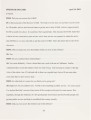
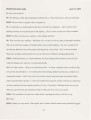
Show JEREMIAH IGGARD pril14 2 04 ambushed. And their specific job is indirect fire the artillery piec s. The H witz r ar de igned to sit 20 to 30 miles away and lob shells into specific target areas. o th ir infantry experience-their training, they had it-but in a direct attack they didn t have the numbers to effectively turn back the ambush. And so, they called for support. And, since we were so close-we were right behind them-our commanding officer, Major Kirkpatrick, made a decision. And, within 15 minutes of hearing we were going to combat-we were actually going to fight-we went in. And approximately five minutes after we went in the unit that had been attacked was able to pull out, and assess their casualties, and set themselves back up again. FHM: Were there very many casualties in that unit? JS: There were a few. Their commanding officer was hit with a rocket propelled grenade. He lost one of his hands. He was taken to the rear and evaluated. They fixed him up, and he continued to support his Marines from the rear until he was able to see them after the fighting. As far as for our unit, we received no casualties in this particular fight. It was a relatively short fight. And for my part I didn't see any of the enemy; and, therefore, did not fire my weapon. There were some who thought they saw-they weren't sure of what they saw, and so they targeted-they shot at what they thought might have been an enemy sometimes to find that it was an enemy, either in hiding; or, to find out that it was just a shadow. But the end result was one to our liking. We saw that we had subdued the enemy in this town, and we were able to move on without any casualties in our specific unit. FHM: Did that happen at night or in broad daylight? 13 |
| Reference URL |
https://collections.lib.utah.edu/ark:/87278/s6hb178g/1028861 |