| Title |
Jeremiah Siggard, April 18, 2004, Salt Lake City, Utah: an interview by Frances Merrill |
| Alternative Title |
Jeremiah Siggard, Saving the legacy: an oral history of Utah's World War II veterans, ACCN 2070, American West Center, University of Utah |
| Creator |
Siggard, Jeremiah |
| Contributor |
Merrill, Frances; University of Utah. American West Center |
| Publisher |
Digitized by J. Willard Marriott Library, University of Utah |
| Date |
2004-04-18 |
| Date Digital |
2015-12-16 |
| Access Rights |
I acknowledge and agree that all information I obtain as a result of accessing any oral history provided by the University of Utah's Marriott Library shall be used only for historical or scholarly or academic research purposes, and not for commercial purposes. I understand that any other use of the materials is not authorized by the University of Utah and may exceed the scope of permission granted to the University of Utah by the interviewer or interviewee. I may request permission for other uses, in writing to Special Collections at the Marriott Library, which the University of Utah may choose grant, in its sole discretion. I agree to defend, indemnify and hold the University of Utah and its Marriott Library harmless for and against any actions or claims that relate to my improper use of materials provided by the University of Utah. |
| Spatial Coverage |
Camp Pendleton, San Diego County, California, United States; Kuwait; Iraq |
| Subject |
Siggard, Jeremiah--Interviews; Iraq War, 2003-2011--Personal narratives, American; Marines--Biography; Veterans--United States--Biography |
| Keywords |
Operation Iraqi Freedom |
| Description |
Transcript (33 pages) of an interview by Frances Merrill with Jeremiah Siggard on April 18, 2004. Part of the "Saving the Legacy" Oral History Project |
| Collection Number and Name |
Accn2070, Saving the Legacy oral history project, 2001-2010 |
| Abstract |
Siggard enlisted in the Marine Corps in 1997 after graduating high school. After boot camp he completed his combat training at Camp Pendleton, California. He volunteered for an infantry unit being shipped to Kuwait and Iraq. He describes his combat experiences in Al Fujar and Bagdad. He also talks about weather, living quarters, food, and other daily concerns. Interviewed by Frances Merrill. 33 pages. |
| Type |
Text |
| Genre |
oral histories (literary works) |
| Format |
application/pdf |
| Extent |
33 pages |
| Language |
eng |
| Rights |
 |
| Scanning Technician |
Mazi Rakhsha |
| Conversion Specifications |
Original scanned with Kirtas 2400 and saved as 400 ppi uncompressed TIFF. PDF generated by Adobe Acrobat Pro X for CONTENTdm display |
| ARK |
ark:/87278/s6hb178g |
| Topic |
Personal narratives--American; Veterans; Iraq War (2003-2011) |
| Setname |
uum_slohp |
| ID |
1028882 |
| Reference URL |
https://collections.lib.utah.edu/ark:/87278/s6hb178g |
| Title |
Page 4 |
| Format |
application/pdf |
| Setname |
uum_slohp |
| ID |
1028851 |
| OCR Text |
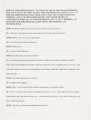
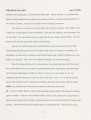
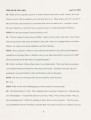
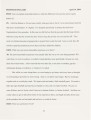
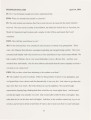
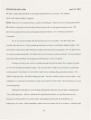
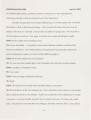
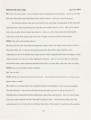
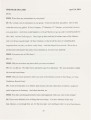
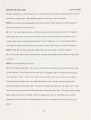
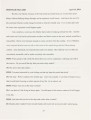
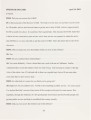
Show JEREMIAH IGGARD pri114 2004 JS: When I got there I was a little bit nervous. We had a long bus ride and as we were pulling up I began to wonder what it was I had gotten myself into. I felt like I might have jumped in without thinking things through entirely. FHM: Did you go by yourself, or did you have other friends that joined with you? JS: When I joined I did join by myself. I did have a few friends who had joined earlier, and had gone through boot camp. And I'd talked to them about it a little bit. But when I went I went by myself. We met at, what they call MEPPS. It's a medical facility to make sure that everybody is qualified physically and mentally to go through the training process. FHM: And was that at MCRD? JS: No, that was in Los Angeles. So we met in Los Angeles-! think it was about 3:00 in the morning. And we got on a bus there, and got on the bus ride down to MCRD. And when we got there we had-well, we kind of called it the Last Supper. We stopped at a Denny's for our final meal as a civilian, and the last real meal we would have for three months. And when we got there we were all sitting there, and all of a sudden this-we pulled in, and this Marine gets on there, and he's got his drill instructor cover on. And he starts yelling and screaming at us. And we're just kind of wondering, okay what do we do now? FHM: Is that when you were in Denny's? JS: No, this was after we got to the recruit depot. FHM: How many were in your group? JS: What they do is when they get there they divide us up into different platoons, and you start out approximately with 80 people per platoon, 3 |
| Reference URL |
https://collections.lib.utah.edu/ark:/87278/s6hb178g/1028851 |