| Title |
Shirl D. Kemp, Provo, Utah: an interview by Benjamin Bahlmann, February 9, 2002: Saving the Legacy tape nos. 491 & 492 |
| Alternative Title |
Shirl D. Kemp, Saving the legacy: an oral history of Utah's World War II veterans, ACCN 2070, American West Center, University of Utah |
| Creator |
Kemp, Shirl D., 1925-2010 |
| Contributor |
University of Utah. American West Center; Bahlmann, Benjamin J. |
| Publisher |
Digitized by J. Willard Marriott Library, University of Utah |
| Date |
2002-02-09 |
| Date Digital |
2015-12-16 |
| Access Rights |
I acknowledge and agree that all information I obtain as a result of accessing any oral history provided by the University of Utah's Marriott Library shall be used only for historical or scholarly or academic research purposes, and not for commercial purposes. I understand that any other use of the materials is not authorized by the University of Utah and may exceed the scope of permission granted to the University of Utah by the interviewer or interviewee. I may request permission for other uses, in writing to Special Collections at the Marriott Library, which the University of Utah may choose grant, in its sole discretion. I agree to defend, indemnify and hold the University of Utah and its Marriott Library harmless for and against any actions or claims that relate to my improper use of materials provided by the University of Utah. |
| Spatial Coverage |
Australia; Hawaii |
| Subject |
Kemp, Shirl D., 1925-2010--Interviews; Veterans--Utah--Biography; World War, 1939-1945--Personal narratives, American; World War, 1939-1945--Naval operations, American; World War, 1939-1945--Naval operations--Submarine; World War, 1939-1945--Campaigns--Pacific Area--Personal narratives, American |
| Keywords |
Submariners; Radio operators; Monsen Lung |
| Description |
Transcript (89 pages) of an interview by Benjamin Bahlmann with Shirl D. Kemp, on February 9, 2002. From tape numbers 491 and 492 in the "Saving the Legacy" Oral History Project |
| Collection Number and Name |
Accn2070, Saving the Legacy oral history project, 2001-2010 |
| Abstract |
Kemp (b. 1925) describes his childhood, education, and employment in Murray, Utah. He joined the Navy in1943 and received basic training at Farrigut, Idaho. He joined the submariners and was trained in New London, Connecticut. He describes his training, upon completion of which he traveled through the Pacific to Australia where he was assigned to the Sea Robin. He describes his activities, duties and tours aboard the sub. He was discharged in April 1946. Interviewed by Benjamin Bahlmann. 89 pages. |
| Type |
Text |
| Genre |
oral histories (literary works) |
| Format |
application/pdf |
| Extent |
89 pages |
| Language |
eng |
| Rights |
 |
| Scanning Technician |
Mazi Rakhsha |
| Conversion Specifications |
Original scanned with Kirtas 2400 and saved as 400 ppi uncompressed TIFF. PDF generated by Adobe Acrobat Pro X for CONTENTdm display |
| ARK |
ark:/87278/s6ks8tn6 |
| Topic |
Personal narratives--American; Veterans; World War (1939-1945); Military operations, Naval--Submarine--American |
| Setname |
uum_slohp |
| ID |
1028796 |
| Reference URL |
https://collections.lib.utah.edu/ark:/87278/s6ks8tn6 |
| Title |
Page 52 |
| Format |
application/pdf |
| Setname |
uum_slohp |
| ID |
1028758 |
| OCR Text |
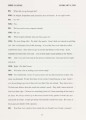
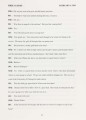
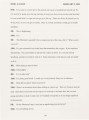
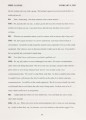
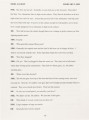
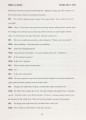
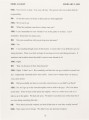
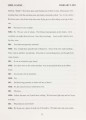
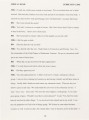
Show SHIRL D. KEMP FEBRUARY 9, 2002 BB: So you were in the galley? SDK: I was in the galley and the guys kept coming through and telling us we were tracking targets, telling us where we were and what we were doing. So since I didn't have a specific job at that time and I had only been on the sub for seven weeks at the time, I was just waiting and waiting. All of a sudden we heard this sound. If you weren't in the control room you didn't hear the captain say, "Fire one," or "Fire two." You'd just hear the noise of the air. The torpedoes are blown out by air and we could hear that air that sends that torpedo out. BB: That's how torpedoes are fired, by air? SDK: An air impulse pushes them out. Then they have a propeller that takes off. It's an automatic firing mechanism. As it goes out, it kicked this little lever that starts the motor going on the torpedo. BB: Could you hear it going away? SDK: Yes, well, in the sound room, you could track it. You could hear it go right to the target. In so many minutes, they'd figured out how long it would take to get there and if we didn't hear an explosion we knew we'd missed. So they'd tell us. We had it figured out. Most of the time it took about thirty seconds or something like that. We'd be watching our watches and listening. If we heard an explosion, we knew we got a hit. So then there'd be a lot of jubilation and excitement if we got a hit. Then the captain would report throughout the boat what was going on, how many ships there were and whatever. BB: Were you with some other submarines? SDK: A wolfpack? BB: Yes. SDK: Yes, it explains all that in here. It tells all about the subs we were with. 52 |
| Reference URL |
https://collections.lib.utah.edu/ark:/87278/s6ks8tn6/1028758 |