| Title |
Charles D. Snow, Ivins, Utah: an interview by Winston Erickson, 21 February 2003 : Saving the Legacy tape no. SL-589 |
| Alternative Title |
Charles D. Snow, Saving the legacy: an oral history of Utah's World War II veterans, ACCN 2070, American West Center, University of Utah |
| Creator |
Snow, Charles D., 1926- |
| Contributor |
Erickson, Winston P., 1943-; University of Utah. American West Center |
| Publisher |
Digitized by J. Willard Marriott Library, University of Utah |
| Date |
2003-02-21 |
| Date Digital |
2015-12-16 |
| Access Rights |
I acknowledge and agree that all information I obtain as a result of accessing any oral history provided by the University of Utah's Marriott Library shall be used only for historical or scholarly or academic research purposes, and not for commercial purposes. I understand that any other use of the materials is not authorized by the University of Utah and may exceed the scope of permission granted to the University of Utah by the interviewer or interviewee. I may request permission for other uses, in writing to Special Collections at the Marriott Library, which the University of Utah may choose grant, in its sole discretion. I agree to defend, indemnify and hold the University of Utah and its Marriott Library harmless for and against any actions or claims that relate to my improper use of materials provided by the University of Utah. |
| Spatial Coverage |
Okinawa, Japan; Philippines; Borneo; China |
| Subject |
Snow, Charles D., 1926- --Interviews; Veterans--United States--Biography; World War, 1939-1945--Personal narratives, American; World War, 1939-1945--Naval operations, American; World War, 1939-1945--Campaigns--Pacific Area--Personal narratives, American |
| Keywords |
Metcalf; Destroyers |
| Description |
Transcript (33 pages) of an interview by Winston Erickson with Charles D. Snow on February 21, 2003. From tape number 589 in the "Saving the Legacy" Oral History Project |
| Collection Number and Name |
Accn2070, Saving the Legacy oral history project, 2001-2010 |
| Abstract |
Snow (b. 1926) recalls his Utah youth and describes enlisting in the Navy in 1944. He took his basic training in Farragut, Idaho, then was sent to Bremerton, Washington. He was commissioned on the USS Metcalf and served in the Pacific until 1946. Interviewed by Winston Erickson. 33 pages. |
| Type |
Text |
| Genre |
oral histories (literary works) |
| Format |
application/pdf |
| Extent |
33 pages |
| Language |
eng |
| Rights |
 |
| Scanning Technician |
Mazi Rakhsha |
| Conversion Specifications |
Original scanned with Kirtas 2400 and saved as 400 ppi uncompressed TIFF. PDF generated by Adobe Acrobat Pro X for CONTENTdm display |
| ARK |
ark:/87278/s6ck0gh9 |
| Topic |
Personal narratives--American; Veterans; World War (1939-1945); Military operations, Naval--American |
| Setname |
uum_slohp |
| ID |
1028599 |
| Reference URL |
https://collections.lib.utah.edu/ark:/87278/s6ck0gh9 |
| Title |
Page 30 |
| Format |
application/pdf |
| Setname |
uum_slohp |
| ID |
1028594 |
| OCR Text |
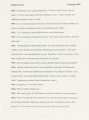
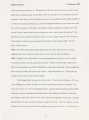
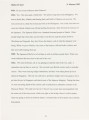
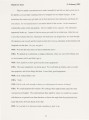
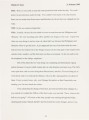
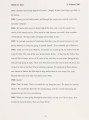
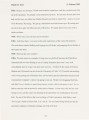
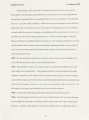
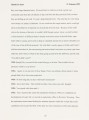
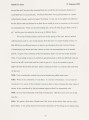
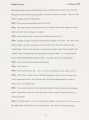
Show harle D. now 21 ebruary 200 WIN: [laugh] W 11, if the stuffs in the ground anyway and you put it back in th ground, what have you done? CHA: It s hard to explain to the public, for example that during some of our expl rati n work we did a lot of airborne surveys where we'd take a scintillation unit into an aircraft and fly around; and we used to have to fly closer than five hundred feet to the ground because if you go much higher than that, the background radiation of radium 226 and radon is such that it masks the count that you're trying to pick up on the ground. And it's ubiquitous; it's almost everywhere. We looked long and hard at the Chattanooga shale down around Chattanooga, Tennessee, because there's enough uranium in that shale that it's near economic quantities. The difficulty in milling is one of the reasons we didn't do it. People have lived there and continue to live there in great happiness, and don't know the difference. WIN: True. In the mining situation a lot of people didn't realize dangers. The uranium miners suffered from it, but- CHA: Well, some of the dangers I'm acquainted with in uranium mining was the diesel smoke from the diesel equipment that was used underground on the Colorado plateau. During the time that we were there working at the Moki Mine, for example, why the state would come down, and they were conducting a program to see if we were being affected by the radiation, and so on; and they started taking x-rays of us. The first time they came down they had an old army field unit left over from World War II. They'd stand you up and take a three-position shots of your chest-a front, a back, and the side. At the time they were using some of the old slow film left over from World War II, yet when they developed it and it didn't tum out to suit them, they'd stand you up and do it again. 29 |
| Reference URL |
https://collections.lib.utah.edu/ark:/87278/s6ck0gh9/1028594 |