| OCR Text |
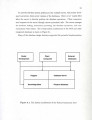
Show CHAPTER 5 DATABASE DESIGN The database dictionary automatically generates a specification in the Standard Query Language (SQL) [22], a nonprocedural database programming language. The project created SQL database definition language specifications for the Patient Assessment Tool (PAT), laboratory results, medications, and clinical study databases. Relational database models represent data as a collection of tables containing fields. Each body system or nursing activity grouping is saved as a table, and key fields are used to query those tables. Data normalization attempts to minimize database redundancy through smaller distinct tables and intertable relationships. The PAT achieves data normalization through predefined joins, which link tables through their key fields. To further optimize retrieval speed and minimize storage requirements, predefined joins are implemented as sets in a network database model. Network database models [92] contain tables which are related by links, implementable as pointers. This eliminates the need to store the keys of tables only accessed through predefined joins. All body systems and nursing activity groupings are stored as tables with a unique primary key containing patient social security number, date, and time. This follows the Time-Oriented Databank {TOD) model for electronic patient database systems [4 7] [48] [182], which associates time stamps with clinical observations. All databases developed for this dissertation comply with the Microsoft Open Database Connectivity (ODBC) standard [22]. This superset of 1989 American National Standards Institute (ANSI) SQL [22] allows them to communicate with other databases, report generators, and graphical database development tools through a standardized set of object oriented calls. |