| Title |
Carl Joseph Santoro, Salt Lake City, Utah: an interview by Becky B. Lloyd, June 28, 2004: Saving the Legacy tape no. 670 |
| Alternative Title |
Carl Joseph Santoro, Saving the legacy: an oral history of Utah's World War II veterans, ACCN 2070, American West Center, University of Utah |
| Creator |
Santoro, Carl Joseph, 1925- |
| Contributor |
Lloyd, Becky B.; University of Utah. American West Center |
| Publisher |
Digitized by J. Willard Marriott Library, University of Utah |
| Date |
2004-06-28 |
| Date Digital |
2015-12-16 |
| Access Rights |
I acknowledge and agree that all information I obtain as a result of accessing any oral history provided by the University of Utah's Marriott Library shall be used only for historical or scholarly or academic research purposes, and not for commercial purposes. I understand that any other use of the materials is not authorized by the University of Utah and may exceed the scope of permission granted to the University of Utah by the interviewer or interviewee. I may request permission for other uses, in writing to Special Collections at the Marriott Library, which the University of Utah may choose grant, in its sole discretion. I agree to defend, indemnify and hold the University of Utah and its Marriott Library harmless for and against any actions or claims that relate to my improper use of materials provided by the University of Utah. |
| Spatial Coverage |
Clearfield, Weber County, Utah, United States; Mare Island, Solano County, California, United States |
| Subject |
Santoro, Carl Joseph, 1925- --Interviews; Veterans--United States--Biography; World War, 1939-1945--Personal narratives, American; World War, 1939-1945--Naval operations, American |
| Description |
Transcript (39 pages) of an interview by Becky B. Lloyd with Carl Joseph Santoro on June 28, 2004. From tape number 670 in the "Saving the Legacy" Oral History Project |
| Collection Number and Name |
Accn2070, Saving the Legacy oral history project, 2001-2010 |
| Abstract |
Santoro (1925) was inducted into the Navy in February 1944, and took basic training at Sampson Naval Training Station in Geneva, New York. He worked at Clearfield Naval Supply Depot as kitchen help, janitor, and boiler room personnel before being sent to Mare Island on a ship repair unit. Returned to Clearfield for MP duty prior to his discharge in April 1946. Interviewed by Becky Lloyd. 39 pages. |
| Type |
Text |
| Genre |
oral histories (literary works) |
| Format |
application/pdf |
| Extent |
39 pages |
| Language |
eng |
| Rights |
 |
| Scanning Technician |
Mazi Rakhsha |
| Conversion Specifications |
Original scanned with Kirtas 2400 and saved as 400 ppi uncompressed TIFF. PDF generated by Adobe Acrobat Pro X for CONTENTdm display |
| ARK |
ark:/87278/s6dc03zt |
| Topic |
Personal narratives--American; Veterans; World War (1939-1945); Military operations, Naval--American |
| Setname |
uum_slohp |
| ID |
1027574 |
| Reference URL |
https://collections.lib.utah.edu/ark:/87278/s6dc03zt |
| Title |
Page 14 |
| Format |
application/pdf |
| Setname |
uum_slohp |
| ID |
1027548 |
| OCR Text |
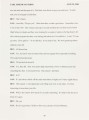
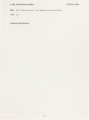
Show RL JO EPH A TORO J 2 2004 AN: I tarted at the bottom of the heap as a mess cook they call d u . What y u did was you served the food, you washed the dishes, you got up early in the morning and helped the cooks get ready. You did all the dirty work as far as food. You served the guys and picked up their trays and washed them in the dish machines. Once a week, you had the pots and pans detail. That was terrible. It was two big tubs of hot water and you washed the pots and pans all by hand, all these tubs and pots and everything. It was a sixteen-hour day. Man, I hated that. That was in the kitchen or the galley. We all had to take turns doing it. But I had my tum once a week. Then I graduated to being a compartment cleaner. That meant I was a janitor. I did the toilets, I hauled the waste out and for a while. At that time, there were Quonset huts at Clearfield. We didn't have a barracks. There were twelve guys to a hut. Each hut had a coal oil stove in it. We had to go get the coal oil and fill the stove tank. That was a miserable job. I had to do that. We took our turns, thank goodness. We got trained to take turns pretty good. Hey, you take your turn and nobody got victimized. That's what we did. There were twelve of us and the heater used up a full tank every day. Every twelve days it was my tum to do that. I've got a picture of that in here somewhere. BEC: Oh, I'd like to see that. SAN: I think I have. No, I don't have. I thought I did. I just grabbed these in a hurry without looking at them because I was running out of time. Well, you can't see it. But, this was the kid from Cleveland that I was going to go to sea with. [looking through pictures] I can't show you a Quonset hut but you can see the front door. BEC: Right, and on that picture, you can kind of see the curving roofline of the hut. Now, what is that? 14 |
| Reference URL |
https://collections.lib.utah.edu/ark:/87278/s6dc03zt/1027548 |