| Title |
Reece B. Robertson, Salt Lake City, Utah: an interview by Benjamin J. Bahlmann, March 7, 2002: Saving the Legacy tape nos. 498-500 |
| Alternative Title |
Reece B. Robertson, Saving the legacy: an oral history of Utah's World War II veterans, ACCN 2070, American West Center, University of Utah |
| Creator |
Robertson, Reece B., 1920- |
| Contributor |
Bahlmann, Benjamin J.; University of Utah. American West Center |
| Publisher |
Digitized by J. Willard Marriott Library, University of Utah |
| Date |
2002-03-07 |
| Date Digital |
2015-12-16 |
| Access Rights |
I acknowledge and agree that all information I obtain as a result of accessing any oral history provided by the University of Utah's Marriott Library shall be used only for historical or scholarly or academic research purposes, and not for commercial purposes. I understand that any other use of the materials is not authorized by the University of Utah and may exceed the scope of permission granted to the University of Utah by the interviewer or interviewee. I may request permission for other uses, in writing to Special Collections at the Marriott Library, which the University of Utah may choose grant, in its sole discretion. I agree to defend, indemnify and hold the University of Utah and its Marriott Library harmless for and against any actions or claims that relate to my improper use of materials provided by the University of Utah. |
| Spatial Coverage |
Germany; Wyoming, United States |
| Subject |
Robertson, Reece B., 1920- --Interviews; Veterans--United States--Biography; World War, 1939-1945--Personal narratives, American; World War, 1939-1945--Aerial operations, American; World War, 1939-1945--Campaigns--Europe, Northern--Personal narratives, American; World War, 1939-1945--Prisoners and prisons, American; Prisoners of war--United States; Prisoners of war--Germany |
| Keywords |
National Guard; Bomber pilots; POWs; Barth, Germany |
| Description |
Transcript (104 pages) of an interview by Benjamin J. Bahlmann with Reece B. Robertson on March 7, 2002. From tape numbers 498, 499, and 500 in the "Saving the Legacy" Oral History Project |
| Collection Number and Name |
Accn2070, Saving the Legacy oral history project, 2001-2010 |
| Abstract |
Robertson (1920-2009) attended the University of Wyoming and joined the National Guard Calvary Unit, which was activated in February 1941. He was trained to fly the B26, A20, and A26 aircraft and was assigned to the European Theater. He served with the Ninth Air Force, 115th Bomb Group, 67th Squadron at Braintree in Southern England. He was shot down on Christmas Eve 1944, and held in Barth, Germany, at Stalag Luft One, which was later liberated by the Russian army. Interviewed by Benjamin Bahlmann. 104 pages. |
| Type |
Text |
| Genre |
oral histories (literary works) |
| Format |
application/pdf |
| Extent |
104 pages |
| Language |
eng |
| Rights |
 |
| Scanning Technician |
Mazi Rakhsha |
| Conversion Specifications |
Original scanned with Kirtas 2400 and saved as 400 ppi uncompressed TIFF. PDF generated by Adobe Acrobat Pro X for CONTENTdm display |
| ARK |
ark:/87278/s6rr41bb |
| Topic |
Personal narratives--American; Veterans; World War (1939-1945); Military operations, Aerial--American; Prisoners of war |
| Setname |
uum_slohp |
| ID |
1027034 |
| Reference URL |
https://collections.lib.utah.edu/ark:/87278/s6rr41bb |
| Title |
Page 72 |
| Format |
application/pdf |
| Setname |
uum_slohp |
| ID |
1027001 |
| OCR Text |
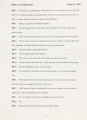
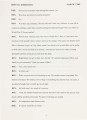
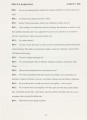
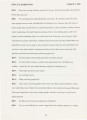
Show 7,2002 th y re about ix feet off the ground-so we can t tunn 1. o that th kind w w r at. I don t think of anything particularly interesting happening there. BEN: Did they start feeding you right away? You were shot down at hri tma - wa it the twenty-third you were shot down? REE: Twenty-fourth. BEN: When did you arrive to the camp? REE: I'd say two to three weeks. Then at the camp, they would give us a bowl of soup a day and I think a seventh of a loaf of bread, something like that. BEN: Was there any introduction? You mentioned they took the officers into one room. Did they lay it out to you, how it was run? Any kind of instructions? REE: Well, the first day we were there, we had a fellow who came in and he says, "Don't any of you clowns try to escape. We've got an escape committee, so if it's absolutely necessary to get out, you can work through this committee. But don't you try it." So I said to myself, "Boy, I've been through enough. I'm not going to try to escape." Besides that, I got to thinking, "If I get outside that fence, I'll be in a sea of Germans. And if I manage to get to the front lines, if I don't get killed by the Germans, I'll get killed by the Americans when I'm trying to get across the line. I'm not about to escape." BEN: Was there an order of command? Was there a line of authority? REE: Sure, oh, yes. In charge of our compound, there was this ace fighter, Gabreski. He was a colonel. He was in charge of our camp, our unit. Then they had a fellow who was above. He was a colonel. He was in charge of the whole camp. And we were organized just like we were in the army. We had a captain for the barracks we were in, 72 |
| Reference URL |
https://collections.lib.utah.edu/ark:/87278/s6rr41bb/1027001 |