| Title |
Paul W. Flandro, Salt Lake City, Utah: an interview by Winston P. Erickson, March 22, 2000: Saving the legacy tape no. 4 |
| Alternative Title |
Paul W. Flandro, Saving the legacy: an oral history of Utah's World War II veterans, ACCN 2070, American West Center, University of Utah |
| Creator |
Flandro, Paul W., 1921- |
| Contributor |
Erickson, Winston P., 1943-; University of Utah. American West Center |
| Publisher |
Digitized by J. Willard Marriott Library, University of Utah |
| Date |
2000-03-22 |
| Date Digital |
2015-09-16 |
| Access Rights |
I acknowledge and agree that all information I obtain as a result of accessing any oral history provided by the University of Utah's Marriott Library shall be used only for historical or scholarly or academic research purposes, and not for commercial purposes. I understand that any other use of the materials is not authorized by the University of Utah and may exceed the scope of permission granted to the University of Utah by the interviewer or interviewee. I may request permission for other uses, in writing to Special Collections at the Marriott Library, which the University of Utah may choose grant, in its sole discretion. I agree to defend, indemnify and hold the University of Utah and its Marriott Library harmless for and against any actions or claims that relate to my improper use of materials provided by the University of Utah. |
| Spatial Coverage |
Saipan, Northern Mariana Islands; Nagasaki, Japan; Korea; Salt Lake City, Salt Lake County, Utah, United States |
| Subject |
Flandro, Paul W., 1921- --Interviews; World War, 1939-1945--Personal narratives, American; Veterans--Utah--Biography; World War, 1939-1945--Artillery operations, American; World War, 1939-1945--Campaigns--Pacific Area--Personal narratives, American; Nagasaki (Japan) |
| Keywords |
5th Marine Division; 2nd Marine Division, "H" Battery, 3rd Battalion; Saipan; Nagasaki; Korea |
| Description |
Transcript (43 pages) of an interview by Winston P. Erickson with Paul W. Flandro on March 22, 2000. This is from tape number 4 in the "Saving the Legacy Oral History Project |
| Collection Number and Name |
Accn2070, Saving the Legacy oral history project, 2001-2010 |
| Abstract |
Flandro (b. 1921) describes his childhood on the East bench of Salt Lake City, where he was in both high school and college ROTC. In 1943 he transferred from the U. S. Army into the U. S. Marine Corps for active duty. After a period of training Flandro was assigned to the newly-formed 5th Marine Division and shipped to Saipan. He spend most of his service time attached to the 2nd Marine Division, "H" Battery, 3rd Battalion, 10th Marines--a field artillery outfit. He was assigned to the first group of soldiers into Nagasaki after the bomb was dropped. He was discharged as a Captain, but was recalled for the Korean war. 43 pages. |
| Type |
Text |
| Genre |
oral histories (literary works) |
| Format |
application/pdf |
| Extent |
43 pages |
| Language |
eng |
| Rights |
 |
| Scanning Technician |
Mazi Rakhsha |
| Conversion Specifications |
Original scanned with Kirtas 2400 and saved as 400 ppi uncompressed TIFF. PDF generated by Adobe Acrobat Pro X for CONTENTdm display |
| ARK |
ark:/87278/s6qg0s3q |
| Topic |
Personal narratives--American; Veterans; World War (1939-1945); Military operations, Artillery--American |
| Setname |
uum_slohp |
| ID |
1026463 |
| Reference URL |
https://collections.lib.utah.edu/ark:/87278/s6qg0s3q |
| Title |
Page 35 |
| Format |
application/pdf |
| Setname |
uum_slohp |
| ID |
1026453 |
| OCR Text |
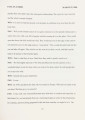
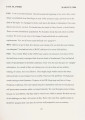
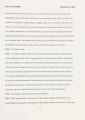
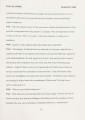
Show PAULFLA DRO U S Marines were. As we came in after having b n out n - n 10 ut of combat, we hadn't seen a child or a woman. As we ould mar h in th h told us of what they had been told were shocking. They want d to kno wh n th fighting troops were coming, "When were the barbarian killer Marines troops coming? They didn't realize that it was us, the marines because of the fact we picked up their kid and hugged them as we marched in. It was a wonderful choice experience but they just couldn't believe it. The stories that they told, such as we had killed our mothers and that we had done all of these gross and horrible things, that they had been told. But fortunately, it was all in error. We made great friends with the bewildered native people living there. Then, after we left Omura, Japan, I went up to Sasebo, Japan, where I had enough combat months earned to be eligible to be rotated back home. I was assigned to the 1st Marine Division. They, too, were being rotated home. At that point we ended up our last combat assignment, for the time being, and returned to San Diego, California. We all had trophies galore, but typical of the Marine Corps they confiscated every one of them. They took all of our boxes and our luggage and put it in dump trucks and whisked us away. We were never to see our gear again. We were tricked. Anyway, that was hard. But the thing is that this was a good quality experience for me. It was quality from the standpoint that I hoped it would never happen again. Another thing I realized is that our government is made up of people, some good and some bad. That's the real world, isn't it? WIN: You had a job to do. 34 |
| Reference URL |
https://collections.lib.utah.edu/ark:/87278/s6qg0s3q/1026453 |