| Title |
Paul W. Flandro, Salt Lake City, Utah: an interview by Winston P. Erickson, March 22, 2000: Saving the legacy tape no. 4 |
| Alternative Title |
Paul W. Flandro, Saving the legacy: an oral history of Utah's World War II veterans, ACCN 2070, American West Center, University of Utah |
| Creator |
Flandro, Paul W., 1921- |
| Contributor |
Erickson, Winston P., 1943-; University of Utah. American West Center |
| Publisher |
Digitized by J. Willard Marriott Library, University of Utah |
| Date |
2000-03-22 |
| Date Digital |
2015-09-16 |
| Access Rights |
I acknowledge and agree that all information I obtain as a result of accessing any oral history provided by the University of Utah's Marriott Library shall be used only for historical or scholarly or academic research purposes, and not for commercial purposes. I understand that any other use of the materials is not authorized by the University of Utah and may exceed the scope of permission granted to the University of Utah by the interviewer or interviewee. I may request permission for other uses, in writing to Special Collections at the Marriott Library, which the University of Utah may choose grant, in its sole discretion. I agree to defend, indemnify and hold the University of Utah and its Marriott Library harmless for and against any actions or claims that relate to my improper use of materials provided by the University of Utah. |
| Spatial Coverage |
Saipan, Northern Mariana Islands; Nagasaki, Japan; Korea; Salt Lake City, Salt Lake County, Utah, United States |
| Subject |
Flandro, Paul W., 1921- --Interviews; World War, 1939-1945--Personal narratives, American; Veterans--Utah--Biography; World War, 1939-1945--Artillery operations, American; World War, 1939-1945--Campaigns--Pacific Area--Personal narratives, American; Nagasaki (Japan) |
| Keywords |
5th Marine Division; 2nd Marine Division, "H" Battery, 3rd Battalion; Saipan; Nagasaki; Korea |
| Description |
Transcript (43 pages) of an interview by Winston P. Erickson with Paul W. Flandro on March 22, 2000. This is from tape number 4 in the "Saving the Legacy Oral History Project |
| Collection Number and Name |
Accn2070, Saving the Legacy oral history project, 2001-2010 |
| Abstract |
Flandro (b. 1921) describes his childhood on the East bench of Salt Lake City, where he was in both high school and college ROTC. In 1943 he transferred from the U. S. Army into the U. S. Marine Corps for active duty. After a period of training Flandro was assigned to the newly-formed 5th Marine Division and shipped to Saipan. He spend most of his service time attached to the 2nd Marine Division, "H" Battery, 3rd Battalion, 10th Marines--a field artillery outfit. He was assigned to the first group of soldiers into Nagasaki after the bomb was dropped. He was discharged as a Captain, but was recalled for the Korean war. 43 pages. |
| Type |
Text |
| Genre |
oral histories (literary works) |
| Format |
application/pdf |
| Extent |
43 pages |
| Language |
eng |
| Rights |
 |
| Scanning Technician |
Mazi Rakhsha |
| Conversion Specifications |
Original scanned with Kirtas 2400 and saved as 400 ppi uncompressed TIFF. PDF generated by Adobe Acrobat Pro X for CONTENTdm display |
| ARK |
ark:/87278/s6qg0s3q |
| Topic |
Personal narratives--American; Veterans; World War (1939-1945); Military operations, Artillery--American |
| Setname |
uum_slohp |
| ID |
1026463 |
| Reference URL |
https://collections.lib.utah.edu/ark:/87278/s6qg0s3q |
| Title |
Page 34 |
| Format |
application/pdf |
| Setname |
uum_slohp |
| ID |
1026452 |
| OCR Text |
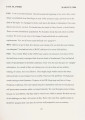
Show PAULFLANDRO enough that our leaders felt that it was safe timewi for m int llig n into Nagasaki. Yes we were the first troops that were going in. WIN: Your assignment at Nagasaki was what? tr I t PAU: Our mission and my challenge was to go up into the canyons to evaluate th people damage due to the bombs effect up the canyons. Let me illustrate by this exampl If you were to take and drop the bomb on the Jordan LDS Temple on Redwood Road and 1 06th South, in the center of the Salt Lake with mountains surrounding like a saucer-like valley, and then explode it, the heat waves gushed in all directions and went up all the canyons, such as Mill Creek, Parley's, Big Cottonwood Little Cottonwood, Red Butte, Butterfield, City Creek .etc.). At that instant, all of that flame caught the people-men, women and children-and they were burning or had been burned and dying right in front of you, out in front of their burned out homes. WIN: What was your responsibility? P AU: Our responsibility was to go in and size up the situation. It was a terrible scene! We understood how important that was. We knew how miserable it was. To see that, one action, one bomb, and there was nothing left of the city. The steel buildings of the village that were made of steel supports were so hot that it just bent over and you could see the destruction. The direction of the gust was pointed away from center blast. That was a hard experience because it was something that was pretty meaningful and life changing. We went back to Omura. As we went back into Omura this is where the propaganda programs broke down. This began with the natives. They had been told how horrible we 33 |
| Reference URL |
https://collections.lib.utah.edu/ark:/87278/s6qg0s3q/1026452 |