| Title |
Rollo Fullmer, Salt Lake City, Utah: an interview by Becky B. Lloyd, March 14, 2000: Saving the legacy tape no. 1 |
| Alternative Title |
Rollo Fullmer, Saving the legacy: an oral history of Utah's World War II veterans, ACCN 2070, American West Center, University of Utah |
| Creator |
Fullmer, Rollo, 1918-2011 |
| Contributor |
Lloyd, Becky B.; University of Utah. American West Center |
| Publisher |
Digitized by J. Willard Marriott Library, University of Utah |
| Date |
2000-03-14 |
| Date Digital |
2015-09-16 |
| Access Rights |
I acknowledge and agree that all information I obtain as a result of accessing any oral history provided by the University of Utah's Marriott Library shall be used only for historical or scholarly or academic research purposes, and not for commercial purposes. I understand that any other use of the materials is not authorized by the University of Utah and may exceed the scope of permission granted to the University of Utah by the interviewer or interviewee. I may request permission for other uses, in writing to Special Collections at the Marriott Library, which the University of Utah may choose grant, in its sole discretion. I agree to defend, indemnify and hold the University of Utah and its Marriott Library harmless for and against any actions or claims that relate to my improper use of materials provided by the University of Utah. |
| Spatial Coverage |
Richfield, Sevier County, Utah, United States; New Caledonia; Fort Belvoir, Fairfax County, Virginia, United States |
| Subject |
Fullmer, Rollo, 1918-2011--Interviews; World War, 1939-1945--Personal narratives, American; Veterans--Utah--Biography; World War, 1939-1945--Campaigns--Pacific Area--Personal narratives, American; Military engineers--Biography; Roosevelt, Franklin D. (Franklin Delano), 1882-1945--Death and burial |
| Keywords |
115th Combat Engineers, 40th Division; 353rd Combat Engineers; San Luis Obispo; Camp White; New Caledonia |
| Description |
Transcript (40 pages) of an interview by Becky B. Lloyd with Rollo Fullmer on March 14, 2000. This is from tape number 1 in the "Saving the Legacy Oral History Project |
| Collection Number and Name |
Accn2070, Saving the Legacy oral history project, 2001-2010 |
| Abstract |
Rollow Fullmer (b. 1918) tells of his youth in Circleville, Utah, recalling his father's death in 1926 and the subsequent hardships suffered by the family. He joined the National Guard in 1941 and was placed in a medical unit with the 115th Combat Engineers of the 40th Division. He took his basic training at Camp San Luis Obispo before being transferred to Camp White, Oregon, with the 353rd Engineers. Fullmer describes his trip overseas on the to New Caledonia, where his unit was assigned to construction tasks. He was accepted into OCS at Fort Belvoir, Virginia, where his unit participated in the color guard at President Franklin D. Roosevelt's funeral. He was discharged as a sergeant in November 1945. 40 pages. |
| Type |
Text |
| Genre |
oral histories (literary works) |
| Format |
application/pdf |
| Extent |
40 pages |
| Language |
eng |
| Rights |
 |
| Scanning Technician |
Mazi Rakhsha |
| Conversion Specifications |
Original scanned with Kirtas 2400 and saved as 400 ppi uncompressed TIFF. PDF generated by Adobe Acrobat Pro X for CONTENTdm display |
| ARK |
ark:/87278/s62r5qxd |
| Topic |
Personal narratives--American; Veterans; World War (1939-1945); Military engineers |
| Setname |
uum_slohp |
| ID |
1026361 |
| Reference URL |
https://collections.lib.utah.edu/ark:/87278/s62r5qxd |
| Title |
Page 38 |
| Format |
application/pdf |
| Setname |
uum_slohp |
| ID |
1026357 |
| OCR Text |
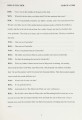
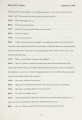
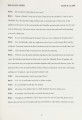
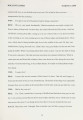
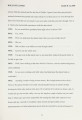
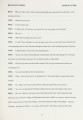
Show 0 LO LM 4 ROL: Well I just train d a plato n 0 m . t th t th sergeant was the only permanent guy in th unit. WIN: Were you like a drill sergeant or drill instruct r? ROL: Yes. I was in charge of the platoon day and night li ing right in th b rr k with this bunch of green men. They would allow us to sel ct thr actin c rpor I m this green bunch, and that was quite a deal. You would have to observ th m £ r about week just to kind of see who was smart, who has got the savvy and who you would pick to help you train this platoon. Mainly just give them the basic training and have them for oh, about fifteen weeks, then they would be assigned out to units all over. So it was quite a few platoons I trained. I was there eighteen months. WIN: When they would go to basic training there, would they go to specialty training? ROL: We had to train them in building different kinds of bridges, in demolition, etc. WIN: So these were engineers? ROL: They would go to engineer units in different divisions. Mentioning Bailey Bridges, I just remembered that we had an overseas unit there for a while. One sergeant had been through hell over there in the Pacific. He was a civil engineer and he had built bridges like everything over there. We had a green lieutenant that was helping us build a bridge across the tributary to the Potomac River there. You roll these steel bridges out, and they are supposed to be on a balancing basis. If you get them out too far they will drop in the river. You had to build a bridge back away from the rollers, way back here, so that there is so much weight to keep that other part of the bridge still going. Anyway, this first lieutenant, I guess he hadn't built too many bridges, did something, and this staff sergeant, Sergeant Lintz, he said, "Lieutenant, do you know what the hell you are doing? 37 |
| Reference URL |
https://collections.lib.utah.edu/ark:/87278/s62r5qxd/1026357 |