| Title |
Rollo Fullmer, Salt Lake City, Utah: an interview by Becky B. Lloyd, March 14, 2000: Saving the legacy tape no. 1 |
| Alternative Title |
Rollo Fullmer, Saving the legacy: an oral history of Utah's World War II veterans, ACCN 2070, American West Center, University of Utah |
| Creator |
Fullmer, Rollo, 1918-2011 |
| Contributor |
Lloyd, Becky B.; University of Utah. American West Center |
| Publisher |
Digitized by J. Willard Marriott Library, University of Utah |
| Date |
2000-03-14 |
| Date Digital |
2015-09-16 |
| Access Rights |
I acknowledge and agree that all information I obtain as a result of accessing any oral history provided by the University of Utah's Marriott Library shall be used only for historical or scholarly or academic research purposes, and not for commercial purposes. I understand that any other use of the materials is not authorized by the University of Utah and may exceed the scope of permission granted to the University of Utah by the interviewer or interviewee. I may request permission for other uses, in writing to Special Collections at the Marriott Library, which the University of Utah may choose grant, in its sole discretion. I agree to defend, indemnify and hold the University of Utah and its Marriott Library harmless for and against any actions or claims that relate to my improper use of materials provided by the University of Utah. |
| Spatial Coverage |
Richfield, Sevier County, Utah, United States; New Caledonia; Fort Belvoir, Fairfax County, Virginia, United States |
| Subject |
Fullmer, Rollo, 1918-2011--Interviews; World War, 1939-1945--Personal narratives, American; Veterans--Utah--Biography; World War, 1939-1945--Campaigns--Pacific Area--Personal narratives, American; Military engineers--Biography; Roosevelt, Franklin D. (Franklin Delano), 1882-1945--Death and burial |
| Keywords |
115th Combat Engineers, 40th Division; 353rd Combat Engineers; San Luis Obispo; Camp White; New Caledonia |
| Description |
Transcript (40 pages) of an interview by Becky B. Lloyd with Rollo Fullmer on March 14, 2000. This is from tape number 1 in the "Saving the Legacy Oral History Project |
| Collection Number and Name |
Accn2070, Saving the Legacy oral history project, 2001-2010 |
| Abstract |
Rollow Fullmer (b. 1918) tells of his youth in Circleville, Utah, recalling his father's death in 1926 and the subsequent hardships suffered by the family. He joined the National Guard in 1941 and was placed in a medical unit with the 115th Combat Engineers of the 40th Division. He took his basic training at Camp San Luis Obispo before being transferred to Camp White, Oregon, with the 353rd Engineers. Fullmer describes his trip overseas on the to New Caledonia, where his unit was assigned to construction tasks. He was accepted into OCS at Fort Belvoir, Virginia, where his unit participated in the color guard at President Franklin D. Roosevelt's funeral. He was discharged as a sergeant in November 1945. 40 pages. |
| Type |
Text |
| Genre |
oral histories (literary works) |
| Format |
application/pdf |
| Extent |
40 pages |
| Language |
eng |
| Rights |
 |
| Scanning Technician |
Mazi Rakhsha |
| Conversion Specifications |
Original scanned with Kirtas 2400 and saved as 400 ppi uncompressed TIFF. PDF generated by Adobe Acrobat Pro X for CONTENTdm display |
| ARK |
ark:/87278/s62r5qxd |
| Topic |
Personal narratives--American; Veterans; World War (1939-1945); Military engineers |
| Setname |
uum_slohp |
| ID |
1026361 |
| Reference URL |
https://collections.lib.utah.edu/ark:/87278/s62r5qxd |
| Title |
Page 31 |
| Format |
application/pdf |
| Setname |
uum_slohp |
| ID |
1026350 |
| OCR Text |
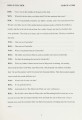
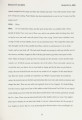
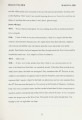
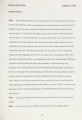
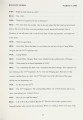
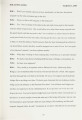
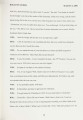
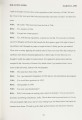
Show OLLO LM communicative. They were cl ar out o it. It ju t ""-A..L.L .. 4'-' t t 1 came out without legs or arms and things like that. Lat r n at the hospital. There was no auditorium or anything to play in. uldju open air there. Those that got well enough that they could com out and h ar u th would come out and tell their stories on crutches. WIN: How did they react to your music? 1 th r ROL: That is amazing. At the hospital, guys would come up to us after a concert with tears in their eyes and say how it made them feel like when they came off that hospital ship and heard that music. They would feel like that they were home. So they didn't have much hope before. They thought that everything was taken care of now. WIN: They expressed to you a positive experience? ROL: With tears in their eyes, just emotional. It got us emotional, too. WIN: It is always fulfilling, you know, that people appreciate what you do. ROL: Another experience, which I think I mentioned to you prior to this, we went up to the north end of the island and played for one of our companies that had a sawmill up there. This old French padre had been up there doing missionary work on the north end of these islands to the Kanakas, the black natives. He was invited to bring all of these little native people that they could to this concert that we were going to play for the company up there. To see those little Kanakas, most of them were little kids, with a lot of adults, too, with their eyes this big, you know, looking at these instruments that they had never seen before. The old padre had a hard time getting them all even halfway close up to where we were playing. They got them up there in a big bunch. When we struck out on a lively march, it scared them to the point where they ran into the jungle just like rabbits 30 |
| Reference URL |
https://collections.lib.utah.edu/ark:/87278/s62r5qxd/1026350 |