| Title |
Warren S. Wimmer, American Fork, Utah: an interview by Winston Erickson, May 26, 2000: Saving the legacy tape no. 25, 26, and 27 |
| Alternative Title |
Warren Wimmer, Saving the legacy: an oral history of Utah's World War II veterans, ACCN 2070, American West Center, University of Utah |
| Creator |
Wimmer, Warren, 1920-2006 |
| Contributor |
Erickson, Winston P., 1943-; University of Utah. American West Center |
| Publisher |
Digitized by J. Willard Marriott Library, University of Utah |
| Date |
2000-05-26 |
| Date Digital |
2015-09-16 |
| Access Rights |
I acknowledge and agree that all information I obtain as a result of accessing any oral history provided by the University of Utah's Marriott Library shall be used only for historical or scholarly or academic research purposes, and not for commercial purposes. I understand that any other use of the materials is not authorized by the University of Utah and may exceed the scope of permission granted to the University of Utah by the interviewer or interviewee. I may request permission for other uses, in writing to Special Collections at the Marriott Library, which the University of Utah may choose grant, in its sole discretion. I agree to defend, indemnify and hold the University of Utah and its Marriott Library harmless for and against any actions or claims that relate to my improper use of materials provided by the University of Utah. |
| Spatial Coverage |
Pearl Harbor, Oahu, Hawaii, United States; Guadalcanal; Tulaghi Island (Solomon Islands); Saipan, Northern Mariana Islands; Savo Island; American Fork, Utah County, Utah, United States |
| Subject |
Wimmer, Warren, 1920-2006--Interviews; World War, 1939-1945--Personal narratives, American; Veterans--Utah--Biography; World War, 1939-1945--Naval operations, American; World War, 1939-1945--Campaigns--Pacific Area--Personal narratives, American; Pearl Harbor (Hawaii), Attack on, 1941 |
| Description |
Transcript (53 pages) of an interview by Winston P. Erickson with Warren S. Wimmer on May 26, 2000. This is from tape numbers 25, 26, and 27 in the "Saving the Legacy Oral History Project |
| Collection Number and Name |
Accn2070, Saving the Legacy oral history project, 2001-2010 |
| Abstract |
Wimmer (b. 1920) recalls his childhood in rural Utah and enlisting in the Navy in July 1941. After basic training he was assigned to the USS Rigal in Hawaii. Upon his arrival he learned that the Rigal had been towed to Hawaii to be converted into a destroyer tender and was in the process of being rebuilt. He gives a long and vivid account of the Japanese attack on Pearl Harbor and the aftermath. He served on work parties that recovered bodies before being admitted to the hospital for shrapnel wounds. On December 10 he was evacuated with other wounded from Pearl Harbor on a luxury liner with two coast guard cutters as escort. He was later assigned to the USS Shaw and saw combat at Guadalcanal, Tulagi, Saipan, and Savo Island. 53 pages. |
| Type |
Text |
| Genre |
oral histories (literary works) |
| Format |
application/pdf |
| Extent |
53 pages |
| Language |
eng |
| Rights |
 |
| Scanning Technician |
Mazi Rakhsha |
| Conversion Specifications |
Original scanned with Kirtas 2400 and saved as 400 ppi uncompressed TIFF. PDF generated by Adobe Acrobat Pro X for CONTENTdm display |
| ARK |
ark:/87278/s6jh5kdz |
| Topic |
Personal narratives--American; Veterans; World War (1939-1945); Military operations, Naval--American; Pearl Harbor, Attack on (Hawaii : 1941) |
| Setname |
uum_slohp |
| ID |
1026083 |
| Reference URL |
https://collections.lib.utah.edu/ark:/87278/s6jh5kdz |
| Title |
Page 27 |
| Format |
application/pdf |
| Setname |
uum_slohp |
| ID |
1026054 |
| OCR Text |
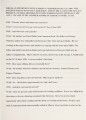
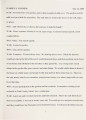
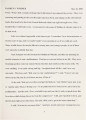
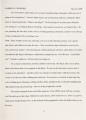
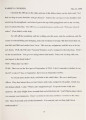
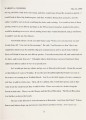
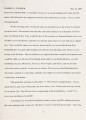
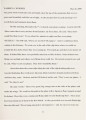
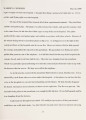
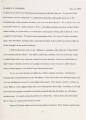
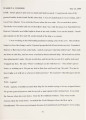
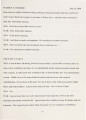
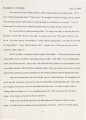
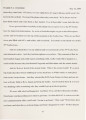
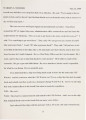
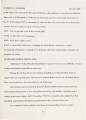
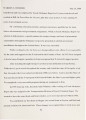
Show W RR .WIMMER a ' 26 2000 we looked we aw the plane come down and bomb the rizoua. It' a a 500 lb. bomb. It looked like it went down the tack, but it hit mid hip and went right down into the lower deck . That set off all of the ammunition magazine . The Arizona went rioht straight down, and 1,100 and some odd sailors were entrapped in that hip. They clo ed the hatches as quickly as they could to keep her from sinking. They clo ed the hatche on 1,100 and some odd sailors that were below decks. They're still entombed in the Arizona. I stood there on the water's edge and watched the bombs that blew up the USS Arizona. At that time many of my shipmates had been killed that I went through boot camp with because there were about ten or twelve of them that went on the Arizona. Many years later, as I went out and read the names of those that had been entombed in the Arizona, I found several names of fellows I went through boot camp with. We knew that the whole bay was going to go up in flames any minute because the battlewagons were on fire, the planes were strafing, and the bombs were dropping. Every time their plane would come over close to where we were, we'd run over and get under the old truck. I don't know why because that wouldn't save you, but we always thought that if you hid under something it would protect you. Several of the fellows that swam to shore we pulled out of the water. We put them on this old weapons carrier, and when we got about ten or twelve on we'd head over to the naval hospital, which was just around the bend, and right straight across down from the Battleship Row. So we took our first load to the naval hospital. And, as we did, we just saw 25 |
| Reference URL |
https://collections.lib.utah.edu/ark:/87278/s6jh5kdz/1026054 |